- Place
- Akmenė, Mažeikiai, and Šiauliai district municipalities
- Region
- Samogitia
- Type
- Regional park protecting the Venta River valley
- Address
- Visitor Centre: Ventos g. 30A, Venta, Akmenė District
- Coordinates
- 56.19000, 22.68100
Ventos regioninis parkas
Venta Regional Park: landscape of the Venta valley
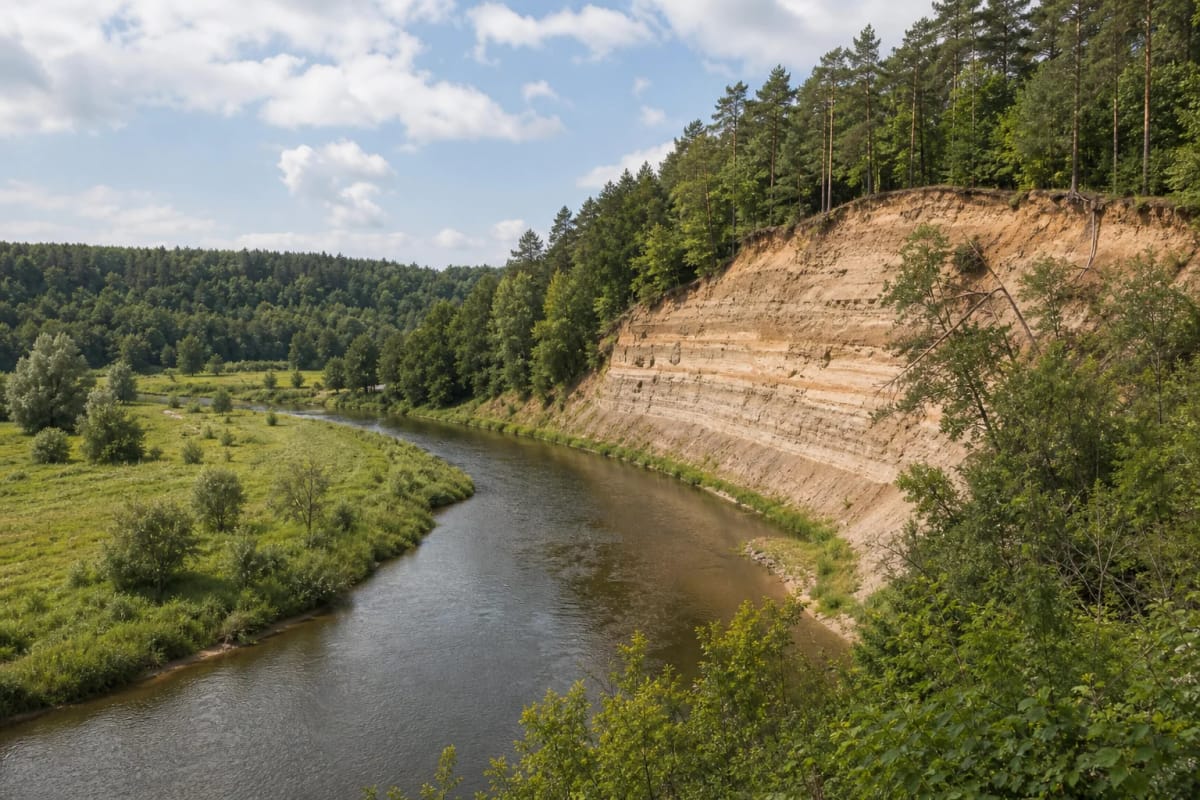
Venta Regional Park protects the winding Venta River valley with expressive slopes and strong meanders. It is an area of about 9,800 hectares, established in 1992 and stretching across three municipalities: Akmenė, Mažeikiai, and Šiauliai districts. Its visitor centre is in the town of Venta, Akmenė District.
The park's main value is not a single object but the Venta valley itself, with outcrops, forests, mills, and cultural heritage. It is best understood as a larger landscape that includes separately described sites such as the Jurakalnis Trail.
Jurassic outcrops
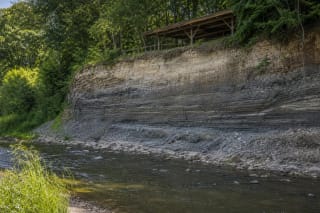
In the Venta valley, river erosion has revealed the richest Jurassic geological outcrops in Lithuania. They contain fossil sea fauna about 160 million years old, including ammonites and other molluscs. Dionizas Poška was among the first to study these exposures.
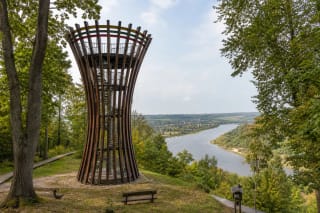
The best-known site is Papilė Outcrop, near which the geological Jurakalnis Trail and observation tower have been installed. The park also hosts rare animals: twelve beetle species have been found here that occur nowhere else in Lithuania.
The Venta, valley, and nature
The park protects the natural network of the Venta and its tributaries, including the Virvytė, Uogys, Ažvilis, and Dabikinė, as well as natural meadows and old forests. It contains one strict nature reserve, Purviai, and eight reserves protecting the valley landscape, geology, and rare plant habitats.
About 700 plant species grow in the park, and more than 140 bird species breed there. Natural monuments include the fifteen-trunk linden of Papilė, old oaks and pines, and the valley also offers views of the confluence of the Virvytė and Venta.
Cultural heritage and museums
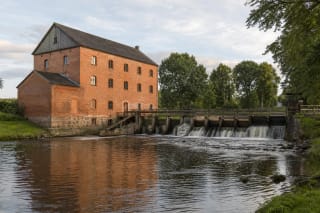
The Venta valley is rich in cultural heritage as well: Papilė hillforts, old water mills such as Viekšniai and Augustaičiai, remains of manor sites, and the urban part of Viekšniai. Papilė also has the Simonas Daukantas Memorial Museum.
Several municipal museums are concentrated in Viekšniai within the park area: the unique wooden Viekšniai Pharmacy, the Aleksandras Griškevičius museum of an aviation pioneer, and the Biržiškos professors' memorial exhibition. A nature trip can therefore become a cultural route very easily.
Visiting
The park visitor centre in Venta opened in 2015 and has an interactive exhibition with Jurassic fossils that visitors can touch. The park itself is an open area, and its trails are free; guided tours are organised by the park administration.
Plan at least half a day, combining several places: Papilė and Jurakalnis outcrops, the visitor centre in Venta, and the museums of Viekšniai. The best period is from late spring to autumn, when trails are dry and the outcrop layers are easier to see.