- Place
- Molavėnai, Nemakščiai Eldership, Raseiniai District Municipality
- Region
- Raseiniai District
- Type
- archaeological landscape of two hillforts by the Šešuvis
- Coordinates
- 55.44900, 22.87200
Molavėnai sacred hills, Griaužai, Kuprės, Kauprės
Two hillforts by the Šešuvis
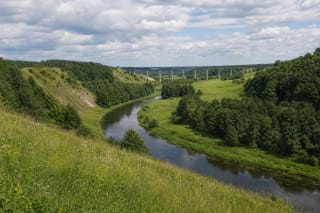
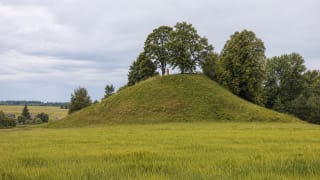
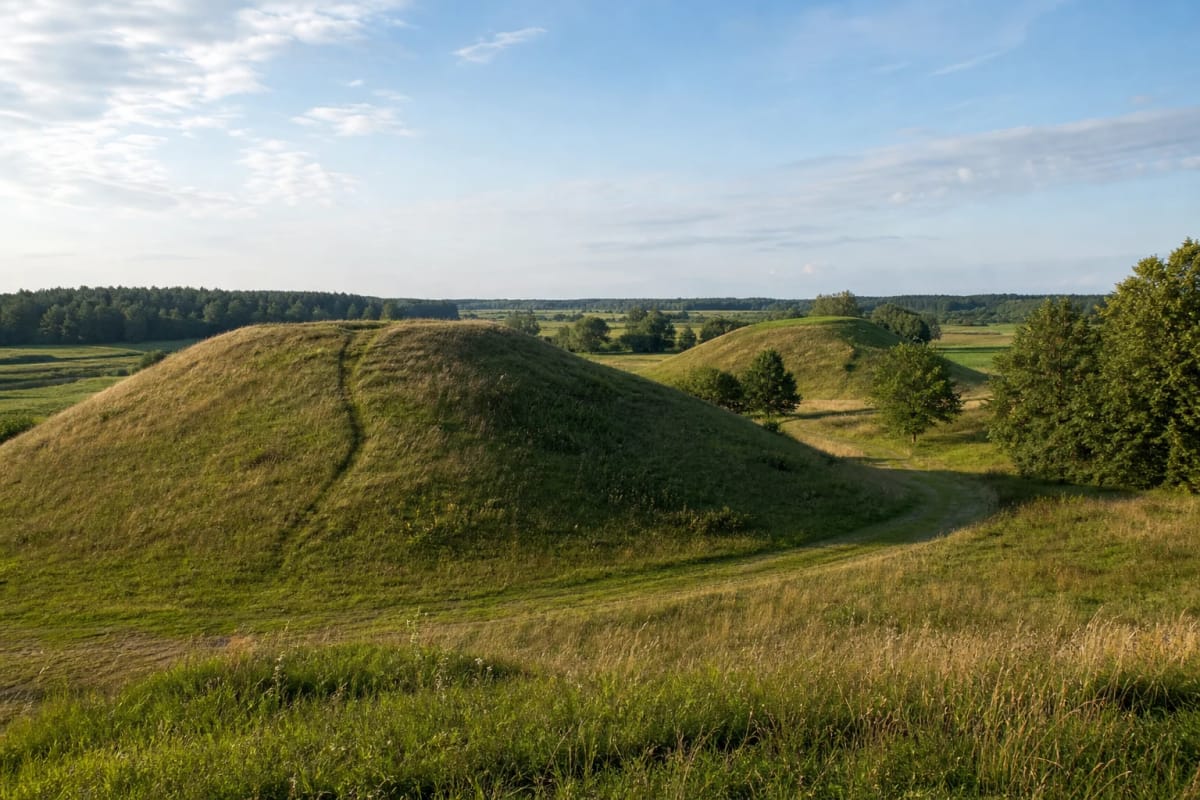
VLE states that the Molavėnai Hillforts are two hillforts in Raseiniai District Municipality, Nemakščiai Eldership, about 500 m southeast of Molavėnai village. Visitors arrive not at one summit but at an archaeological landscape in the Šešuvis valley, where hills, ditches, and ramparts form a coherent defensive whole. VLE gives a very broad dating for the complex, from the first millennium BC to the end of the second millennium AD.
The name Molavėnai sacred hills is also used, but VLE describes the objects as hillforts. For that reason the main English title is Molavėnai Hillforts, while the sacred-hill wording is kept as a traveller and local-language alternative. VLE also notes that the settlement of Vienvagiai in this area was mentioned in 1395, so the written history of the region reaches early Grand Duchy of Lithuania documents.
First hillfort: Griaužai (Kuprės)
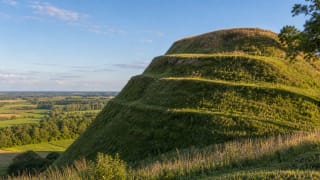
VLE states that the first hillfort, formerly known as Griaužai and also called Kuprės, stands on the right bank of the Šešuvis. Its slopes are steep, 5-18 m high, but erosion has left only a narrow ridge: a quadrangular platform just 28 x 3-5 m. Today the summit is therefore narrow and fragile, while the surrounding defensive system makes the strongest impression.
VLE describes that system in detail. Northwest of the platform are two fortified outer works; southeast is an additional fortified area. At the foot is a ditch 13 m wide and 3 m deep, beyond it a rampart 4.5 m high and 15 m wide, then another ditch-and-rampart line. The outer-work platforms, 10 x 21 m and 14 x 20 m, were reinforced with separate ramparts. This multi-level defensive ring shows that the place was important and long used.
Second hillfort: a 1987 discovery at the Šešuvis and Jaujupis confluence
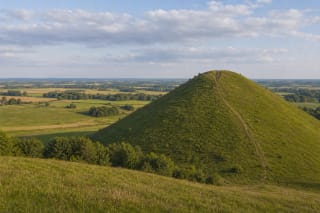
VLE states that the second Molavėnai hillfort was found only in 1987, by local historian A. Girčius. It lies 400 m northeast of the first hillfort at the confluence of the Šešuvis and Jaujupis, so river valleys defended it on two sides. The slopes are steep, up to 10 m high, and the quadrangular platform measures 42 x 95 m, much larger and more unified than the eroded ridge of the first hillfort.
The north-eastern side, most accessible from land, was strengthened by four rampart-and-ditch lines. The first consists of a 30 m long, 4 m high rampart and a ditch 9 m wide and 2 m deep; three weaker lines continue beyond it. That the larger second hillfort was recognized only in the late twentieth century is a useful reminder that archaeological landscapes are not always fully described at once.
What to observe on site
At Molavėnai, look beyond the hilltops to the defensive forms described by VLE: the first hillfort's outer works and additional fortified area, the second hillfort's four-line rampart system, and the way the Šešuvis and Jaujupis valleys close the hills from different sides. These elements explain why the two hillforts work as one archaeological landscape rather than as two random hills.
The best visit is slow. Take time to walk both hillforts, compare their scale, the narrow eroded first hillfort and the broad second one, and avoid reducing the place to one convenient photo spot. Eroded slopes are sensitive to trampling, so use paths and be careful on the narrow ridge.
Visiting practice
Molavėnai Hillforts are open-air heritage objects, so the quality of a visit depends on weather and path conditions. After rain the steep Šešuvis valley slopes may be slippery, while tall summer grass can hide ditches and ramparts. Late spring and early autumn are often the clearest times to visit.
No ticket is normally needed for an independent visit. If you are attending an event, education programme, or local festival, check the organiser's current information, because the hillforts themselves do not have museum opening hours. Molavėnai is convenient for a wider Dubysa Regional Park and Raseiniai-area hillfort route.