- Place
- Raseiniai, Raseiniai District Municipality
- Region
- Raseiniai District
- Type
- interwar Independence monument and city symbol
- Coordinates
- 55.37100, 23.11800
Žemaitis, Independence Monument
Žemaitis: the symbol of Raseiniai
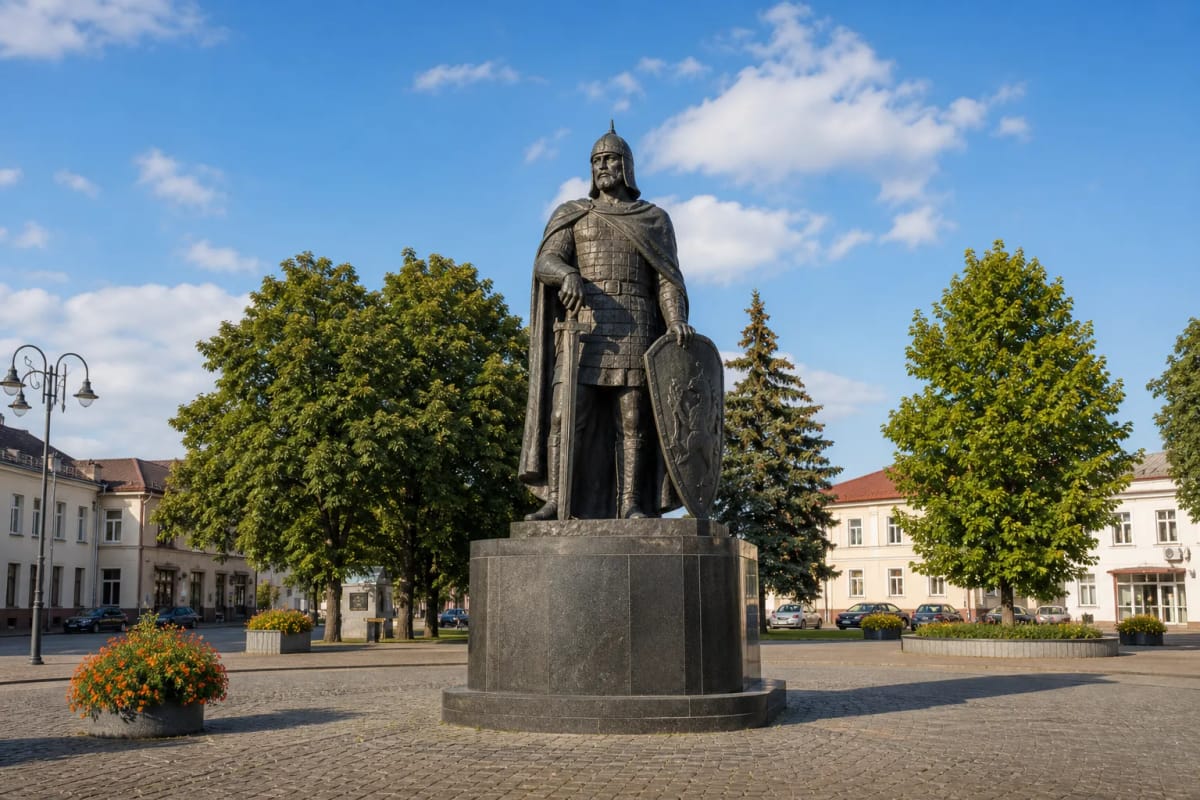
Žemaitis is the clearest monument in Raseiniai and has become a symbol of the whole city. VLE states that an Independence monument by sculptor Vincas Grybas was unveiled in Raseiniai in 1934; it is now known as Žemaitis. The monument marks Lithuanian independence and Samogitian self-awareness.
The standing Samogitian figure is read locally as a sign of national memory. Local tradition says the monument shows a Samogitian with a bear, the heraldic symbol of Samogitia, but that detail should be presented as local tradition because not every feature of the story is confirmed in authoritative sources.
Sculptor Vincas Grybas
The monument was created by Vincas Grybas, one of the most important Lithuanian sculptors of the first half of the twentieth century. VLE states that he was born in 1890 and was shot by the Nazis near Jurbarkas in 1941. The artist who created Žemaitis therefore also became a victim of occupation violence.
Grybas created other major Lithuanian monuments as well: Simonas Daukantas in Papilė, Vytautas the Great in Jurbarkas, and Vincas Kudirka in Kudirkos Naumiestis. The Vincas Grybas Memorial Museum operates in Jurbarkas, so the Raseiniai Žemaitis is best seen as part of a wider sculptural legacy.
Žemaitis and Magdė: what is what
Two different Raseiniai symbols are often confused. The city monument is called Žemaitis: it is Vincas Grybas's Independence monument. Raseinių Magdė is a separate name, referring to the heroine of a poem by Maironis; the city also has Magdė's Well as a separate object.
The monument should therefore not be called Magdė. Knowing this distinction before a visit makes a walk through Raseiniai more accurate and keeps the city's names from blurring together.
Memory from 1934 to today
VLE states that Žemaitis was restored in 1989, so the monument survived and remains a key city sign. During the national revival it became a symbol of civic movement: VLE notes that in October 1988 the national flag was raised by the Žemaitis monument.
Raseiniai has deep history. VLE recalls that the town had Magdeburg rights from the sixteenth century and later became an important political centre of Samogitia. The city was heavily destroyed during the Second World War, which makes the surviving Žemaitis an even stronger sign of continuity.
Visiting the monument
The Žemaitis monument stands in central Raseiniai and can be visited freely, without a ticket, at any time. A short visit takes 10-20 minutes; to understand the city better, add the old town and Raseiniai Regional History Museum.
State commemorations, especially on February 16, take place at the monument, so it is not only a tourist object but a living place of civic memory. Raseiniai combines well with the Dubysa valley and nearby hillforts.