- Place
- Vilkaviškis District Municipality
- Region
- Suvalkija
- Type
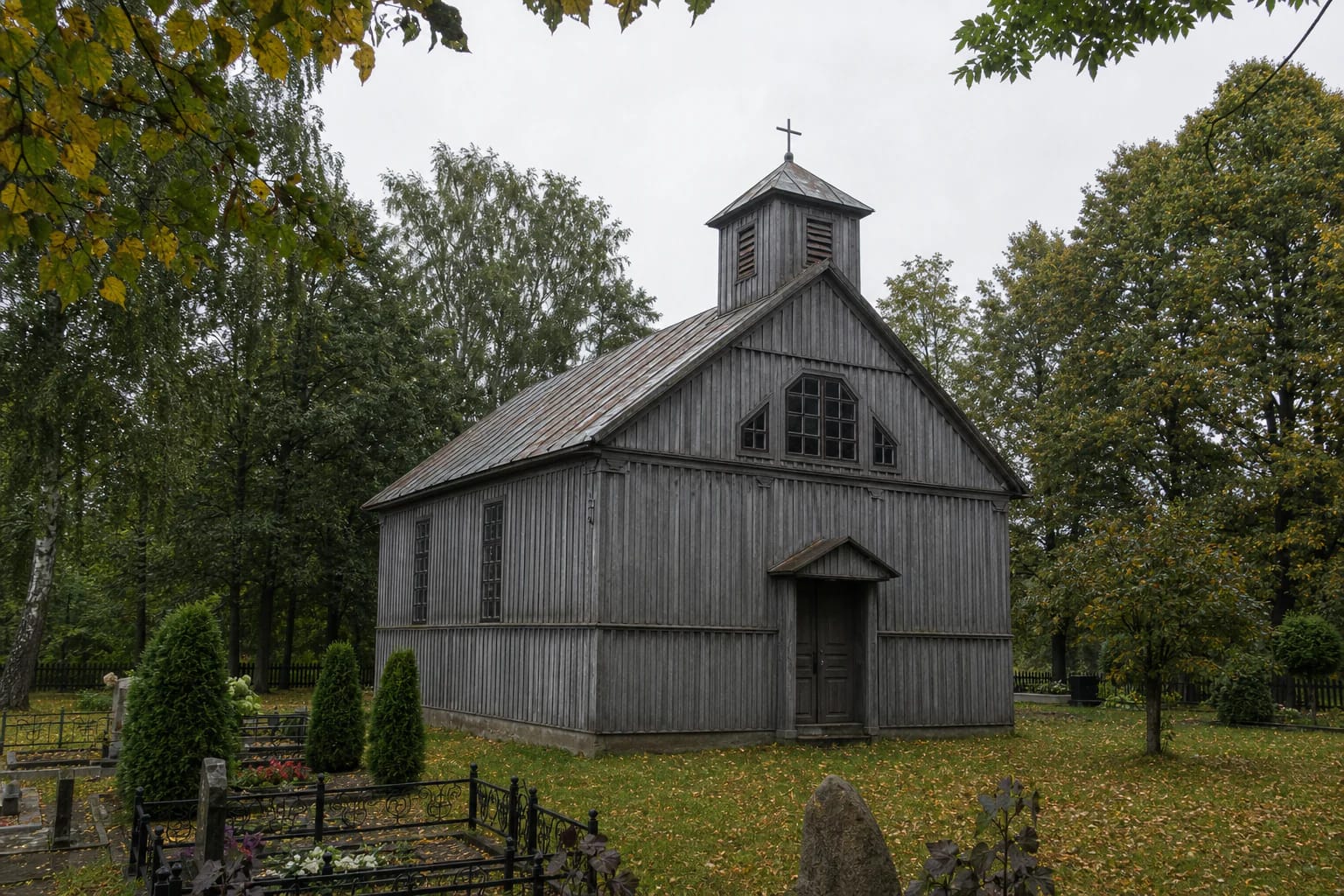
- 1929-1930 wooden village-cemetery chapel with a narrower sanctuary and a square belfry rising from the gable
- Address
- Parausiai Village, Vilkaviškis District (Pilviškiai Eldership; by the village cemetery)
- Coordinates
- 54.68751, 23.24913
- Visit duration
- 20-40 minutes for the exterior and a quiet rural-landscape stop
- Best time
- in daylight and dry weather, respecting the cemetery's peace; arrange permission before seeking interior access
Parausiai Chapel of the Sacred Heart of Jesus, Parausiai Cemetery Chapel of the Sacred Heart of Jesus, Parausiai Chapel
A chapel beside the Rausvė and village cemetery
Parausiai Village Chapel of the Sacred Heart of Jesus stands in Parausiai Village, Pilviškiai Eldership, Vilkaviškis District. No reliable street number is published: the chapel is beside the Rausvė, about 2.3 km east of the Gižai-Pilviškiai road and around 0.2 km south-west of the active village cemetery.
The listed address is therefore broad, while 54.6875114, 23.2491288 marks the chapel itself. It is not the whole Parausiai village centre and does not indicate a formal car park.
The quiet riverside rural setting is part of the chapel's identity. Follow the actual approach, do not drive through cemetery or private land, and leave space for funerals and local worship.
The current KPD name and KVR 16117 protection
The Department of Cultural Heritage's 2024 list calls the object the Parausiai Village Chapel of the Sacred Heart of Jesus and lists it as a state-protected individual object under KVR code 16117. This is the object's current official name.
An older e-TAR list uses the form Parausiai Cemetery Chapel of the Sacred Heart of Jesus, while maps and local accounts often shorten it to Parausiai Chapel. These are variants for one place, not a list of several chapels.
Protected status means that changes to the building and its setting are not simply a private repair matter. For visitors, it calls for careful approach, respectful behaviour and no unauthorised touching, rebuilding or decoration.
Built by the community in 1929-1930
The chapel was built in 1929-1930. Local accounts emphasise community support, making this a village religious building rather than a manor's representative commission.
Worship was later held in the chapel; it was closed in 1958 and returned after independence. This history explains its continuing local importance even though no regular present-day Mass schedule is published.
Local stories also mention weapons hidden in the chapel after the war. They belong to local memory and are no reason to enter a closed interior.
A small wooden volume with a sensitive condition history
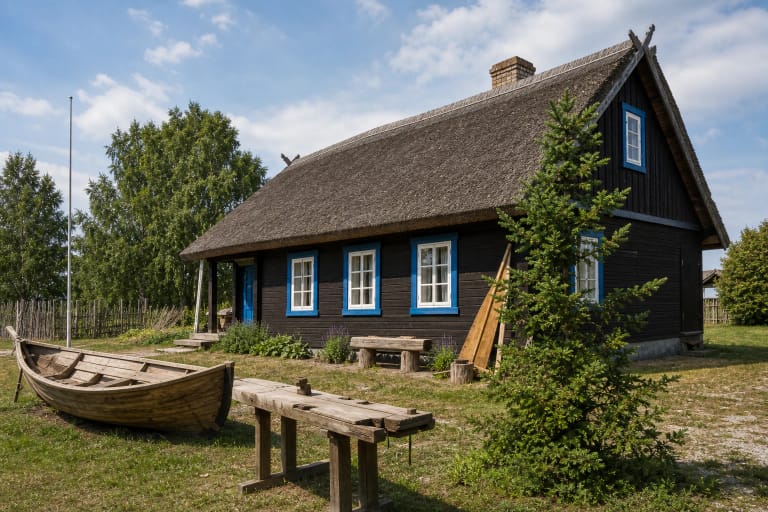
The exterior is defined by a compact rectangular wooden body, a slightly narrower sanctuary and a square belfry rising from the front gable. Above it are a pyramidal metal roof and a simple cross. This intimate scale belongs to a village chapel, not a large masonry church.
A 2021 KPD condition assessment noted dampness to the walls and foundations because roof gutters had not been installed, although that assessment called the physical condition unchanged. It is not a current engineering inspection, but it is important context for a cautious approach.
The timber finish and colour can change with maintenance and weather. The paint colour and interior furnishings may look different or be unseen during a visit, so identify the building by its recognisable geometry and KPD name.
A respectful visit, not guaranteed interior access
No regular opening hours, current Mass timetable, ticket price, tour booking or interior-access policy is published. Because the chapel stands beside a cemetery, observe cemetery etiquette, keep the approach clear and photograph respectfully.
If you want to enter, seek permission from the responsible person or parish in advance and do not assume the door will be unlocked. Because the building's condition may be sensitive, assess safety locally rather than relying on a photograph.
Allow 20-40 minutes for the exterior and landscape. Choose daylight and avoid disturbing funerals or prayer in the cemetery.