- Place
- Paežeriai, Vilkaviškis District Municipality
- Region
- Suvalkija
- Type
- late Baroque and Classicist manor ensemble beside a lake
- Address
- Dvaro g. 6, Paežeriai village, Šeimena Eldership, Vilkaviškis District
- Coordinates
- 54.63957, 22.98082
Manor by Lake Paežeriai
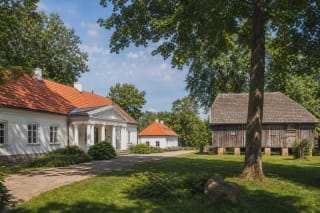
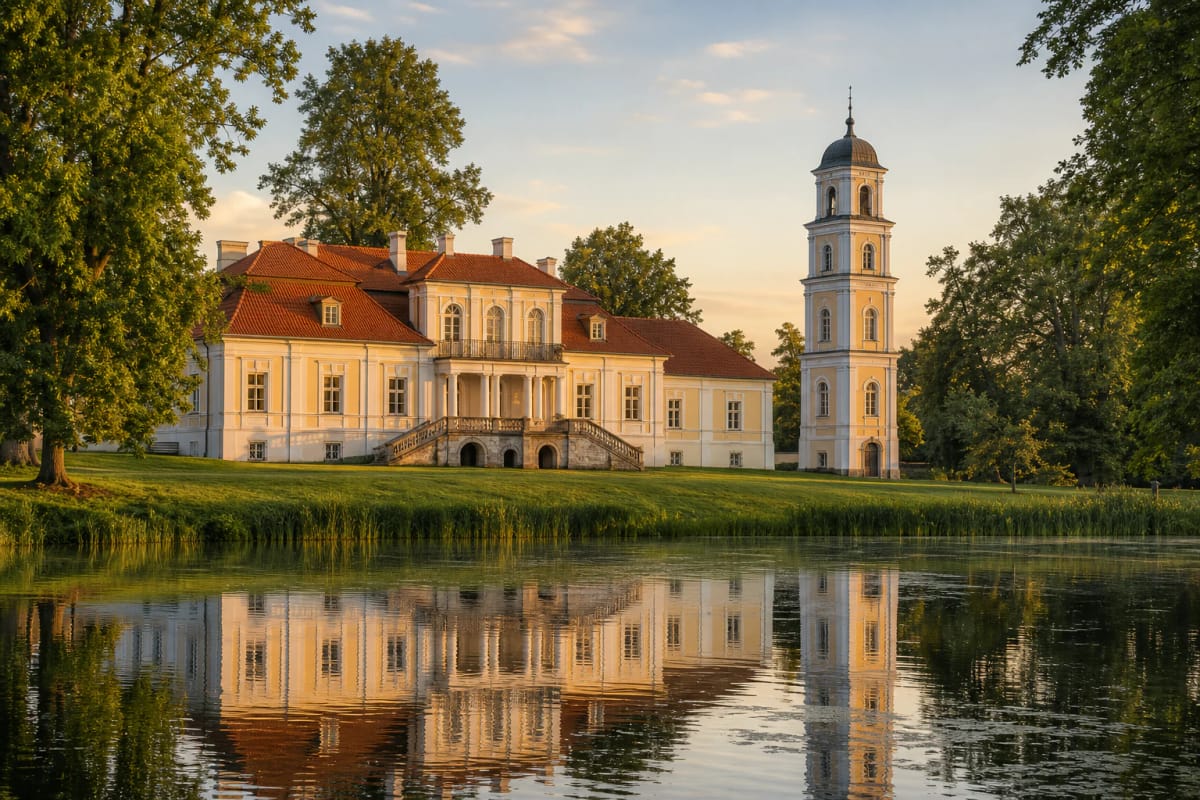
Paežeriai Manor stands in Vilkaviškis District, beside Lake Paežeriai. The impression of the place does not depend on palace architecture alone: the lake, park, open spaces, and vertical accent of the tower create the full manor landscape.
This is one of those Suvalkija sites where a manor is easy to read as an ensemble of representation and leisure. The palace was built so that the surrounding landscape would work together with the building, so it is worth walking not only past the facade but also through the park and along the lakeshore.
Martynas Knakfusas' palace
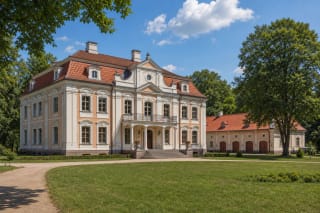
The Cultural Heritage Register dates Paežeriai Manor palace to 1795-1799 and links it with architect Martynas Knakfusas (about 1740-1821), one of the early figures of Classicist architecture in Lithuania. Simonas Zabiela commissioned the palace after inviting the architect following 1794; earlier Paežeriai belonged to the Glinskis and Zabiela families, and in the nineteenth century to the Gauronskis, who shaped the interiors and farm buildings.
Late Baroque and Classicist features meet at Paežeriai. The palace is not simply a strict Classicist block: the main facade has a four-column Ionic portico, while on the lake side a semicircular projecting section stands on columns. In the twentieth and twenty-first centuries the manor was reconstructed several times: 1938-1939, 1954-1957, 1968-1970, 1979-1981, and 2008-2014.
Neo-Gothic Belvedere tower and park
One of the most recognizable accents of Paežeriai Manor is the Belvedere tower. The Cultural Heritage Register describes it as a Neo-Gothic, round, six-tier tower with crenellations; a clock once stood in a round niche on the fourth tier. The tower gives the ensemble a vertical marker and reminds visitors that views in manor parks were deliberately composed.
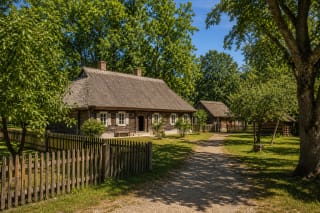
The Cultural Heritage Register lists 11 objects in the manor estate: palace, service building, tower, cattle shed, storehouse, distillery, stable, granary, pigsty, icehouse, and park. In 1976 about 40 tree species were counted in the mixed-plan park; when the lake level was raised in 1983, part of the protected territory was flooded.
Historical layers and present use
The manor history also has more difficult layers. In 1940 an agricultural school was established here, and in 1942 the palace became the residence of von Renteln, the German general commissioner for Lithuania. The manor was not a frozen object: its functions changed with each period.
Today the estate is managed by the Vilkaviškis District Suvalkija (Sūduva) Cultural Centre-Museum. The palace houses the Suvalkija Art Gallery, while the service building houses the Vilkaviškis Regional Museum. During source review, public visiting information was limited, so check the latest manor or district cultural-institution notice before travelling for hours, events, and tickets.