- Place
- Telšiai District Municipality
- Region
- Žemaitija
- Type
- hillfort with baileys and a foot settlement
- Address
- Akmenskinė, Žarėnai eldership, Telšiai District Municipality
- Coordinates
- 55.83775, 22.17933
- Visit duration
- 60-90 minutes
- Best time
- in dry daylight, when the steep slopes, Minija valley, and visitor paths are safest and clearest
Plinija Hillfort, Žarėnai Hillfort
A high hillfort beside the Minija
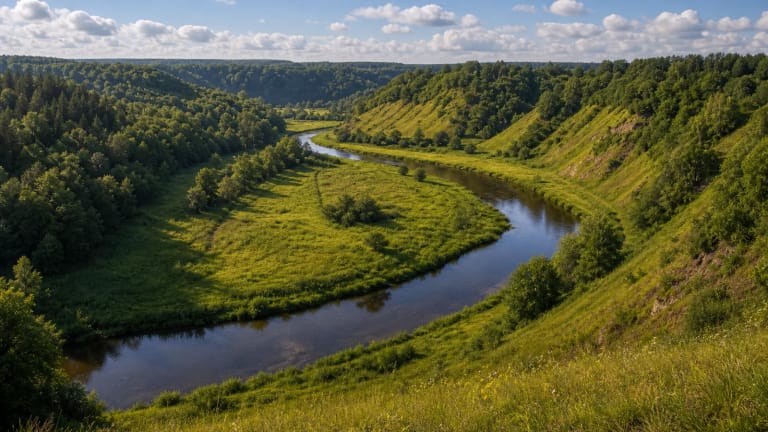
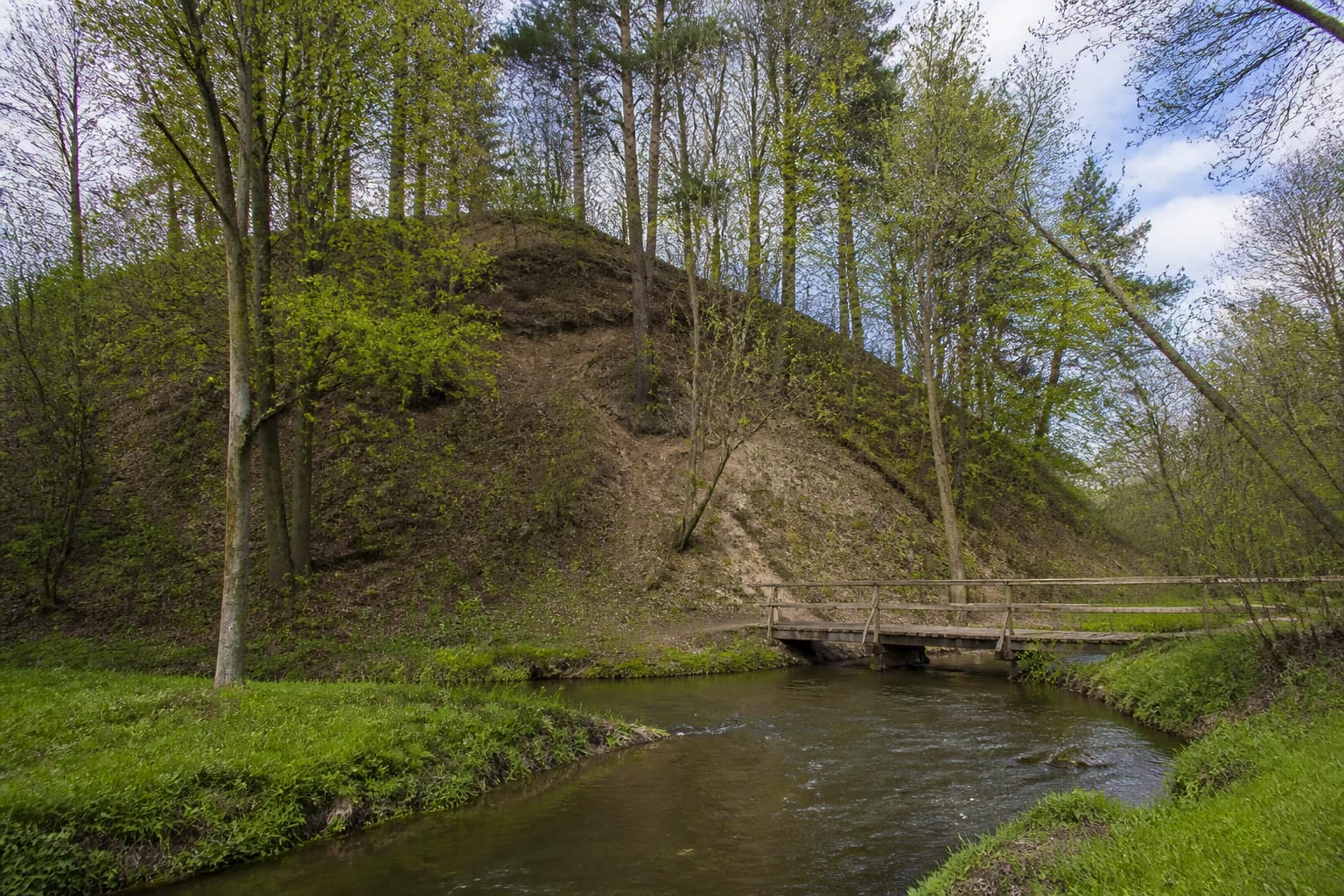
Paplienijos Hillfort lies near Paplienija village, on the right bank of the Minija in Žarėnai eldership, Telšiai District. Its character comes from height as much as from the summit: steep slopes reaching up to 25 metres lift the hillfort above the river landscape.
Paplienijos Hillfort is also known as Plinija, Plienija, and Žarėnai Hillfort. All of these names refer to the same archaeological site.
Ramparts, ditches, and two baileys
The main summit is quadrangular and approximately 25 by 40 metres. A rampart 1.5 metres high and 15 metres wide runs along the north, while ditches and longer outer banks were formed below it. A ditch on the southern slope separated the hillfort from the first bailey.
The first bailey also had a quadrangular enclosure, about 28 metres long, with a second bailey beyond its bank. Some of these forms are easier to understand from the paths and changing ground than from a single viewpoint. The Minija has also washed away parts of the baileys, so the complex records natural river change as well as human defence.
A settlement and finds that speak of daily life
A foot settlement covering about 10 hectares lies north and west of the hillfort. An expedition from the Telšiai Museum, led by archaeologist Valatka, investigated about 525 square metres in 1959–1962 and found a cultural layer up to one metre thick, building remains, hearths, and small metal-smelting furnaces.
The finds include knives, awls, scrapers, a flint axe, whetstones, quern stones, spindle whorls, clay weights, jewellery, and pottery. They are kept at the Šiauliai Aušra Museum, so visitors must not search for objects at the hillfort. The visible landscape is protected heritage, not a place to collect souvenirs.
The memory of Žarė Castle
Paplienijos Hillfort is dated from the middle of the first millennium BC to the thirteenth century AD. The encyclopedia connects it with the Curonian Žarė Castle mentioned in 1253. That is historical context, not a basis for inventing the castle's appearance: what visitors see today are earthen fortifications and the river valley.
The place is especially rewarding when the defensive summit, residential foot settlement, and water route are read together. The Minija supplied a natural obstacle, while the baileys extended the defended landscape. Keep to marked paths and let the terrain, rather than an imagined reconstruction, tell the story.
Improved grounds and a practical visit
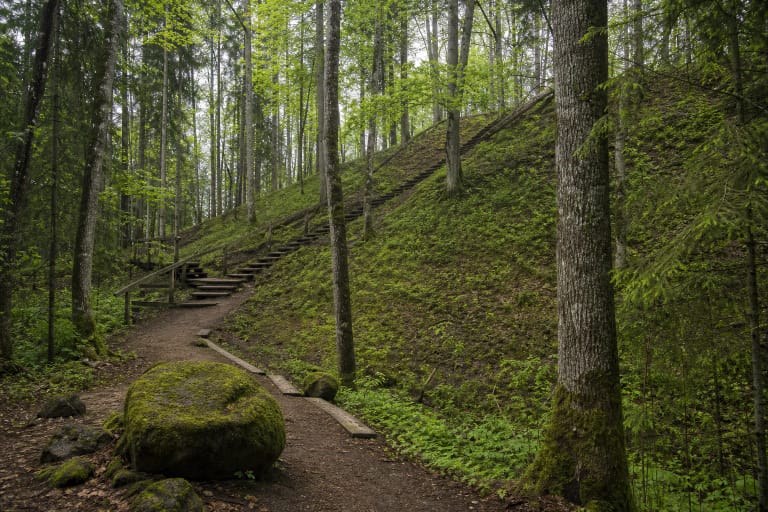
Telšiai District Municipality reports that the hillfort's conservation and visitor-adaptation work was completed in 2022. The emergency condition was addressed; steps, walking paths, directional markers, boundary markers, signs, fire places, benches, and information boards were installed, and a small bridge was repaired.
The nearby Plinija Spring was also adapted for visits; it is a separate stop. Allow 60-90 minutes for the hillfort, baileys, and views, wear shoes with a good grip, and protect the steep slopes.