- Place
- Akmenė District Municipality
- Region
- Akmenė District
- Type
- geological outcrop and historic watermill
- Address
- Papartynė, Akmenė District
- Coordinates
- 56.12398, 22.85853
- Visit duration
- 1–1.5 hours if you explore both the valley and the mill dam
- Best time
- a dry day from late spring through autumn, when the valley slopes are easier to walk
Papartynė Watermill, Papartynė Mill Geological Outcrop
Two Papartynė valley stories in one place
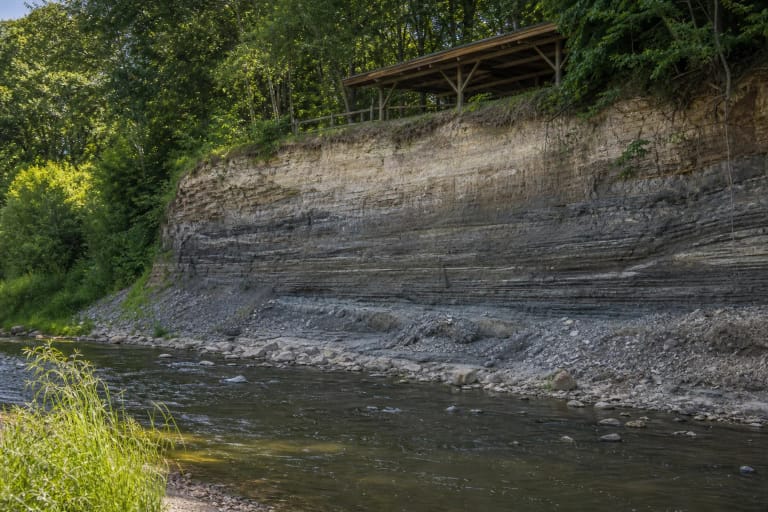
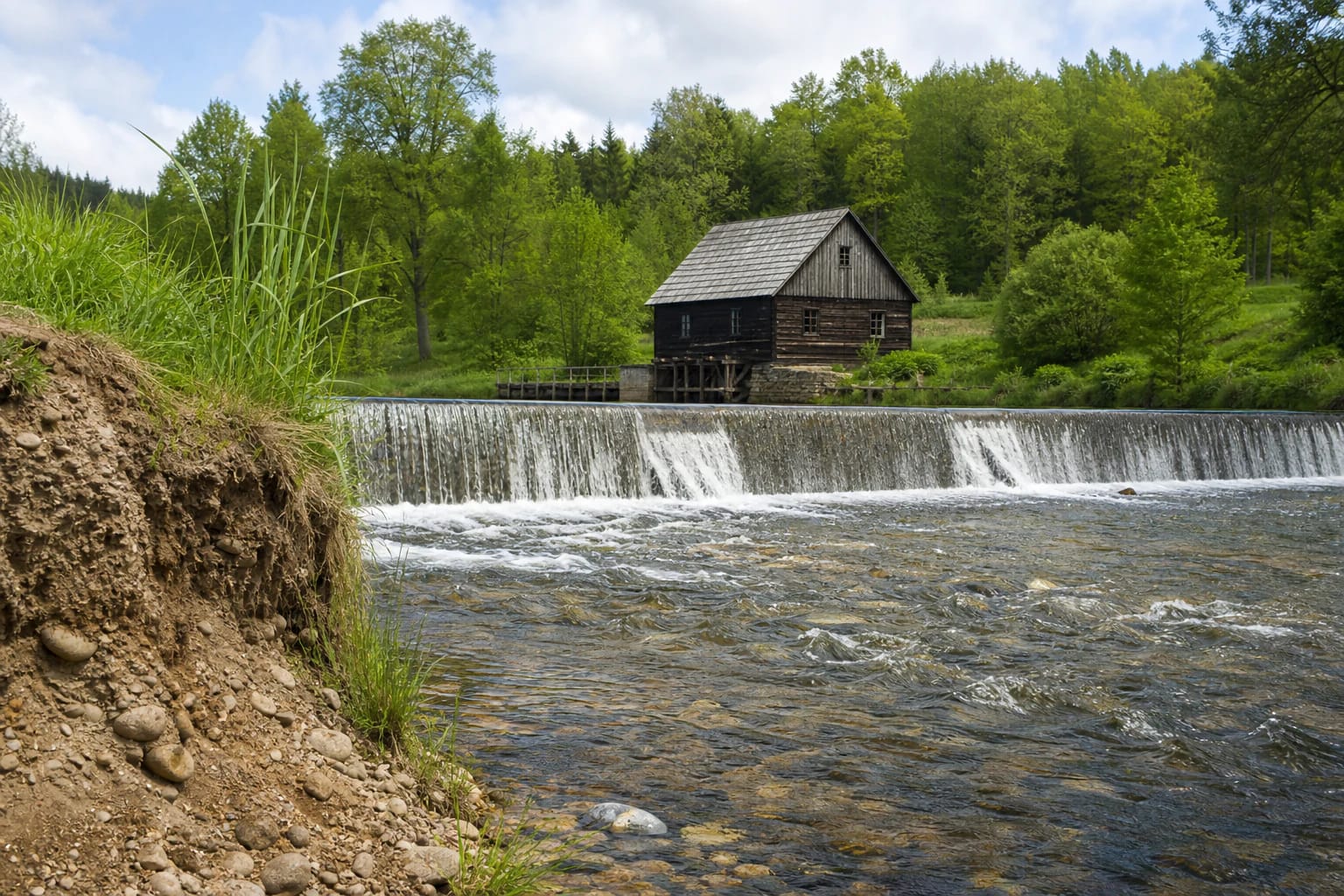
Papartynė Geological Outcrop and Watermill is not a single building but the name of a place where natural and technological heritage meet. Around the dam, the valley still reads as a nineteenth-century mill landscape, while the slopes expose rock in which visitors may look for traces of Jurassic life. The contrast is the site's main attraction.
Allow time for both the water and dam and the exposed layers rather than stopping for a photograph of the mill alone.
A mill documented from 1867 to the end of its old working life
The Papartynė mill began operating in 1867. It had a turbine, two pairs of millstones, and a grain-cleaning machine known in Lithuanian as a piklius; the site also produced electricity and cut shingles. The equipment shows that this was a practical centre of the local economy, not a decorative water feature.
The mill operated until 1953. Collectivisation then changed the local economy, the mill lost its role and was closed, and the building and dam deteriorated. Looking at the quiet water today with that history in mind makes the landscape's long everyday working life easier to imagine.
A restored watercourse and a hydroelectric installation
In 1999, entrepreneurs began bringing the deteriorated mill site back to life. The former dam was restored and a hydroelectric plant was installed beside it. That history is why a visitor should look beyond the mill volume to the water level, spillway, and the whole piece of hydro-engineering that shapes the valley.
Renewal does not make the mill a conventional museum with daily opening hours. The hydro installations may be in operation, and access to the building depends on the owner and the day. Stay in publicly accessible places, do not climb onto dam structures, and never enter technical areas without explicit permission.
The outcrop reaches back to a Jurassic sea
The Papartynė outcrop is notable for fossilised remains in its rocks, including fossils of animals that lived roughly 150 million years ago. Visitors can imagine a time when northern Lithuania formed part of a very different marine landscape. It is a geological story on a scale far older than the mill.
Looking for fossils does not mean digging into the slope. Observe naturally exposed surfaces, do not pull specimens from the rock, and leave the landform intact. If you find something that may be significant, photograph it in place and ask a geology specialist for advice instead of removing it.
Papartynė valley planning and safety
Papartynė is a rural site without a museum ticket desk, toilets, or a guaranteed guide. Arrive in daylight, check the approach before setting out, and follow any signs or the owner's instructions on arrival. After rain, grass and slopes can be slippery; keep children close to the water and dam.
Allow roughly one to one and a half hours for a first visit: see the dam and mill setting and examine naturally exposed rock. Do not climb hydro-engineering structures, and keep children close to the water.