- Place
- Raudonė, Jurbarkas District Municipality
- Region
- Jurbarkas District
- Type
- castle park, nature trail, and Nemunas valley viewpoint
- Address
- Pilies g. 1, Raudonė, Jurbarkas District
- Coordinates
- 55.09700, 23.13000
Raudonė Park, Raudonė Nature Trail
A 25 ha Landscape on the Nemunas Slope
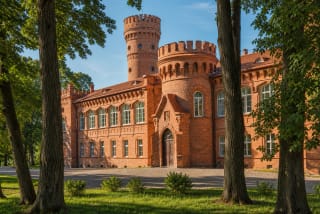
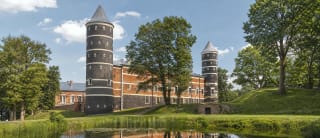
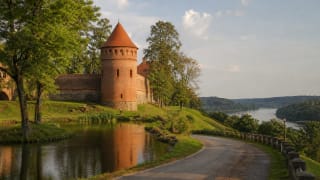
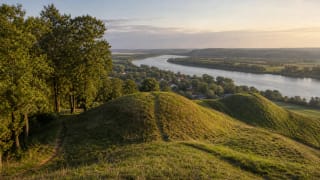
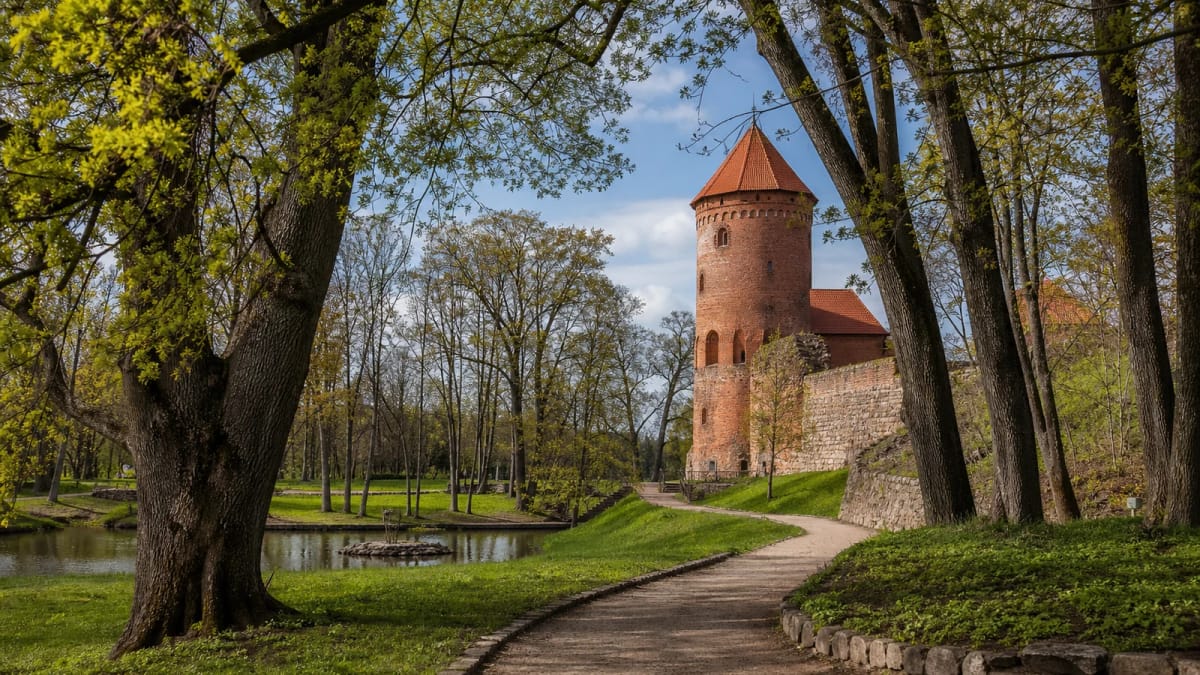
Raudonė Castle Park is a Panemunė-road experience in its own right. Even if the castle interior or tower is closed that day, the park reveals the scale of the ensemble: the red-brick castle, ponds, alleys, old trees, mill, and the slope of the Nemunas valley. VLE states that the castle is surrounded by a park laid out in the sixteenth to eighteenth centuries, and that the ensemble was encircled by a 25 ha mixed-plan park, one of the most mature manor green spaces on the right bank of the Nemunas.
Saugoma.lt describes Raudonė Castle and Park as an ensemble with ponds, alleys, impressive oaks, and a mill. The park is therefore not just a green frame around the building: it shapes how the castle is seen and how visitors move through the place. Its age should be read together with the castle's history: VLE states that the residence was built in the late sixteenth century by Krišpinas Kiršenšteinas, who received Raudonė Manor from Grand Duke Sigismund Augustus, and later owners included the Olendskis, P. Zubov, and other families.
The Raudonė Nature Trail
Saugoma.lt states that the Raudonė Nature Trail runs through the castle park. Along the trail you can see the castle, the red-brick mill, and protected trees: Raudonė Lime, Gediminaitis Oak, and Raudonė Black Poplar. The trail is a good way not to remain only by the castle facade; it leads into places that speak about the everyday manor landscape, with water bodies, alleys, memory squares, and natural monuments.
Several named points give the walk its structure. The Saugoma.lt description mentions Šauliai Square, where riflemen gathered in the interwar period, Friendship and Love Hills, and a hornbeam alley leading toward Beždžionkalnis. These names show that the park was long not only a manor display space but also a community landscape, best read slowly and with stops.
Protected Trees
Old protected trees form the park's core. Saugoma.lt singles out three: Raudonė Lime, Gediminaitis Oak, and Raudonė Black Poplar; VLE also stresses the park's impressive oaks. These trees matter not only as botanical curiosities but as living witnesses to the age of the green space, laid out in the sixteenth to eighteenth centuries.
The ground around old trees is a sensitive part of park heritage. Roots, ground cover, and trunks are easily damaged, so keep to paths, avoid trampling root zones, and do not disturb the soil. The name Gediminaitis Oak recalls Lithuania's Gediminid dynasty, so the trees also act as memory signs linking nature with the history of the Nemunas region.
Beždžionkalnis and Park Stories
Raudonė Park also has a legendary layer. The Saugoma.lt description tells that one castle owner had a much-loved monkey and, after it died, raised a small mound over its grave; this is how Beždžionkalnis, or Monkey Hill, appeared. Such stories are best understood as a layer of park memory: they are not the same as documented castle-construction history, but they help the park feel like a place where manor, community memory, and local storytelling meet.
Together with Beždžionkalnis, Friendship and Love Hills, and Šauliai Square, these points create a sequence for the walk. The park becomes not one view but a set of named places. Keep the documented castle history, including construction in the late sixteenth century and Neo-Gothic features after the 1856-1877 reconstruction, separate from these park legends.
Tower Panorama above the Nemunas Valley
The park's composition is clearest from the castle tower. VLE states that the tower in the middle of the southern wing is 33.5 m high and visible within a radius of 10-15 km, and that a viewing platform has been installed in the great tower. Saugoma.lt stresses that Raudonė Castle's adapted tower offers visitors views of the surroundings, especially the Nemunas valley.
The tower shows why the park and castle stand here: the high right-bank slope, river valley, and Panemunė road form one composition. VLE also notes that the Nazis blew up the tower in 1944 and that it was rebuilt in 1968, so today's viewpoint is the result of post-war restoration. Check the tower schedule before travelling, because access can change.
How to Visit Raudonė Castle Park
Raudonė Castle Park usually needs 45-90 minutes if you follow the trail and stop briefly by the trees, ponds, mill, and tower. If you visit the tower, a castle exhibition, or an event, plan more time. The park is the most reliable part of the route on days when the castle interiors are closed.
After rain, paths and slopes can be slippery. Keep to marked paths, do not damage slopes, and respect the surroundings of old trees. Raudonė Park combines well with Raudonė Castle, Panemunė Castle, Belvederis Manor, Veliuona Hillforts, and the wider Panemunė Castles Route, so the right-bank line of castles and parks can be read as one landscape.