- Place
- Belvederis, Jurbarkas District Municipality
- Region
- Panemunių Regional Park
- Type
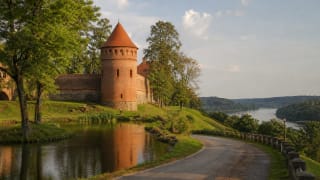
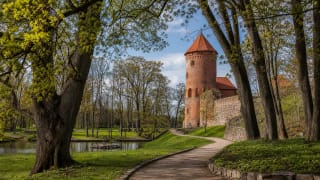
- manor estate with a viewing turret and park
- Coordinates
- 55.08000, 23.39000
Belvederis Manor and Park, Belvederis Manor Estate
Belvederis Manor on the Nemunas Slope
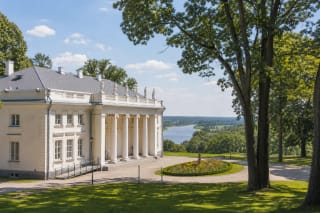
Belvederis Manor stands in Belvederis village, Seredžius eldership, on the right bank of the Nemunas, about 1 km west of Seredžius. VLE describes it as a mid-nineteenth-century Romantic manor estate consisting of a palace, granary, chapel-mausoleum, and park. It is one of the quieter but most interesting Panemunė-road stops, inside Panemunių Regional Park, which Saugoma.lt says was established in 1992 to protect the landscape of the lower Nemunas valley with its slope-erosion complexes.
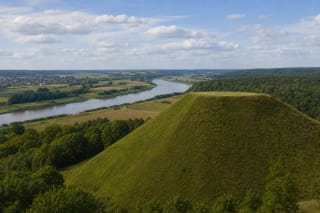
The name is not accidental: belvedere in Italian means a beautiful view, and the manor was built on a high river slope overlooking the Nemunas valley. VLE notes that stairs once rose from the road along the Nemunas toward the palace, with 372 steps. That detail alone shows that the view and theatrical approach were central ideas of the estate rather than incidental additions.
Kletas Burba, the Tiškevičiai, and the Tuscan Villa Idea
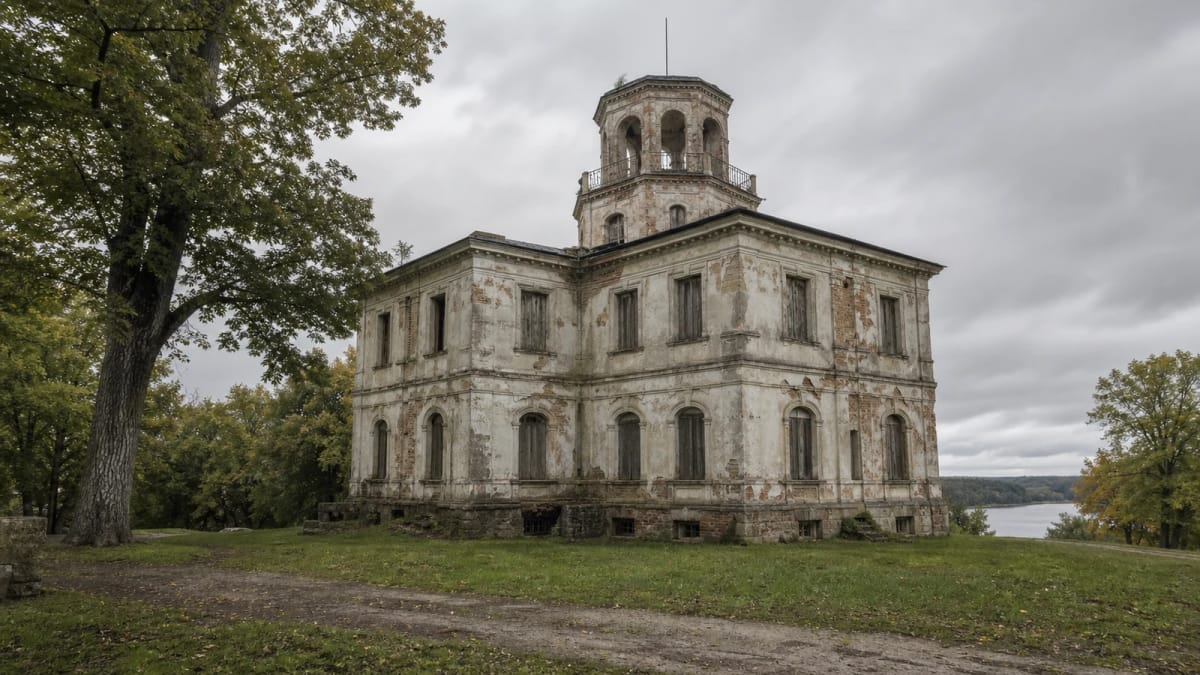
VLE states that K. Burba bought the estate from the Tiškevičiai around 1820 and, after building the palace with a turret, named it Belvederis; the palace was repaired in 1880. Saugoma.lt adds that around 1830 Kletas Burba, Marshal of the Panevėžys nobility, built a luxurious two-storey palace with a viewing turret on the Nemunas slope. The manor is therefore closely tied to the Burba family, which held Belvederis until the early twentieth century; VLE later mentions descendants of O. Burbaitė-Puzinienė.
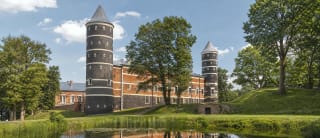
VLE stresses that the palace masterfully interprets the Tuscan-villa style: it is asymmetrical and uses restrained Neo-Renaissance forms. Saugoma.lt adds that the architect is thought to have been the Italian Piero de Rossi and that the palace was built after Italian villa models. The authorship should be worded cautiously because the source says 'thought to be', but the Italian-villa and viewing-turret idea clearly explains why Belvederis differs from the more massive castles of the Panemunė road.
Granary, Chapel-Mausoleum, and 7 ha Park
Belvederis should be read as an ensemble, not a single facade. VLE states that the granary with an entrance arch and wooden balcony, and the chapel-mausoleum facades, combine pointed-arch windows with Classicist pilasters and string courses. This Romantic-era mixture links Gothic hints with Classicist order. The chapel-mausoleum belongs to Burba family memory, adding a funerary and commemorative layer to the estate.
VLE gives the park area as about 7 ha and describes it as lying on undulating terrain, with winding paths planted with native and introduced trees. This combination of park and slope creates a contemplative tone: building, hillside, trees, family chapel, and Nemunas panorama work together, making Belvederis a place for a slow walk rather than a loud tourist attraction.
Agricultural Schools and Decline
In the twentieth century the Belvederis palace long served as a school building. VLE states that a lower agricultural school operated there in 1921-1926, a dairy and animal-husbandry school in 1926-1961, an agricultural technical school in 1961-1969, and a beekeeping and horticulture masters' school until 1971. This educational cycle explains why the buildings survived but were adapted away from residential life.
After 1971 the manor lost a permanent function and began to decay. It was later privatised, but the planned palace renovation did not begin, so Belvederis is often mentioned among Lithuania's neglected manors. For visitors this means that interiors may be inaccessible or unsafe; today's value lies in the ensemble, park, and landscape, not in interior visits.
How to Visit Belvederis Manor
Plan Belvederis as an exterior and landscape stop. A short visit to the palace, granary, chapel, and park takes 30-60 minutes. If the buildings are not officially open to visitors, do not try to enter: view the ensemble from safe, public places and respect heritage boundaries. Do not go into abandoned, fenced, or unsafe spaces.
Belvederis combines well with Panemunė Castle, Raudonė Castle, Veliuona, and Seredžius. It works best as a quieter stop between larger landmarks. Travel in daylight so you can see not only the building but also the slope, park, and river landscape; that setting explains both the name and the estate's whole idea. Access and condition can change, so check current information before a dedicated trip.