- Place
- Vilnius City Municipality
- Region
- Vilnius
- Type
- institutional museum of Lithuanian customs history and work
- Address
- Jeruzalės g. 25, Vilnius
- Coordinates
- 54.74506, 25.27914
- Visit duration
- 60-90 minutes according to the pre-arranged programme
- Best time
- on a weekday only after museum confirmation; arriving spontaneously does not guarantee entry
Muitinės muziejus, Customs Museum Vilnius
From the Grand Duchy to the present
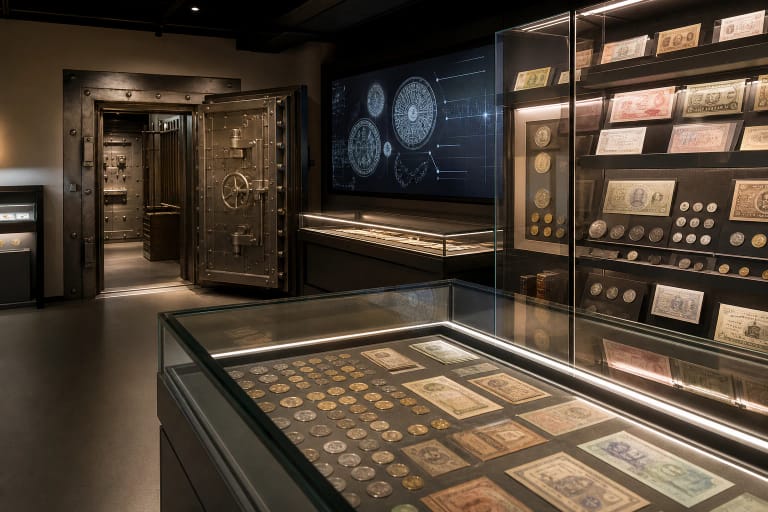
The Customs Museum was established in 1994, soon after the restoration of Lithuanian Customs. Its holdings exceed 7,000 objects, about 3,000 of which are used in permanent displays. A major renewal in 2007-2008 placed greater emphasis on interactive learning.
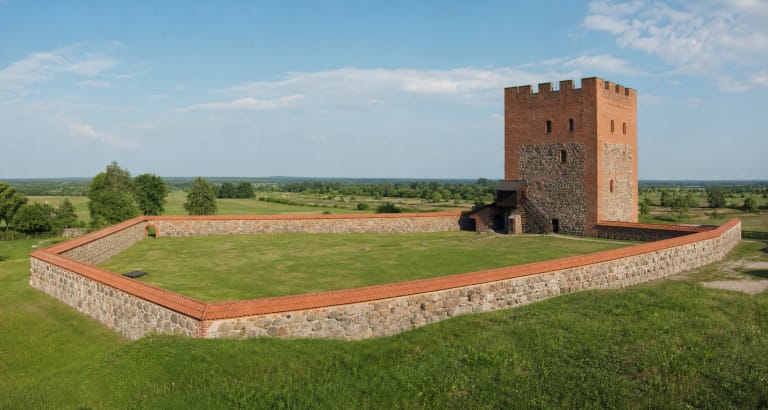
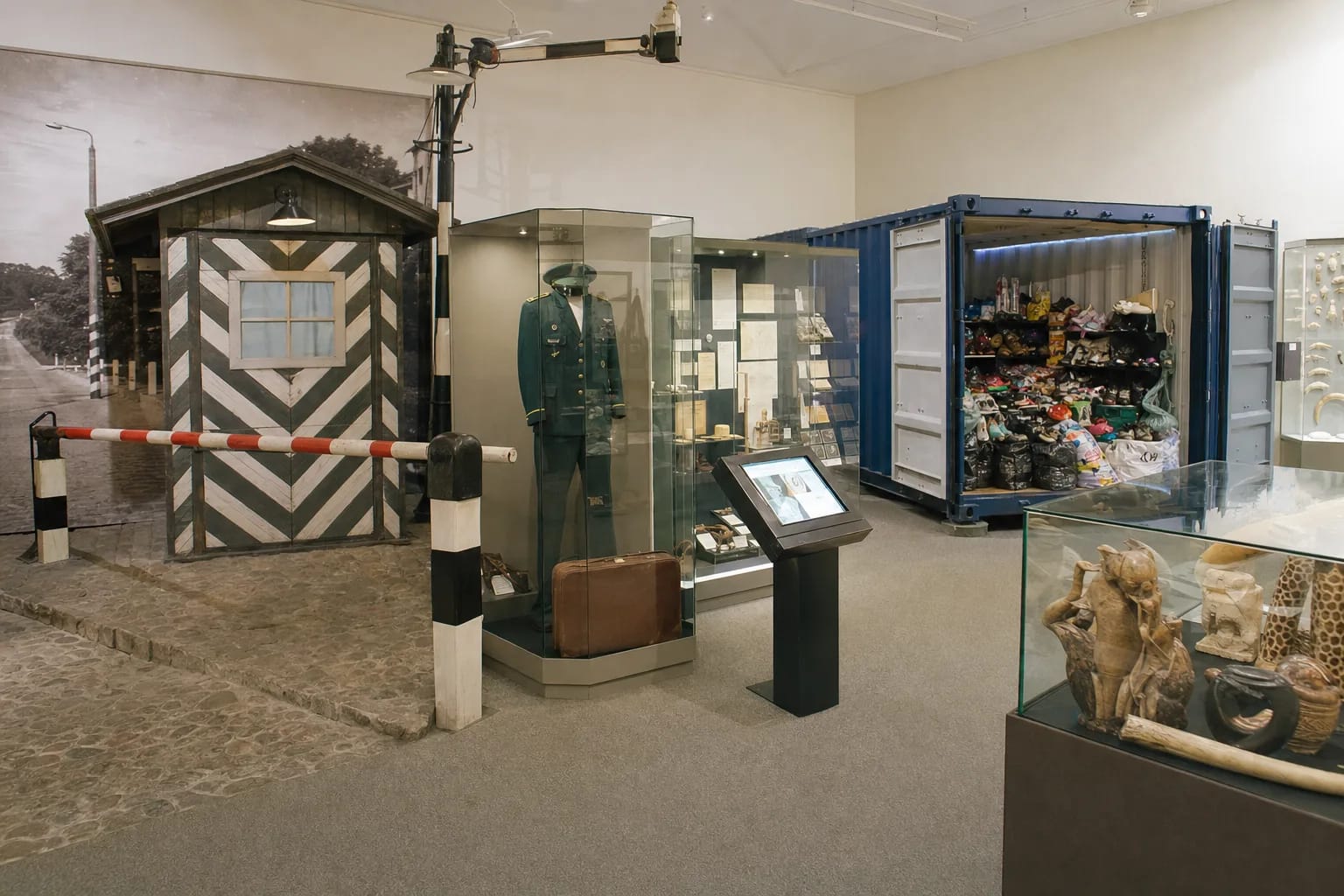
The first of four exhibitions traces customs from the Grand Duchy and Russian Empire to the state restored in 1918. Documents, photographs, and postcards are joined by authentic border posts from Imperial Russia and Prussia, giving physical scale to the abstract history of border administration.
The price of restoring customs and Medininkai memory
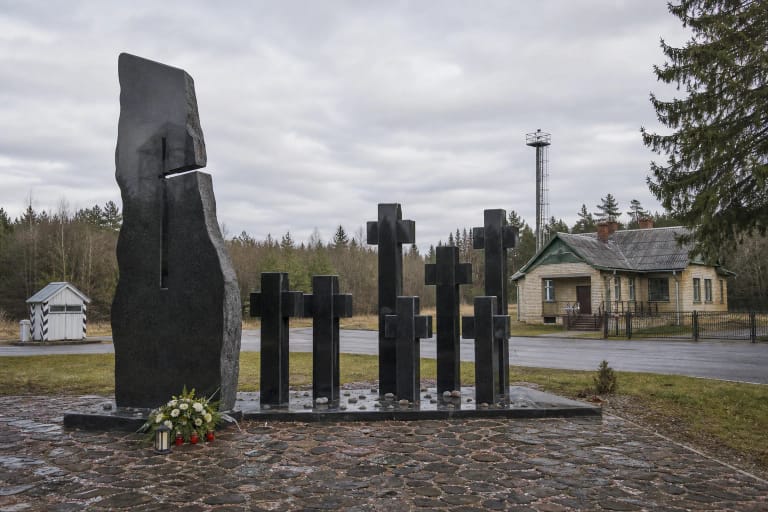
The late twentieth-century section explains the restoration of Lithuanian Customs in 1990 and officials' work under pressure and violence. It commemorates the seven young-state officers murdered at the Medininkai post on 31 July 1991 and the sole survivor, Tomas Šernas.
Personal objects carried that night, photographs, and family testimony are preserved here. Combine this with the Medininkai memorial, but remember that they are separate: the museum is in Vilnius, while the authentic post trailer stands near Medininkai.
What customs seizes and why it matters
A maritime container displays seized counterfeits and goods infringing intellectual-property rights. Another section addresses the CITES convention through objects made from threatened animals and plants, including ivory and reptile skin. They are evidence of harmful illegal trade, not a cabinet of exotic curiosities.
Customs Laboratory samples reveal less visible work. Different diesel fuels, buckwheat, maize residue, and textiles help identify a commodity code that determines tariffs. Certain objects may and should be touched, while searches, touch screens, and motion-triggered sound are especially effective for school groups.
Free, but only by prior arrangement
Museum visits, tours, and educational programmes are free, but visitor groups are accepted only by advance arrangement. This is not a museum you can reliably enter whenever office doors are open. Register by the official email or phone and wait for confirmation.
On 2026-07-21, LIMIS and Customs listed Monday-Thursday 8:00-17:00 and Friday 8:00-15:45, with weekends closed. These are potential times for arranged visits, not a promise of walk-in admission. The museum is at Jeruzalės g. 25, away from the centre, so travel only with a reservation.