- Place
- Vilnius City Municipality
- Region
- Vilnius
- Type
- museum of money and banking history
- Address
- Totorių g. 2/8, Vilnius
- Coordinates
- 54.68680, 25.28050
Bank of Lithuania Money Museum
A Bank of Lithuania museum in the city centre
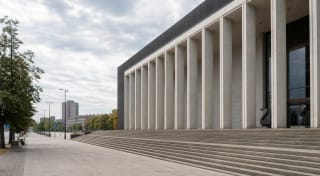
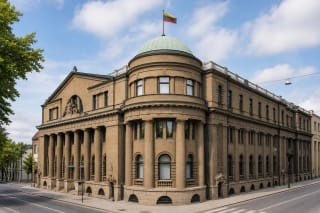
The Money Museum operates on Totorių Street, close to Gediminas Avenue and the Bank of Lithuania area. It is small but information-dense: money is presented not just as a display of coins, but as the history of the state, trade, trust, and technology.
The museum's origins are linked with the State Bank History Museum, founded in 1985. It was officially registered in 1986 with 489 core exhibits, and from 1997 the historian Vidmantas Laurinavičius developed the museum further. The renewed museum opened to visitors on June 25, 1999.
Five halls across two floors
The modern exhibition opened on December 21, 2010. The official museum states that it is arranged across two floors, in about 300 sq. m, and five halls.
The halls lead from the origins of money and barter to coins, banknotes, Lithuanian money, banking, and modern finance. It is worth visiting slowly: the museum has many small exhibits, screens, and comparisons that are easy to miss if you rush.
Numismatics and the vault story
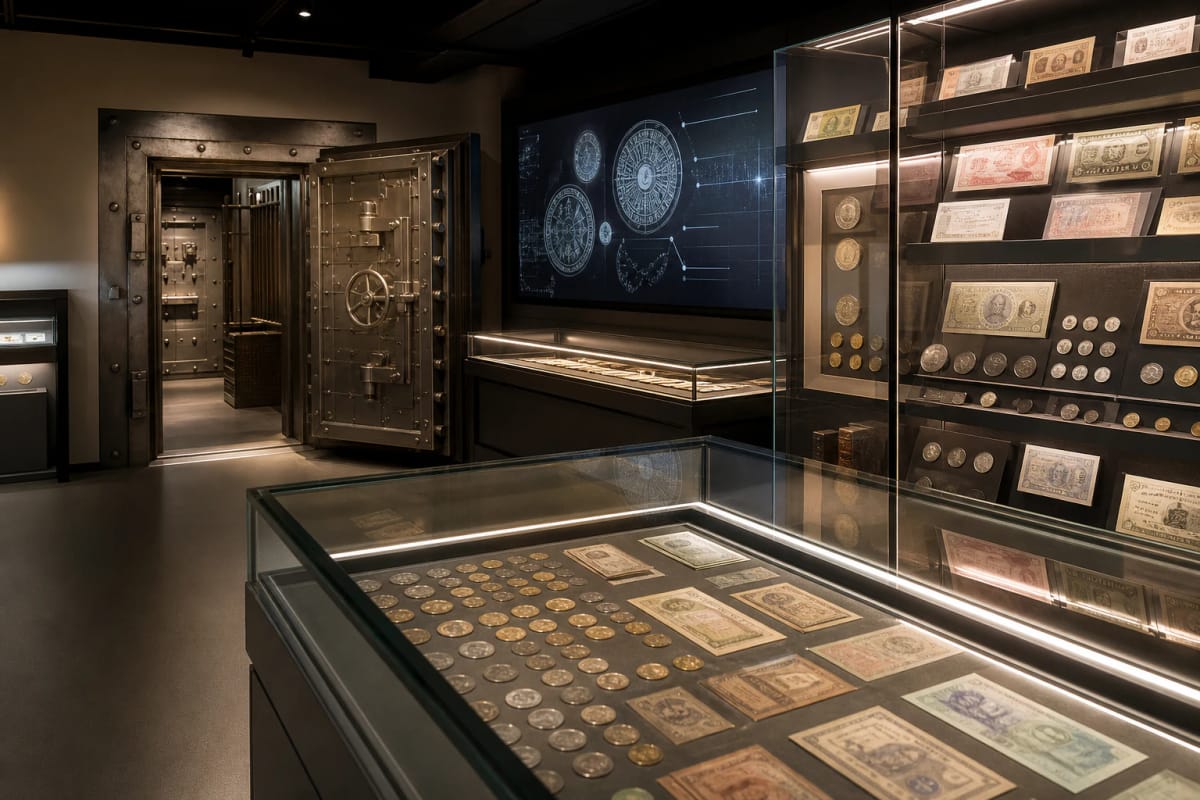
The museum collections include almost 63,000 exhibits, more than half of them numismatic. Coins, banknotes, medals, documents, and other objects show how the form of money and its political meaning changed over time.
The building's own story matters too. The storage of collections is connected with a former Bank of Lithuania vault, including the story of nineteenth-century safe doors by the S. J. Arnheim company. Details like this make money history feel physical, not only something seen behind glass.
What to notice during a visit
The Money Museum is not only for collectors. Children and first-time visitors usually respond to the interactive displays, while adults can follow the links between Lithuanian money, the litas, the bank, and the history of statehood.
If time is short, start with the Lithuanian money section, the numismatic showcases, and the banking hall. Groups should consider registering for an education session or guided tour, because a guide helps sort the most important layers quickly.
Hours and cost
At the time of review, the official Money Museum page listed the usual schedule as Tuesday-Friday 9:00-18:00 and Saturday 10:00-17:00, while the summer schedule from July 1 to September 30 shifted later.
The official registration information stated that guided tours and education sessions were free. Because the schedule is seasonal, check the official Money Museum website before travelling.