- Place
- Kėdainiai, Kėdainiai District Municipality
- Region
- Aukštaitija
- Type
- Ottoman-style brick minaret in a manor park
- Address
- S. Dariaus ir S. Girėno g. 5, Kėdainiai
- Coordinates
- 55.30810, 23.97640
Manor Park Minaret
Kėdainiai Minaret: an eastern tower in a manor park
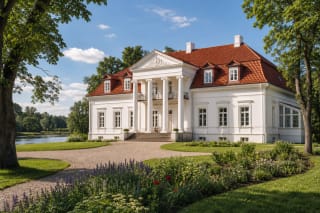
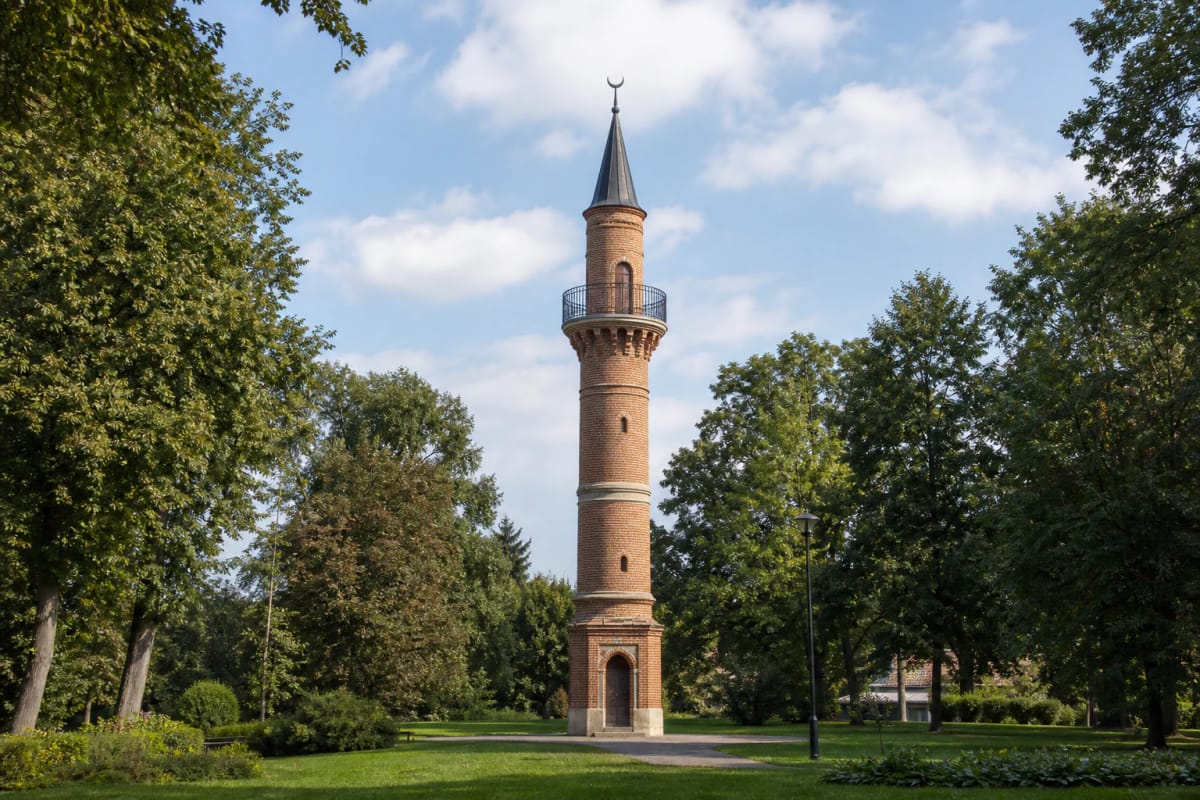
The Kėdainiai Minaret stands in the former Kėdainiai Manor park, now a city park. It is an unexpected sight in central Lithuania: an eastern, Ottoman-style brick tower crowned with a crescent. Its unusual form makes it one of the city's most memorable landmarks.
It is important to know that this is not a religious building. The minaret was never used for worship; it was built as a manor-park ornament and viewing tower. It is best understood as a work of Romantic-era park architecture.
Why there is a minaret in Kėdainiai
In the nineteenth century the manor was owned by Count Eduard Totleben, a general in the army of Tsarist Russia. Around 1880 he built three eastern-style structures in the park, an iwan, a mosque, and the minaret, to commemorate the wars with Turkey, especially the 1877-1878 Russo-Turkish War, and to decorate the park. Only the minaret survives today.
A legend also connects the minaret with a similar tower said to have stood by a mosque in Pleven, where Totleben fought. The general was the patron of construction, not the architect, so the tower's authorship should be linked to his initiative rather than to design work by him.
Architecture and inscriptions
The minaret is brick-built and plastered. Sources give different heights, about 25-28 m. The tapering Ottoman-style shaft has one balcony, reached by an internal spiral stair, and the top is crowned with a decorative finial and Islamic crescent.
Arabic inscriptions appear on the facade and are regarded as quotations from the Quran; historically there were also two marble plaques with Arabic writing. The minaret belongs to the state-protected Kėdainiai Manor Estate complex.
Lithuania's only freestanding minaret
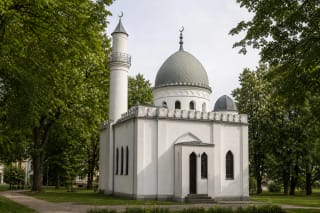
Lithuania has only two minarets: the Kėdainiai Minaret and the one at the Kaunas Mosque. Kėdainiai is the only minaret in the country standing separately, without a mosque, which is what makes it exceptional. The Kaunas minaret belongs to an active Tatar mosque and was built in the interwar period.
Because of this rare form, the Kėdainiai Minaret has become an important city symbol and a popular visitor stop. It recalls both manor history and the wider nineteenth-century fascination with eastern architecture.
How to visit the Kėdainiai Minaret
The minaret is easy to combine with Kėdainiai Old Town and the city park in which it stands. The tower itself usually takes 20-40 minutes to see, while a longer walk through the park, with its ponds and old stones, is worth extra time.
After restoration the minaret was adapted for visits and climbing, but opening times and access conditions may change and may be seasonal. For exact information, check the official Kėdainiai tourism centre page before relying on access to the interior.