
Lithuanian city guides
Kaunas
Kaunas is Lithuania's second-largest city at the confluence of the Nemunas and Neris rivers, the interwar temporary capital, and home to Modernist architecture inscribed on the UNESCO World Heritage List in 2023.
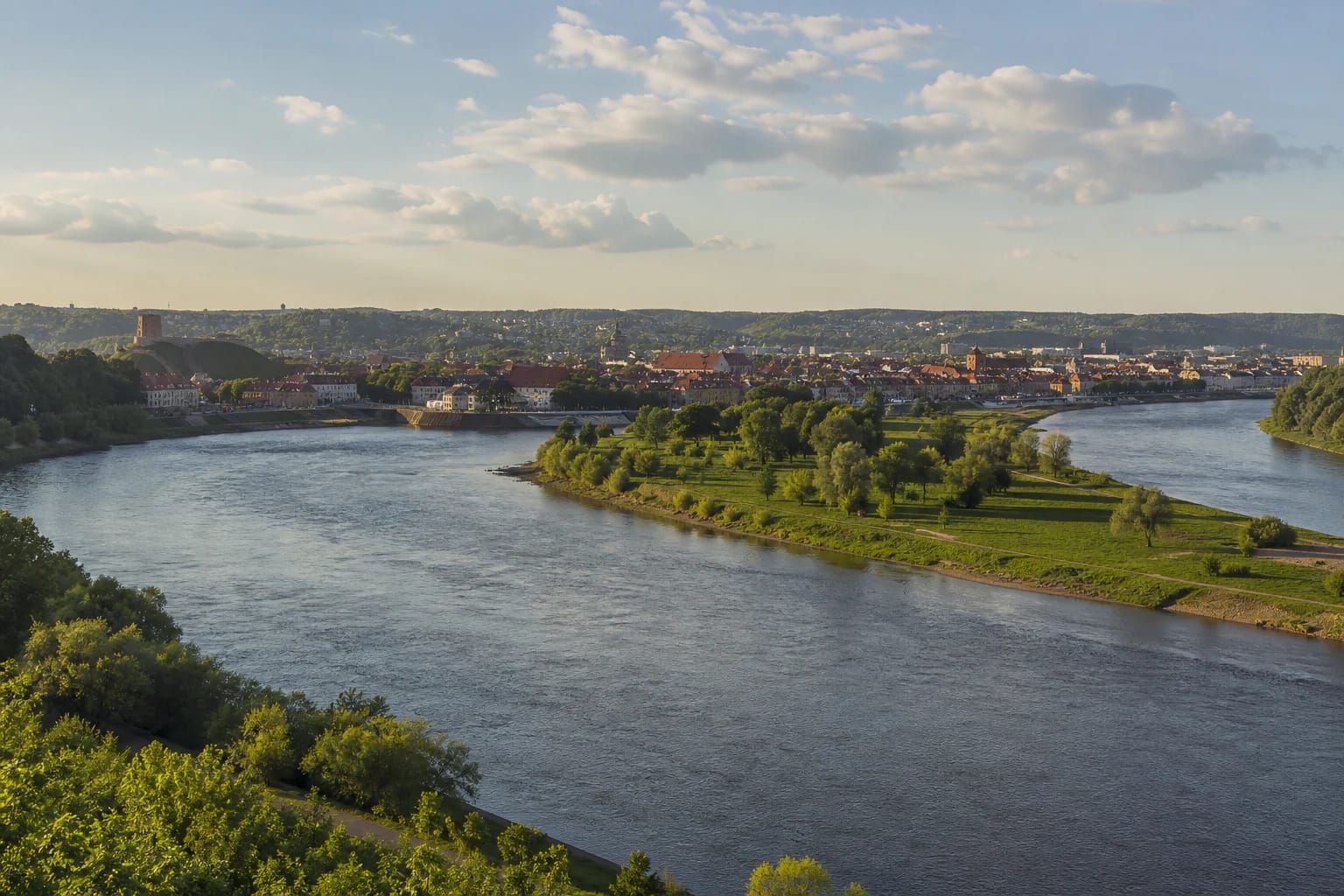
Kaunas
Where to start
Choose a place, compare visiting times or explore the area on the map.
Key places to visit in Kaunas:
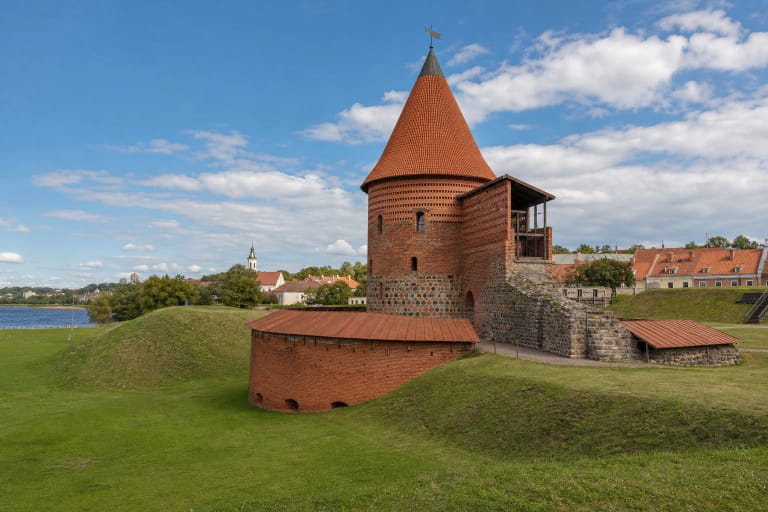
Kaunas Castle
Kaunas Castle at the Nemunas and Neris confluence is one of Lithuania's oldest brick castles and the clearest sign of medieval Kaunas' defensive role.
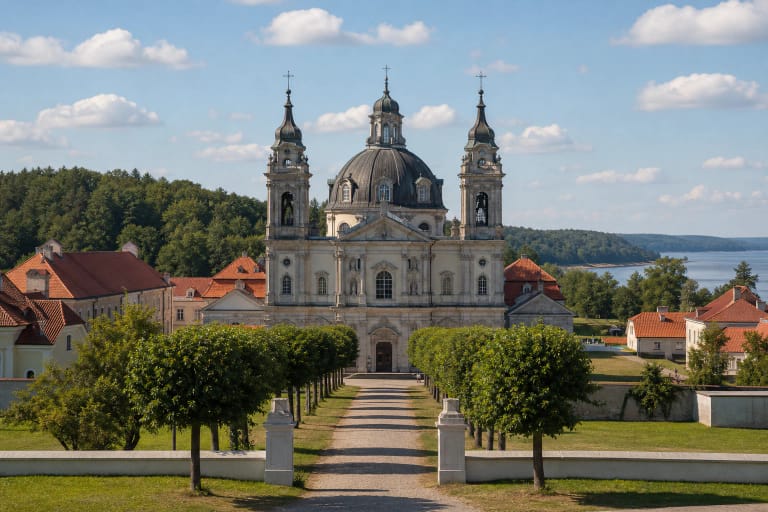
Pažaislis Monastery
Pažaislis Monastery by the Kaunas Reservoir is Lithuania's most important Baroque ensemble, linked with the Pac family, Camaldolese monks, Italian…
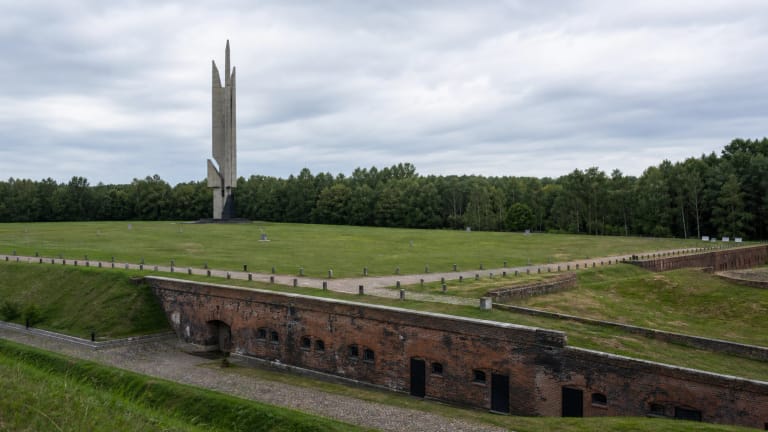
Kaunas Ninth Fort
Kaunas Ninth Fort is part of Kaunas Fortress, later turned into a prison, NKVD transfer point, and Nazi mass-murder site.
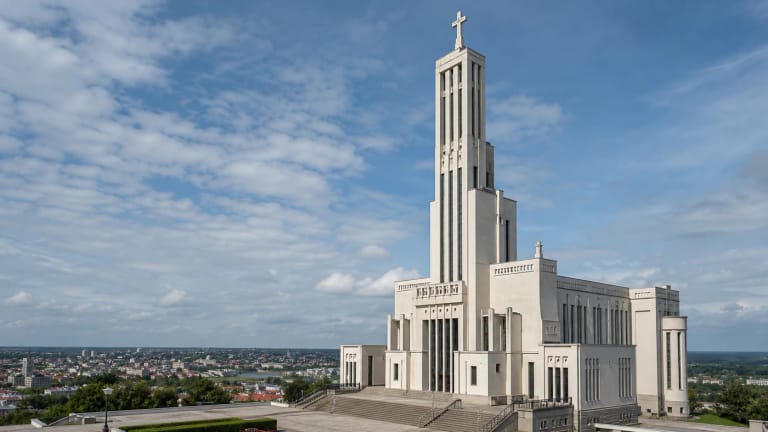
Christ's Resurrection Basilica
Christ's Resurrection Basilica in Žaliakalnis is a symbol of Kaunas Modernism and statehood: an interwar independence monument idea, Soviet…
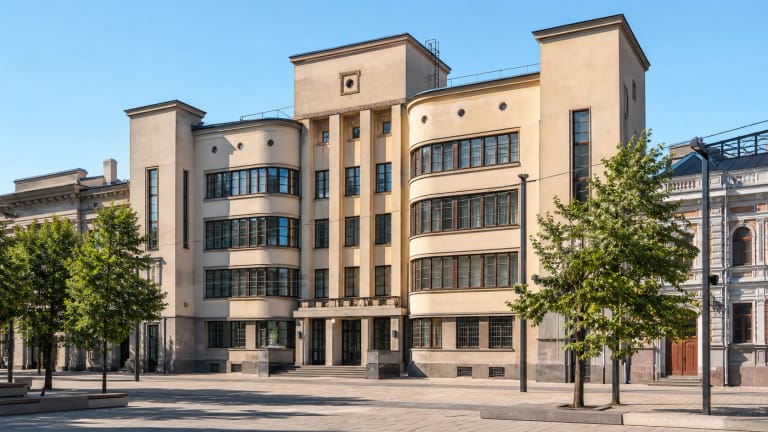
Former Kaunas Central Post Office
The former Kaunas Central Post Office on Laisvės aleja is one of the key buildings of interwar Kaunas modernism.
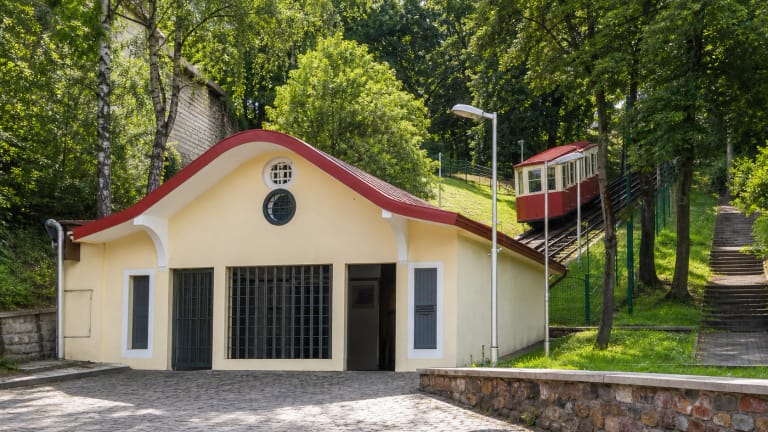
Žaliakalnis Funicular
Žaliakalnis Funicular is a Kaunas technical heritage object operating since 1931, connecting V. Putvinskio Street with Žaliakalnis.
All places in this guide
Places on the mapKaunas Castle1-1.5 hoursPažaislis Monastery1-2 hours, longer with a guided tour or concertKaunas Ninth Fort1.5-3 hoursChrist's Resurrection Basilica45-90 minutes, longer with the terrace or a guided tourFormer Kaunas Central Post Office20-45 minutes for the exterior; longer during a tour or eventŽaliakalnis Funicular15-40 minutes; longer when combined with Žaliakalnis and the Resurrection BasilicaLithuanian Officers' Club in Kaunas20-40 minutes for the exterior; 1-2 hours during an event or arranged visitAleksotas Funicular20-45 minutes; longer with the Aleksotas viewpointNational M. K. Čiurlionis Museum of Art1.5-3 hours; longer with temporary exhibitions and virtual-reality experiencesVytautas the Great War Museum1.5-3 hours; longer with the tower, education, or the military-technology exhibition at another addressRomuva Cinema in Kaunas10-20 minutes for the exterior; 1.5-3 hours with a film screening or eventPienocentras Palace10-25 minutes for the exterior; interior is usually not a tourist siteBank of Lithuania Palace in Kaunas15-30 minutes for the exterior; about 1 hour on an official tourResearch Laboratory in Kaunas15-30 minutes for the exteriorPažanga Palace10-20 minutes for the exterior; interior only if access is arranged in advanceLand Bank Palace in Kaunas10-20 minutes for the exteriorChamber of Commerce, Industry and Crafts Palace15-25 minutes for the exterior; longer only with reliable interior accessKaunas County Municipality Palace10-20 minutes for the exterior and memorial plaqueState Savings Bank Palace in Kaunas10-25 minutes for the exterior; the interior is administrative, not a permanent tourist exhibitionPhysical Education Palace in Kaunas10-25 minutes for the exterior; interior depends on active university useFirefighters' Palace in Kaunas10-20 minutes for the exterior; the building is still an active fire stationKaunas Sports Hall10-20 minutes for the exterior; the interior is most reliably visited during events or hired activitiesLabour Palace in Kaunas15-30 minutes for the exterior; interior is most reliably seen during events, exhibitions, or arranged activitiesKaunas State Philharmonic15-25 minutes for the exterior; 1-2 hours or more when attending a concertKaunas Evangelical Reformed Church10-20 minutes for the exterior; interior is most reliably visited during services or parish eventsJewish Bank in Kaunas10-15 minutes for the site and context; 1-2 hours or more if visiting the zoological museumKaunas City Sickness Fund Palace10-15 minutes for architecture from the street; this is an active medical institution, not a museum visitKaunas Tatar Mosque10-20 minutes for the exterior and Ramybes Park context; interior only during prayer times or by arrangementNeo-Lithuania Student Corporation Palace in Kaunas15-25 minutes for the exterior and Parodos Hill context; interior only during events or by arrangementMaironis Lithuanian Literature Museum1-2 hours; 2-3 hours with a tour, cellars, garden, and temporary exhibitionsKaunas State Musical Theatre10-20 minutes for the exterior and City Garden; 2-3 hours with a performanceHigher Technical School in Kaunas10-20 minutes for the exterior from Tvirtoves aleja; interior only during institutional events or by arrangementHistorical Presidential Palace in Kaunas1-1.5 hours; longer with a guided tour and temporary exhibitionsSugihara House in Kaunas45-90 minutes; longer with the documentary film or an educational programmeKaunas Choral Synagogue15-30 minutes for the exterior; longer only by arranged visit or during an eventSt. Michael the Archangel (Garrison) Church in Kaunas20-45 minutes for the exterior and square; longer during services, events, or when the interior is openAteitininkai Union Palace in Kaunas10-20 minutes for the exterior; longer as part of a Laisvės aleja modernism routeVytautas Magnus University Medical Faculty Palace15-25 minutes for the exterior; longer only with an arranged university or event visitKaunas Clinics Complex20-35 minutes for the historic part of the complex from the outsideHouse of Perkūnas in Kaunas15-25 minutes for the exterior; longer only with an arranged exhibition or tourTadas Ivanauskas Zoological Museum in Kaunas1-2 hours for exhibitions; longer with an education programme or tourLithuanian Aviation Museum1-2 hours; longer with education or the Flight Discovery CentreDevils' Museum in Kaunas45 minutes-1.5 hoursKaunas Picture Gallery1-2 hours; longer with a temporary exhibition or eventLithuanian Education Museum1-1.5 hours; longer with an educational programmeVDU Botanical Garden in Kaunas1-2.5 hours; longer during flowering periods or with the conservatoryJiesia Landscape Reserve and Napoleon Hill45 minutes-1.5 hoursKaunas Fortress Seventh Fort1-2 hours; longer with a tour or eventKaunas Fortress Sixth Fort1-1.5 hours; longer with a guide or eventKaunas Fortress First Fort45 minutes-1 hour; only for safely accessible parts of the territoryScience Island in Kaunas1.5-3 hours; longer with children or an education programmeArt Deco Museum in Kaunas1-1.5 hours; usually with a reserved guided experienceAtomic Bunker in Kaunas1-1.5 hours; depends on the tour formatVersva Landscape Reserve30-90 minutes depending on the chosen section of the valleyKaunas Town Hall45-90 minutes; longer for exhibitions or eventsKaunas Archcathedral Basilica30-75 minutes; longer if attending services or a guided routeSt. George the Martyr Church and Bernardine Monastery in Kaunas30-75 minutes; longer if combined with the castle and SantakaVytautas the Great Church in Kaunas20-40 minutesSt. Gertrude Church in Kaunas20-30 minutesSt. Francis Xavier (Jesuit) Church in Kaunas30-60 minutesMykolas Žilinskas Art Gallery1-1.5 hours when operating; currently closed for reconstructionNational Kaunas Drama Theatre1.5-3 hours for a performance; 10-15 minutes for the facadeĄžuolynas Park1-2 hours for the main paths; 2.5-3 hours including Adam Mickiewicz and Song valleys and the sports-complex surroundingsKaunas Fortress IV Fort1.5-2 hours for a guided tour; about 45-60 minutes for only the permitted surface route and memorialFolk Music Museum in Kaunas45-60 minutes for a booked educational session; independent exhibition visits are currently unavailableHoly Trinity Seminary Church in Kaunas25-45 minutes for the church and exterior, if the interior is openKaukas Stairs30-60 minutes; about 1.5 hours when combined with a Žaliakalnis modernist architecture walkNemunas Island in Kaunas1-2 hours; 3-4 hours with Science Island, the pool, or an eventKaunas Fortress Fifth Fort1.5-2 hours with a guide; less only for permitted above-ground parts of the fortŽalgiris Arena2-4 hours depending on the event; a tour takes 45-60 minutes; arrive 1-2 hours before a major eventNemunas and Neris Confluence Park1-2 hours for the confluence point, paths, and park features; 2-3 hours when combined with Kaunas Castle or the Old TownKalniečiai Park1-2 hours for a circuit of the pond and a rest; 2-3 hours when using the play or sports areasKartlandas Kaunas45-90 minutes for one session including registration, briefing, and waiting; 1.5-3 hours for several sessions or a groupDraugystė Park in Kaunas1-2 hours for a walk and the fountain area; 2-3 hours when using sports or children's spacesPanemunė Pinewood1-2 hours for one loop; 2.5-3 hours for a longer route including the Nemunas riverbankDainava Park in Kaunas45 minutes to 1.5 hours for a pond circuit and the sculptures; 2-3 hours with children's, sports, or community activitiesMarvelė Cascades45-90 minutes for the cascades, bridge, and landscaped valley; allow longer only if making a separate visit to Fort ISantarvė Park in Kaunas30-60 minutes for a short walk; 1-2 hours with the playground, exercise equipment, or summer reading roomYard Gallery (Kiemo galerija), Kaunas25-45 minutes, longer if you read the artwork stories and QR materialLaisvės Alėja in Kaunas25-35 minutes to walk the pedestrian section without stops; 1.5-3 hours with the fountain, facades, monuments, and one museum or theatreUNO Park Kaunas2-3 hours; regular courses allow two hours and the 2026 extreme ticket up to 2.5 hoursVienybės Square in Kaunas20-45 minutes; 1-2 hours with the War Museum and Laisvės AvenueKaunas Museum for the Blindabout 45-90 minutes, depending on the booked tourKaunas Fortress Third Fort45-90 minutes; longer on a tour or during an eventLithuanian Sports Museum45-90 minutesLithuanian Basketball House60-90 minutes; about 2.5 hours with the combined programmeMuseum of Lithuanian Medicine and Pharmacy History45-75 minutes; guided tours last 45-60 minutesMikas and Kipras Petrauskas House60-90 minutesKaunas City Chamber Theatre1.5-2.5 hours, depending on the performanceKaunas State Puppet Theatre1-2 hours, depending on the performanceKaunas Artists' House30-90 minutes; allow the duration stated for an eventSalomėja Nėris and Bernardas Bučas House Museum60-90 minutesBalys and Vanda Sruoga House Museum60-90 minutesKaunas Holy Spirit (Šilainiai I) Church30-60 minutes; longer if you combine it with the Milikonių Hill viewpointKaunas Photography Gallery30-60 minutes; longer for an event or photobook browsingChildren's Literature Museum1-1.5 hours; longer with an educational sessionJuozas Zikaras House Museum45-75 minutesJuozas Tumas-Vaižgantas Apartment Museum45-60 minutes; longer with a guided visitJuozas Gruodis House45-75 minutes; longer for an educational session or garden eventMilikoniai Hill Viewpoint20-45 minutesKaunas Church of St Nicholas30-50 minutes if the church is openKaunas Evangelical Lutheran Church of the Holy Trinity25-45 minutes if the church is openSacred Heart of Jesus Church in Šančiai30-50 minutes, coordinated with church openingAdelė and Paulius Galaunė House Museum60-90 minutes; longer for an exhibition or tourLiudas Truikys and Marijona Rakauskaitė House Museumclosed for renovation; allow about 60-90 minutes after reopeningCuriocity in Kaunas2-4 hours; a day ticket supports a longer outingKaunas Fortress Second Fort45-75 minutes for the exterior grounds; longer only during an organised event or tourKaunas Annunciation Orthodox Cathedral20-40 minutes; longer for a service or pre-arranged tourWakeUp Kaunas1-3 hours, depending on the cable session and services selectedAmsterdam School Museumabout 2 hours for the tour, plus up to 30 minutes to look around independentlyKaunas Holy Cross Carmelite Church20-40 minutes for the exterior, churchyard, and interior when openJuozas Grušas House-Museum45-60 minutes independently; about 1 hour with a pre-booked guided tourThe “Šančiai Times” Mural10-20 minutes; 45-75 minutes with a Nemunas riverside walk and other Šančiai sightsM. K. Čiurlionio Bridge20-40 minutes to cross the bridge and take in the Nemunas valley; longer with a Freda or Aleksotas routeTrijų mergelių Bridge30-60 minutes to cross and read the valley; longer if you continue along Panemunė Pinewood pathsSimonas Daukantas Pedestrian Bridge10-20 minutes to view it from the city side; crossing is currently impossible because of repairsVytautas the Great Monument15-30 minutes for the monument and square; longer if you continue along Laisvės AvenueSteponas Darius and Stasys Girėnas Monument20-40 minutes for the monument; longer with an Ąžuolynas and sports-complex routeVytautas the Great Bridge20-45 minutes to view the bridge from the riverbank and cross itFreedom Warrior (Vytis) Sculpture20-40 minutes for the sculpture, Santaka Park paths, and the Kaunas Castle surroundingsMeno Parkas Gallery45-90 minutes for one exhibition; longer for an opening, talk, or educational eventWe Died for the Motherland Monument20-40 minutesKaunas Church of St Anthony of Padua20-40 minutes for the exterior and a quiet interior visit; longer during Mass or a parish eventVieškūnai Hillfort45-90 minutes; longer if combined with a walk along the Kaunas Reservoir shoreLampėdžio Lake1-3 hours for the shore; about 2-3 hours for swimming and leisure or about 8.5 km for the cycling loopKleboniškis Forest Park1-3 hours for a short walk; the full 10 km cycle path and deeper forest need more timePanemunė Beach1-3 hours, for a short rest or a beach-and-Panemunė Pinewood combinationKaunas Church of St Joseph (Vilijampolė)20-40 minutes for the exterior and a quiet visit if the church is openKaunas Small Church of the Resurrection30-60 minutes, depending on whether the church is open and services are taking placeKaunas Church of St Vincent de Paul (Petrašiūnai)20-40 minutes for the exterior and a quiet visit if the parish permits entryAukštoji Panemunė Church of the Holy Name of the Blessed Virgin Mary30-60 minutes; longer if you combine the visit with a Panemunė routeAleksotas Viewpoint20–45 minutes; longer if you wait for changing light over the panorama“Stumbras” Factory Museum2-2.5 hoursAleksotas Church of St Casimir30-60 minutes; longer if combined with the Aleksotas funicular and other south-western Kaunas sights
About this area
Kaunas is Lithuania's second-largest city, set in central Lithuania where the Nemunas and Neris rivers meet. Its identity is shaped by two especially visible periods: the medieval castle and Hanseatic trade, and the interwar years, when from 1919 to 1939 Kaunas served as Lithuania's temporary capital and grew into a modern state centre. Its architecture of optimism, built during that period, was inscribed on the UNESCO World Heritage List in 2023. For visitors, Kaunas is readable as a route: old town and river confluence, Laisvės Avenue, Žaliakalnis, and the funiculars that connect the slopes.
Kaunas identity and geography
Kaunas stands where Lithuania's two largest rivers, the Nemunas and Neris, come together. The confluence is both symbolic and strategic: the old town formed beside it, while the city expanded across hills and valleys. Žaliakalnis and Aleksotas are the most visible high-ground districts, linked to the centre by historic funiculars.
Kaunas is an important industrial, academic, and cultural centre for Aukštaitija and all Lithuania. Green edges surround the city: the Kaunas Reservoir and its regional park, river valleys, and protected landscapes. Because of the rivers and slopes, Kaunas has many viewpoints that make its geography easy to understand.
History: castle, Hanseatic trade, and the temporary capital
Kaunas appears in written sources from the fourteenth century. Kaunas Castle, one of Lithuania's oldest brick castles, guarded a key point on the Nemunas route against the Teutonic Order. In the Middle Ages, the town grew as a trading centre and had a Hanseatic office connecting it with Western European cities.
The decisive period for modern Kaunas was the interwar era. After Poland seized Vilnius, Kaunas functioned as Lithuania's temporary capital from 1919 to 1939. State institutions, the Presidency, banks, the university, and theatres worked here, and within two decades the city turned from a provincial centre into a modern capital.
Thousands of Modernist buildings were constructed in Kaunas during that period. This architecture of optimism was inscribed on the UNESCO World Heritage List in 2023. The mid-twentieth century brought occupation and the Holocaust, with Kaunas IX Fort as the city's major memory site.
Old town and the confluence
Kaunas Old Town gathers near the Nemunas and Neris confluence. Its centre is Town Hall Square, dominated by the white, high-towered Kaunas Town Hall, often called the White Swan. The square is framed by Kaunas Cathedral Basilica, the largest Gothic church in Lithuania, and the Jesuit Church of St Francis Xavier.
Near the confluence stands the Gothic Vytautas the Great Church, linked with Grand Duke Vytautas, and close by is the Gothic House of Perkūnas, one of Lithuania's oldest brick residential buildings. Finish the walk in Santaka Park, where the two rivers meet beside Kaunas Castle.
Modernism, Laisvės Avenue, and Žaliakalnis
In the New Town, Laisvės Avenue stretches for about one and a half kilometres as a linden-lined pedestrian boulevard and the axis of interwar Kaunas. Around it stand Modernist landmarks: the former Central Post Office, Pienocentras Palace, bank and ministry buildings, Romuva cinema, and other public buildings. At the end of the route, Christ's Resurrection Basilica rises above Žaliakalnis.
Žaliakalnis is a green district of interwar villas, public buildings, and slopes. The Žaliakalnis funicular has operated since 1931, while the Aleksotas funicular climbs the opposite side of the Nemunas. Both are historic transport monuments. The Modernism story is complemented by specialized museums, including the Art Deco Museum.
Museums, memory, and nature
Kaunas has one of Lithuania's strongest museum networks: the National M. K. Čiurlionis Museum of Art and Mykolas Žilinskas Gallery, Vytautas the Great War Museum with its memorial garden, Maironis Lithuanian Literature Museum, and the distinctive Devils' Museum.
Twentieth-century memory is especially visible at Kaunas IX Fort, a former fortress site that became a mass-killing place and memorial, and at Sugihara House, associated with the Japanese diplomat Chiune Sugihara, who helped save thousands of people. The wider Kaunas Fortress ring adds another layer of nineteenth- and twentieth-century history.
For landscape and architecture together, go to Pažaislis Monastery on the Kaunas Reservoir shore, one of the most important Baroque ensembles in north-eastern Europe, or follow the reservoir cliffs and regional-park trails.
Practical tips for visitors
Kaunas works well as a walking city with funicular additions. The old town and Laisvės Avenue are easy on foot; Žaliakalnis and Aleksotas are best reached with the historic funiculars if operating. Many Modernist buildings are viewed from outside, but some have exhibitions or visiting hours.
A realistic one-day route is the confluence and Kaunas Castle, the old town with Town Hall Square and the cathedral, then Laisvės Avenue toward Christ's Resurrection Basilica. With more time, add Pažaislis Monastery, IX Fort, and at least one major art or history museum. Late spring to early autumn is the easiest season for outdoor spaces.
Kaunas: frequently asked questions
Why is Kaunas called the temporary capital?
When Vilnius was under Polish control, Lithuania's state institutions operated in Kaunas from 1919 to 1939, making the city the de facto temporary capital.
What is Kaunas Modernism known for?
During the interwar period, thousands of Modernist buildings were constructed in Kaunas. This architecture of optimism was inscribed on the UNESCO World Heritage List in 2023.
Where do the rivers meet in Kaunas?
Kaunas stands at the confluence of the Nemunas and Neris rivers. The clearest view is from Santaka Park beside the old town.
What is the White Swan in Kaunas?
The White Swan is Kaunas Town Hall, the white high-towered building in Town Hall Square.
What should I see on Laisvės Avenue?
Laisvės Avenue is a roughly 1.5 km linden-lined pedestrian boulevard with interwar Modernist buildings, ending at Christ's Resurrection Basilica.
What is Kaunas IX Fort?
It is a former fort of the Kaunas Fortress that became a mass-killing site during the Second World War. Today it is a museum and memorial.
Is Pažaislis Monastery worth visiting?
Yes. Pažaislis is one of the most beautiful Baroque ensembles in north-eastern Europe, set by the Kaunas Reservoir and easy to reach from the city centre.
How much time should I spend in Kaunas?
The old town and Laisvės Avenue can be visited in one day, but two days are better if you want Pažaislis, IX Fort, and museums.
Kaunas: what else to see
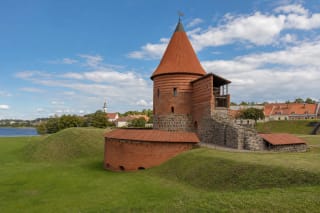
Kaunas Castle
One of Lithuania's oldest brick castles at the Nemunas and Neris confluence, a strong starting point for the old town.
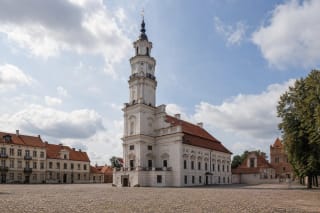
Kaunas Town Hall
The White Swan of Town Hall Square, a central symbol of old Kaunas and city self-government.
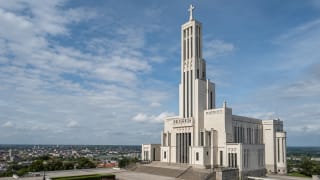
Christ's Resurrection Basilica
A modernist interwar church in Žaliakalnis with an observation terrace above the city.
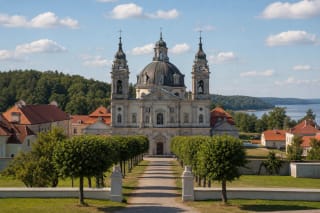
Pažaislis Monastery
One of the most beautiful Baroque ensembles in north-eastern Europe, on the shore of the Kaunas Reservoir.
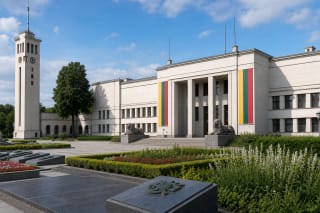
Vytautas the Great War Museum
A central museum of Lithuanian military and state memory, with the interwar memorial garden at Vienybės Square.