- Place
- Druskininkai, Druskininkai Municipality
- Region
- Druskininkai
- Type
- a protected 16.23-hectare historic wellness park with the Ratnyčėlė valley, cascade baths, an aeroionotherapy pavilion, and outdoor recreation areas
- Address
- 1 Sausoji Street, LT-66165 Druskininkai
- Coordinates
- 54.01165, 23.97912
- Visit duration
- 1-2 hours for a walk; 2-4 hours when using the paid cascade-bath and sauna complex
- Best time
- May-September for green scenery and water features; Thursday-Sunday during the current paid-complex hours if the cascades and sauna are your priority
K. Dineika Wellness Park, Dineika Park, Karolis Dineika Physical Culture Park, Druskininkai Therapeutic Physical Culture and Climate Therapy Park
The free 16.23-hectare park and the paid cascade complex are two different experiences
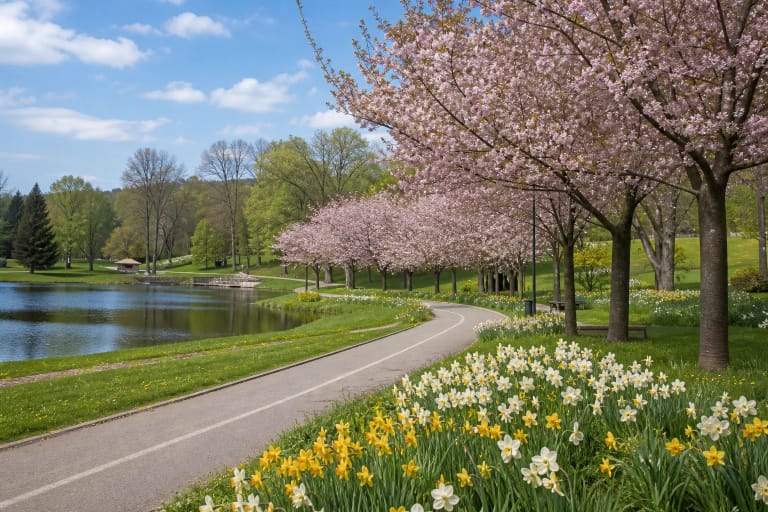
Karolis Dineika Wellness Park lies between Gardino, Sausoji, Veisiejų, and Vytauto streets, on both sides of the narrow Ratnyčėlė. The protected area defined by the Heritage Register covers 162,300 square metres, or 16.23 hectares. Coordinates 54.011653, 23.979115 reproduce the park marker supplied by the official attraction page. A single doorway cannot represent such a large site, so the point is labelled representative rather than entrance.
There is no ticket for the outdoor park. Visitors can walk its paths, rest in the pine forest, explore the Ratnyčėlė valley, and use open recreation areas independently. This does not make every therapeutic facility free or permanently available. The cascade-bath and sauna complex has a separate operator, ticket desk, timetable, rules, and admission charge.
For a first visit, allow at least an hour for a slow circuit through the main avenue, stream bridges, pavilion surroundings, and the amphitheatre added in 2020. With an all-day cascade-and-sauna ticket, the park becomes a place for several hours rather than a brief sightseeing stop.
The Ratnyčėlė is the organising spine of the wellness landscape, not just its backdrop
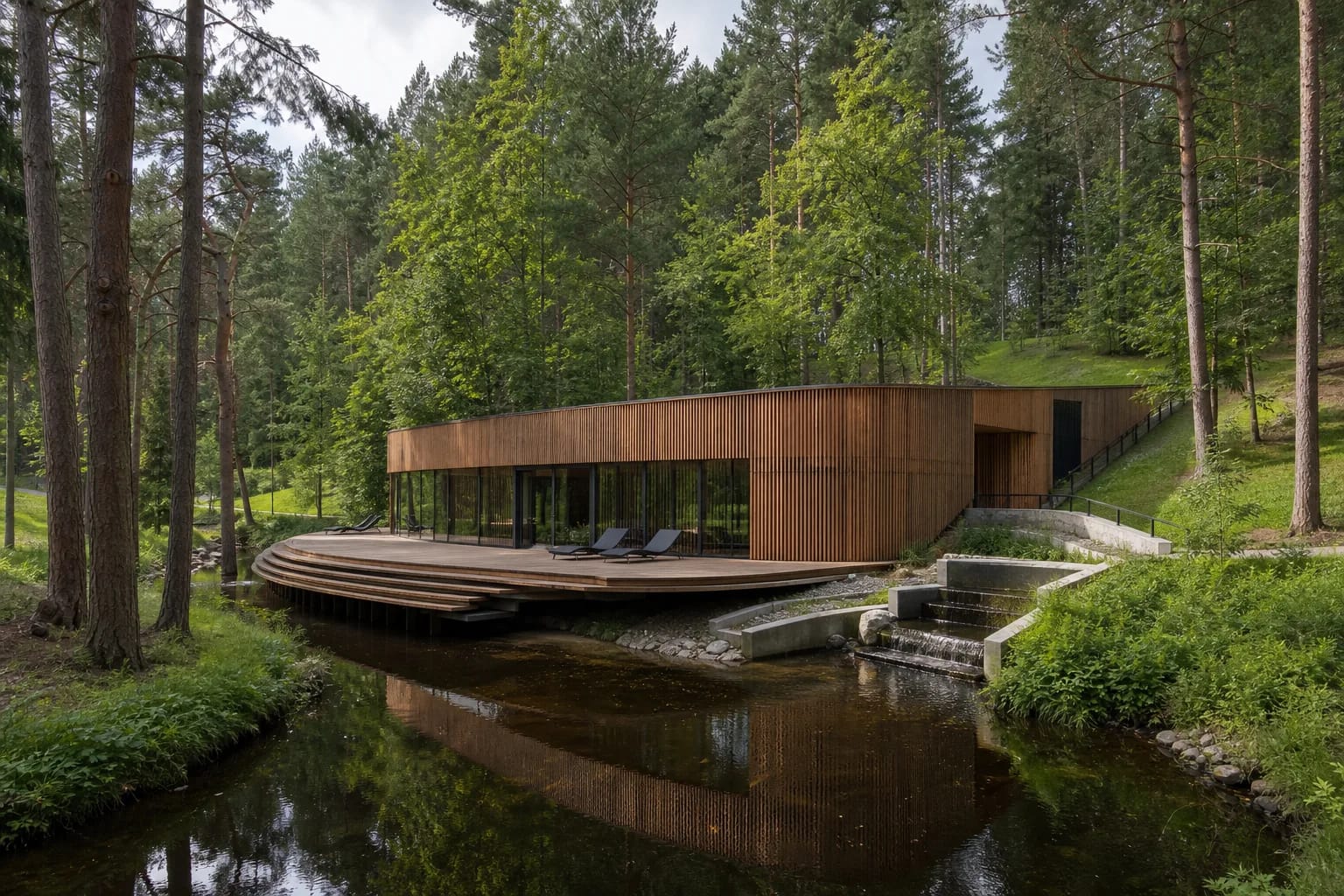
The stream's slopes, a mature pine wood, and architecture designed around water shape the park. Ponds and weirs created along the Ratnyčėlė supplied the cascades, while low pavilions placed among the trees allow visitors to sit close to running water. The cascade bath is a constructed water-treatment feature, not a natural Druskininkai waterfall.
The most distinctive paid experience combines water-jet massage in the cascade baths with the neighbouring sauna. The current complex also has a sun deck, and panoramic windows in the sauna look towards the stream. The aeroionotherapy pavilion belongs to a tradition of sitting beside finely falling water and moist air, but a visitor guide should not turn the park's historic method into a medical guarantee or prescription.
Without entering a paid facility, visitors can still look for the oval foot-pressure-point pool, the main path axis, stone steps, and sites of pavilions from different periods. The Heritage Register protects not only individual structures but also the pine wood, Ratnyčėlė, its slopes and artificial weirs, the measured walking route, and the relationships between these elements.
Outdoor exercise, gymnastics, volleyball, badminton, and table-tennis areas serve active visitors, while younger children have a playground and adapted swing. Exercise sessions, concerts, and other events sometimes use the central stage, so check the Druskininkai events programme if you want an especially quiet visit.
Eugenija Levicka's 1925 sun-bathing park began the story of the present protected site
The Heritage Register's historical record distinguishes a popular place from a formal park. People walked beside the Ratnyčėlė in the late nineteenth century, but the 1908 town plan still showed woodland here. Physician and sports-medicine pioneer Eugenija Levicka founded a private sun-bathing park of about six hectares in 1925. She served as a physician to Polish Marshal Józef Piłsudski.
Levicka drew on the Swedish Ling system and ideas associated with Danish physiologist Johannes Lindhard. The grounds had areas for sun, air, and bathing, two adult pools, a children's pool, and grounds for gymnastics and sport. Men, women, and children used separate sectors. Heritage documentation also records a nudist area, but that is a fact about interwar health culture, not the rules of today's public park.
The park was named for Levicka after her death in 1931. Popular accounts sometimes give 1924 or 1930 as its founding year, but both the Heritage Register assessment and its historical record date the protected site's establishment to 1925. That is the documented date used here.
Karolis Dineika transformed the grounds into a centre for therapeutic physical culture and climate therapy
In 1952 the Ministry of Health established a new type of treatment and prevention institution here and appointed Karolis Dineika to lead it. One of Lithuania's pioneers of physical education and the wellness movement, he combined controlled exercise with breathing, water, sunlight, open air, and psychophysical training. VLE describes his work at the park as lasting from 1952 to 1980, while the Heritage Register dates his directorship to 1952-1978. Both sources agree on his decisive role after 1952.
The first season already brought more than a dozen gymnastics grounds, renewed outdoor pools and solariums, and experimental cascade treatments. The park began winter operation with skis and skates in 1956, gained an outpatient section in 1957, and opened a new cascade-bath building designed by architect Vytautas Gabriūnas in 1964.
An aero-hydro-ionotherapy pavilion followed in 1965, a treatment building in 1969, an active-point foot acupressure pool in 1978, and a replacement ionotherapy pavilion in 1979. By the end of the 1960s, the Heritage Register record reports 3,000-4,000 visitors a day. The number of procedures rose from 7,256 in 1952 to 414,700 in 1967.
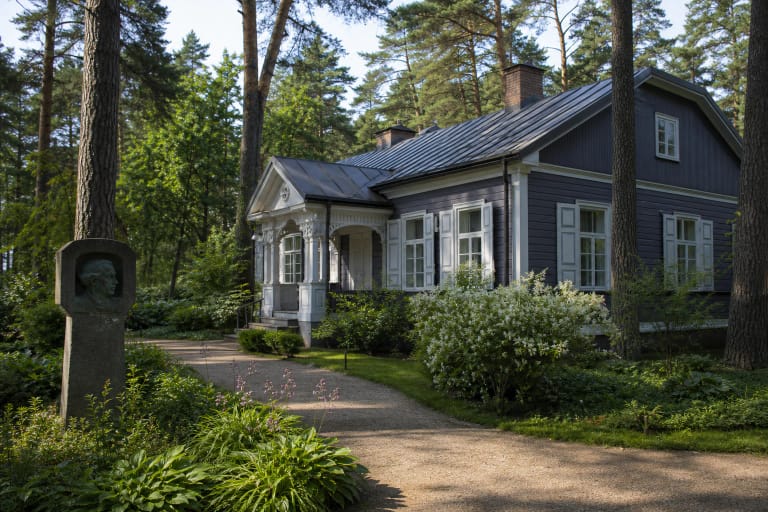
This was not merely a leisure garden. It became a national methodological centre for therapeutic physical culture. Dineika's name entered local use during the Soviet period, and in 2015 the former Therapeutic Physical Culture and Climate Therapy Park was formally named in his honour. A memorial bench by sculptor Romualdas Inčirauskas was unveiled in Druskininkai in 2024.
Heritage protection preserves a layered landscape, not only structures rebuilt in 2015
Karolis Dineika Physical Culture Park is listed under Heritage Register code 28259 as a state-protected cultural heritage site. Its valuable attributes include its recreational and therapeutic role, pine woodland, Ratnyčėlė valley relief, main and measured-walking routes, pavilion sites, the cascade building's location and single-storey scale, the oval form of the acupressure pool, and stone stairways.
The park deteriorated after Lithuania restored independence. A first renewal phase in 2013-2015 cost EUR 1,252,757.72 and reconstructed paths, cascade baths, sauna, ionisation pavilion, and acupressure pool. It also added a terrace, public toilet, and flower beds and repaired stream banks and slopes. The work revived the historic function, but today's visitor sees a modern reconstruction, not untouched material from 1925 or 1965.
A further phase was completed in 2020. It introduced phytotherapy and central paths, a route on the right bank of the Ratnyčėlė, an Augustów Garden path, a renewed footbridge, an amphitheatre, visitor information, and utilities. The park is therefore best read as a meeting of several eras: Levicka's interwar experiment, Dineika's expanded centre, Soviet modernist traces, and a twenty-first-century public landscape.
Current 2026 hours, admission, accessibility, and responsible preparation
On 19 July 2026 the official AQUA page listed the cascade-bath and sauna complex as open Thursday-Sunday from 12:00 to 20:00. An all-day ticket was EUR 10, or EUR 8 with a Druskininkai resident card. These are the paid complex's details, not opening hours for every outdoor path. Hours, seasons, prices, concessions, and available procedures can change, so recheck the operator's page or call +370 610 29121 before making a special journey.
The park is officially presented as adapted for visitors with mobility disabilities, and renewal works added new paths, a public toilet, and a special swing. However, the protected natural stream slopes and historic stone stairs mean that not every shortcut is equally wheelchair-friendly. Prefer the renewed main paths and ask the operator in advance about entry to the paid complex, changing facilities, and assistance.
Cascade water and sauna heat are not universal medical treatments. Travellers with heart, circulation, mobility, or other relevant health conditions should discuss cold water and heat with a clinician and follow the rules on site. Bring whatever equipment the operator currently requires, and understand aeroionotherapy as part of the park's historic method rather than a promise to cure disease.