
Things to do in Lithuania
Things to do in Druskininkai
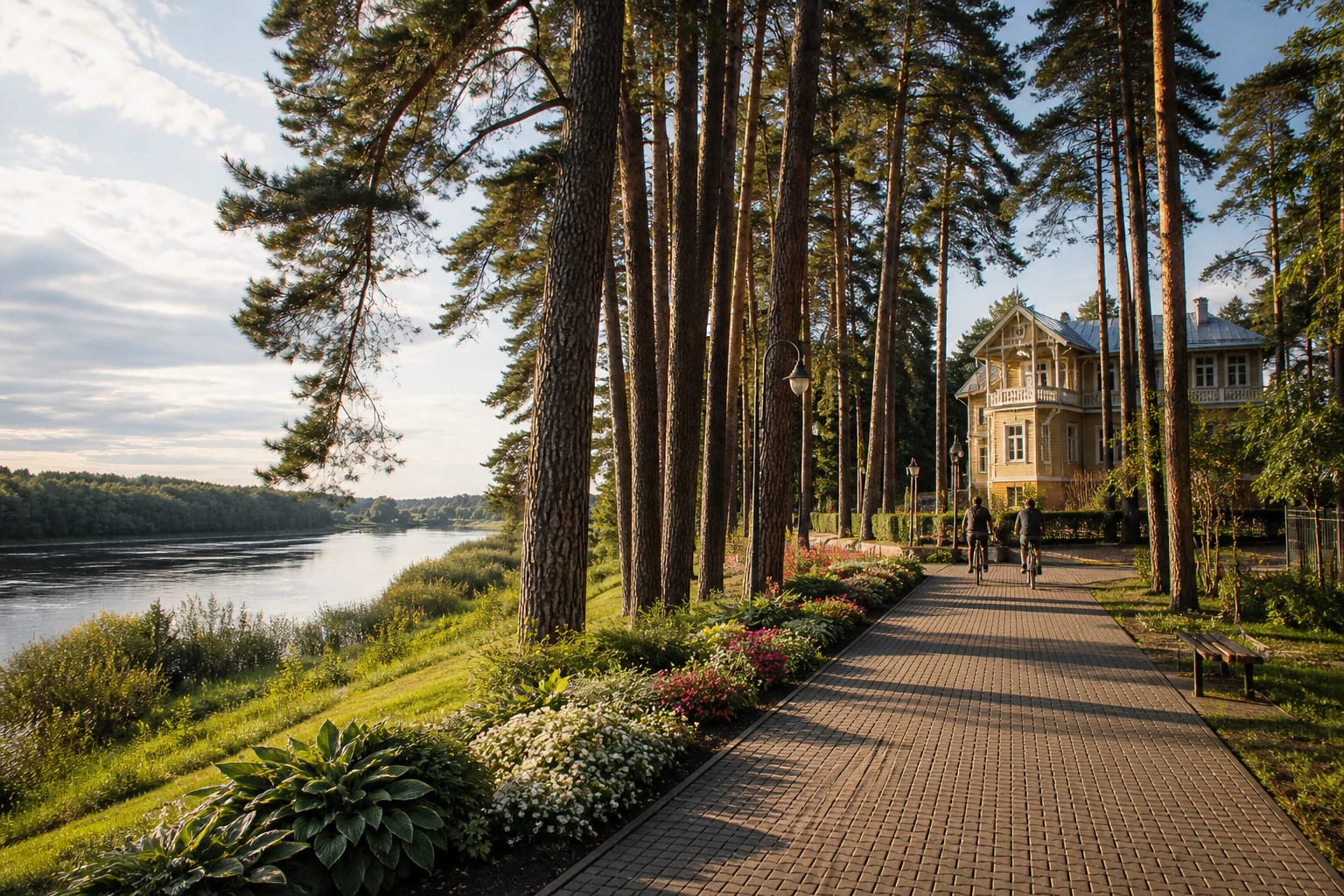
Druskininkai is Lithuania's best-known resort on the Nemunas, famous for mineral water, sanatoriums and spas, M. K. Čiurlionis, Grūtas Park, and winter attractions.
Druskininkai
Where to start
Choose a place, compare visiting times or explore the area on the map.
Key places to visit in Druskininkai:
Raigardas Valley
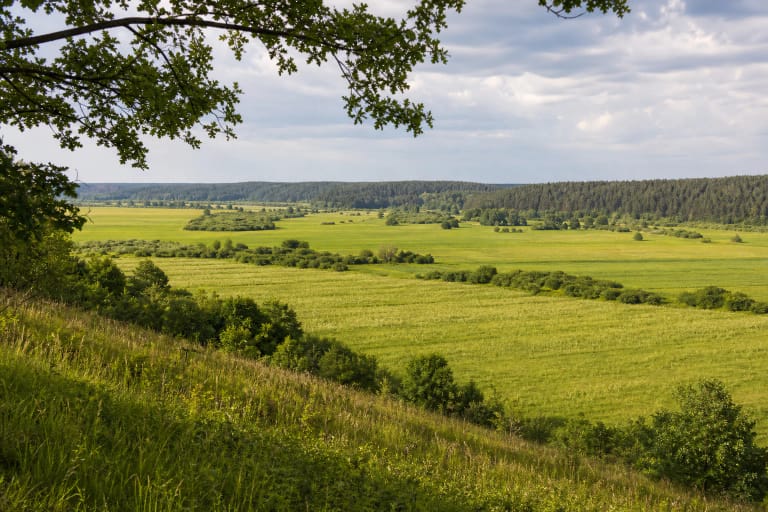
Raigardas Valley near Druskininkai is Lithuania's largest suffosion cirque, a protected landscape, and one of Dzūkija's strongest panoramas, connected…

M. K. Čiurlionis Memorial Museum in Druskininkai
The M. K. Čiurlionis Memorial Museum in Druskininkai, officially the M. K. Čiurlionis House-Museum, has operated since 1963 in the homes where the…
Druskininkai City Museum
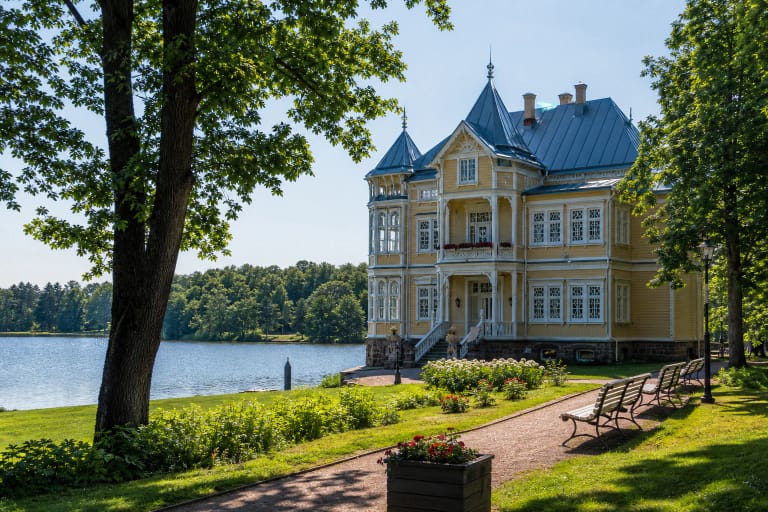
Druskininkai City Museum operates in the representative Villa Linksma by Lake Druskonis.
Druskininkai Cable Car
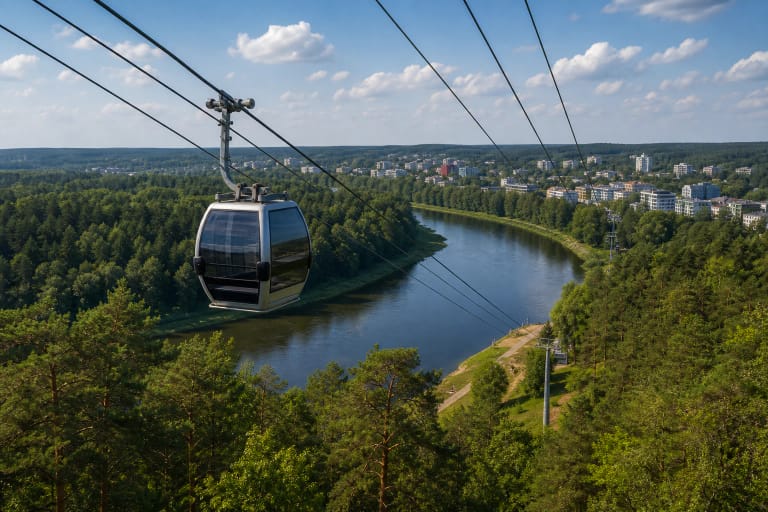
The Druskininkai Cable Car is a suspended cable-car route built over the Nemunas in 2015, linking the resort centre by the water park with the Snow…
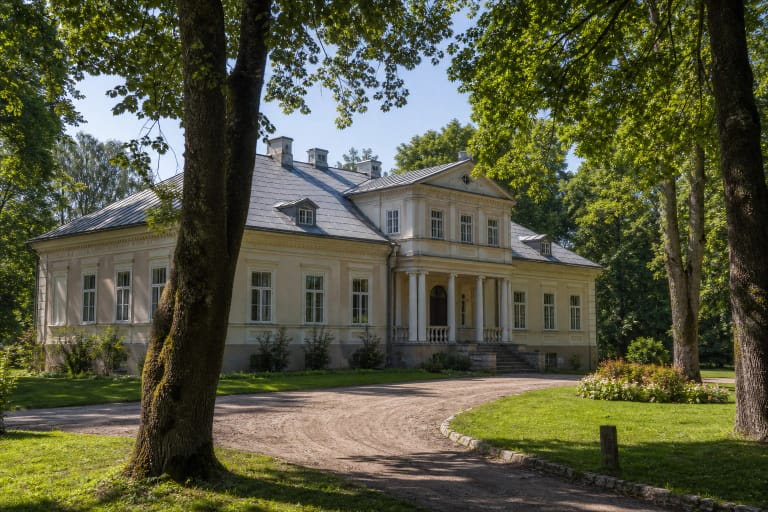
Leipalingis Manor
Leipalingis Manor is a Classical Dzūkija manor estate, KVR code 265, whose palace was probably designed in the late eighteenth or early nineteenth…
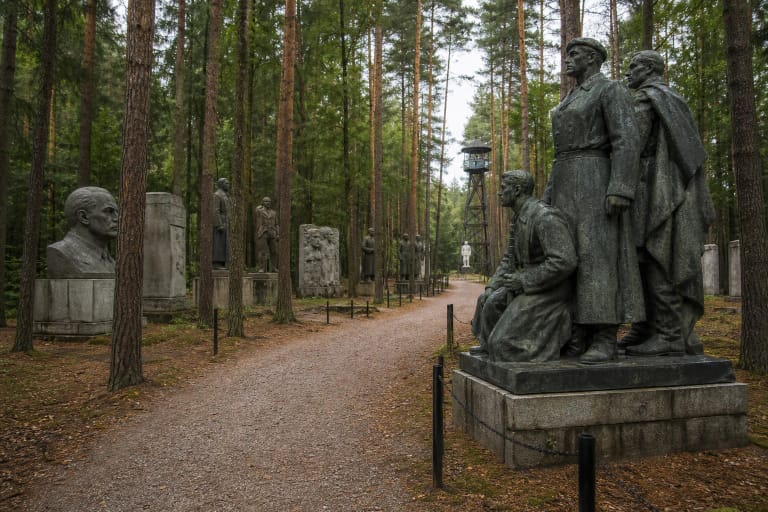
Grūtas Park
Grūtas Park near Druskininkai is an open-air exhibition of Soviet monuments and propaganda.
All places in this guide
Places on the mapRaigardas Valley30-90 min. for the panorama and stopsM. K. Čiurlionis Memorial Museum in Druskininkai45 min.-1.5 hours; longer with an event or educational activityDruskininkai City Museum45 min.-1.5 hours; longer with an exhibition or eventDruskininkai Cable Car30-60 min.; longer with a trip to Snow Arena or a walkLeipalingis Manor45 min.-1.5 hours; longer with a tour or eventGrūtas Park2-3 hoursŠvendubrė Devil's Stone20-40 min.Druskininkai Snow Arena2-4 hoursGirios Aidas Forest Museum1-1.5 hours, including the outdoor trailVijūnėlė Park1-2 hoursMergelių Akys Lake20-40 min.Saulės Trail (Druskininkai)1.5-3 hours, 6.8-9 kmChurch of the Assumption of the Blessed Virgin Mary in Leipalingis30-45 minutes for the exterior and interior when the church is open; 1-1.5 hours together with Leipalingis Manor and the town centreDruskininkai Musical Fountain20-35 minutes for one music-and-water performance; 60-90 minutes together with Spa Park, the Beauty Spring, mineral-water pavilion, and Nemunas riverfrontChurch of Our Lady of the Scapular in Druskininkai35-50 minutes for the exterior, vaulting, and art; 1.5-2 hours together with the City Museum opposite and Vilniaus AvenueDruskininkai Thick Pine Tree15-30 minutes for the pine, roots, and information sign; 45-60 minutes with a walk along Lake DruskonisGrožio Spring in Druskininkai15-30 minutes; about 45-75 minutes together with the Spa Park and nearby pump roomKarolis Dineika Wellness Park1-2 hours for a walk; 2-4 hours when using the paid cascade-bath and sauna complexDruskininkai Water Park2-4 hours; a full day if you choose the sauna zone and an unhurried visitDruskininkai Spa Park45-90 minutes for the park, pump room, and riverfront; approximately 1.5-2 hours if you wait for a Musical Fountain show and descend to Grožio SpringDruskininkai Church of the Icon of the Mother of God “Joy of All Who Sorrow”20-35 minutes for the exterior and interior if the church is open; longer when attending a serviceA. Česnulis Park and the Tree Cake Museum2-3 hours for both sites without a booked activity; about 1.5-2 hours for the park aloneUNO Park Druskininkai1 hour 30 minutes to 2 hours 30 minutes according to the ticket, plus time for registration and the safety briefingV. K. Jonynas Gallery60-90 minutes; longer for an education programme or concertLove Island Viewpoint15-30 minutes; longer as part of a Nemunas riverside walkDruskos Studija45-60 minutes for the display; about 1.5-2 hours for an activityMenų Kalvė Craft Centre30-60 minutes for an exhibition and open studios; 1-3 hours for a chosen activityFamily Entertainment Park “O kas čia?”2-4 hours depending on children's ages, play pace, and programmeLake Ilgis near Grūtas1-2 hours for the shore and a quiet stop; longer when combined with Grūtas Park or other Druskininkai-area sites
About this area
Druskininkai is Lithuania's best-known and oldest resort, set near the country's southern edge on the Nemunas and surrounded by pine forest. The town is famous for mineral water, therapeutic mud, sanatoriums, and modern spa complexes, but it is not only a health resort. Mikalojus Konstantinas Čiurlionis spent his childhood here, the Soviet sculpture collection at Grūtas Park is nearby, Snow Arena brings indoor skiing to the town, and a cable car crosses the Nemunas. Druskininkai works equally well for treatment, slow rest, and active family travel.
Why visit Druskininkai
Druskininkai is a resort town in southern Lithuania, about 7 km from the Belarus border, on both sides of the Nemunas and the Ratnyčia, which flows into it. VLE records that in 2023 the town had 13,170 residents. Dry pine forests and the Nemunas valley shape the clean, therapeutic climate for which the resort is known.
The name comes from the Lithuanian word for salt, druska, and points to the salty mineral water that has made the place famous for centuries. Druskininkai is a balneological, mud-therapy, and climate-therapy resort, so visitors have traditionally come here to rest and improve their health.
Alongside treatment facilities, the town has a handsome old resort centre recognized as an urban monument, lakes, cycle paths, and many attractions. That makes Druskininkai appealing not only to spa guests, but also to active travellers and families with children.
The resort: mineral water and spa culture
Mineral water is the basis of Druskininkai. According to VLE, the town has several mineral-water boreholes, roughly 100 to 320 m deep, as well as springs. The water is rich in sodium, calcium, chloride ions, and sulfates, and the whole resort tradition rests on this water and therapeutic mud.
Historic and modern sanatoriums, treatment centres, and health facilities operate in the town, including Druskininkai Health Resort. Several thousand people can receive treatment and rest in the resort at the same time. Treatments are used for movement and support-system conditions, digestive, cardiovascular, nervous-system, respiratory, and other illnesses.
Large spa and water-attraction complexes, parks, and leisure areas give the resort its contemporary face. Even on a short visit, it is worth tasting mineral water from drinking springs and walking around Vijūnėlė Park and the lakeside areas.
M. K. Čiurlionis' Druskininkai and cultural heritage
Druskininkai is inseparable from Mikalojus Konstantinas Čiurlionis, Lithuania's best-known painter and composer, who spent his childhood here. His family home now houses the M. K. Čiurlionis Memorial Museum, which explains the artist's life and the sources of his imagination; in summer, classical music evenings also take place in this cultural setting.
Other museums and galleries attract culture-minded visitors as well: the town museum, the Museum of Resistance and Deportation Relics, Jewish heritage sites, and exhibition spaces. In the old resort centre stand the neo-Gothic Church of St Mary of the Scapular, built in 1931, and an Orthodox church, both adding to the town's distinctive architectural character.
Nearby Raigardas Valley is also tied to Čiurlionis. The artist immortalized this landscape in his paintings, and local legends describe a rich city that sank beneath the earth there.
Attractions for the whole family
In recent decades Druskininkai has become a town of attractions. Snow Arena, an indoor alpine skiing complex where skiing is possible year-round, opened in 2011. A large water-attraction park opened earlier, in 2006.
In 2015 a cable car was built over the Nemunas, connecting the town with the opposite bank and opening a high view over the resort and valley. Families also often choose the Saulės Trail and shorter nature walks through the forest paths.
About 8 km from town, beside the village of Grūtas, stands Grūtas Park - a complex of Soviet-period monuments and exhibitions, often known simply as Stalin World. It is a controversial but much-visited place that helps visitors understand part of the Soviet legacy.
Nature and surroundings
The setting is one of Druskininkai's strongest attractions. Pine forests and loops of the Nemunas surround the town, while inside it are Lake Druskonis, the Mergelių Akys lakes, and Vijūnėlė Pond, with walking and cycling routes nearby.
In the surroundings, visit Raigardas Valley and its viewpoints; a little farther away, already in Varėna District, the Liškiava hillfort and monastery ensemble stand above the Nemunas. Together they belong to the wider landscape of Dzūkija pine woods and the Nemunas valley.
Druskininkai is a convenient base for exploring southern Dzūkija, from Nemunas bends to the forests and villages of Dzūkija National Park. The resort is easy to combine with nature and culture routes.
Practical tips: getting there and when to visit
From Vilnius, Kaunas, and Alytus, Druskininkai is easiest to reach by car or intercity bus. Roads also lead toward Lazdijai and Grodno. The resort itself is compact, and many distances can be covered on foot or by bicycle.
Druskininkai is attractive year-round: in summer for beaches, lakes, and outdoor attractions; in winter for Snow Arena and spas. Sanatorium and wellness stays are not tied to a season, so the town never feels completely empty.
Snow Arena, the water park, cable car, Grūtas Park, and museums usually require tickets, while sanatorium and spa services are best booked in advance. Check current prices and opening hours before travelling.
Druskininkai: frequently asked questions
How do you get to Druskininkai?
The easiest way is by car or intercity bus from Vilnius, Kaunas, or Alytus. Roads also lead toward Lazdijai and Grodno. The resort is compact, so it is easy to get around on foot or by bicycle.
What is Druskininkai mineral water known for?
Druskininkai is a balneological resort based on mineral water from boreholes and springs. The water is rich in sodium, calcium, chloride ions, and sulfates, and the town's sanatoriums and treatment centres use both the water and therapeutic mud.
Why is Druskininkai connected with M. K. Čiurlionis?
Mikalojus Konstantinas Čiurlionis spent his childhood in Druskininkai. His family home now houses the M. K. Čiurlionis Memorial Museum, and nearby Raigardas Valley, which he painted, is also linked with the artist.
What is Grūtas Park?
Grūtas Park is a Soviet-period monument and exhibition complex about 8 km from Druskininkai, near the village of Grūtas. It is a controversial but popular place presenting the legacy of the Soviet era.
What can families do in Druskininkai?
Families often choose Snow Arena, the water-attraction park, the cable car over the Nemunas, the Saulės Trail, and walks near the lakes and forest paths.
Can you ski in Druskininkai in summer?
Yes. Snow Arena, opened in 2011, has indoor slopes where skiing is possible year-round regardless of weather or season.
What is Raigardas Valley?
Raigardas Valley is a scenic landscape near Druskininkai that M. K. Čiurlionis painted. Legends tell of a rich city that sank beneath the earth, and a viewpoint has been set up near the valley.
When is the best time to visit Druskininkai?
The resort is attractive year-round: summer brings lakes, beaches, and outdoor activities, while winter suits Snow Arena and spa travel. Wellness and sanatorium stays are independent of season.
How long should you spend in Druskininkai?
The main places can be seen in one or two days, but for a spa or wellness stay, Grūtas Park, and surrounding routes, plan several days or a full weekend.
Druskininkai: what else to see
M. K. Čiurlionis Memorial Museum in Druskininkai
The family home where M. K. Čiurlionis spent his childhood, and the cultural heart of the resort.
Grūtas Park
A Soviet monument and exhibition complex near Druskininkai.
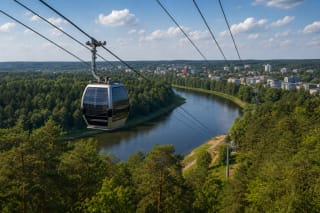
Druskininkai Cable Car
A cable car suspended over the Nemunas, with views of the resort and river valley.
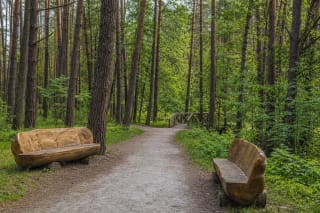
Saulės Trail
A nature trail linking the resort's nature with the Ratnyčia riverbank.
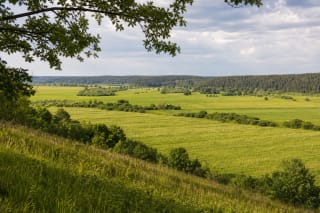
Raigardas Valley
The valley painted by M. K. Čiurlionis, with a legend about a rich city swallowed by the earth.