- Place
- Druskininkai Municipality
- Region
- Druskininkai
- Type
- resort recreation park
- Address
- Turistų g., Druskininkai, by Lake Druskonis and Vijūnėlė Pond
- Coordinates
- 54.01540, 23.96660
Daffodil Park, Vijūnėlis Park
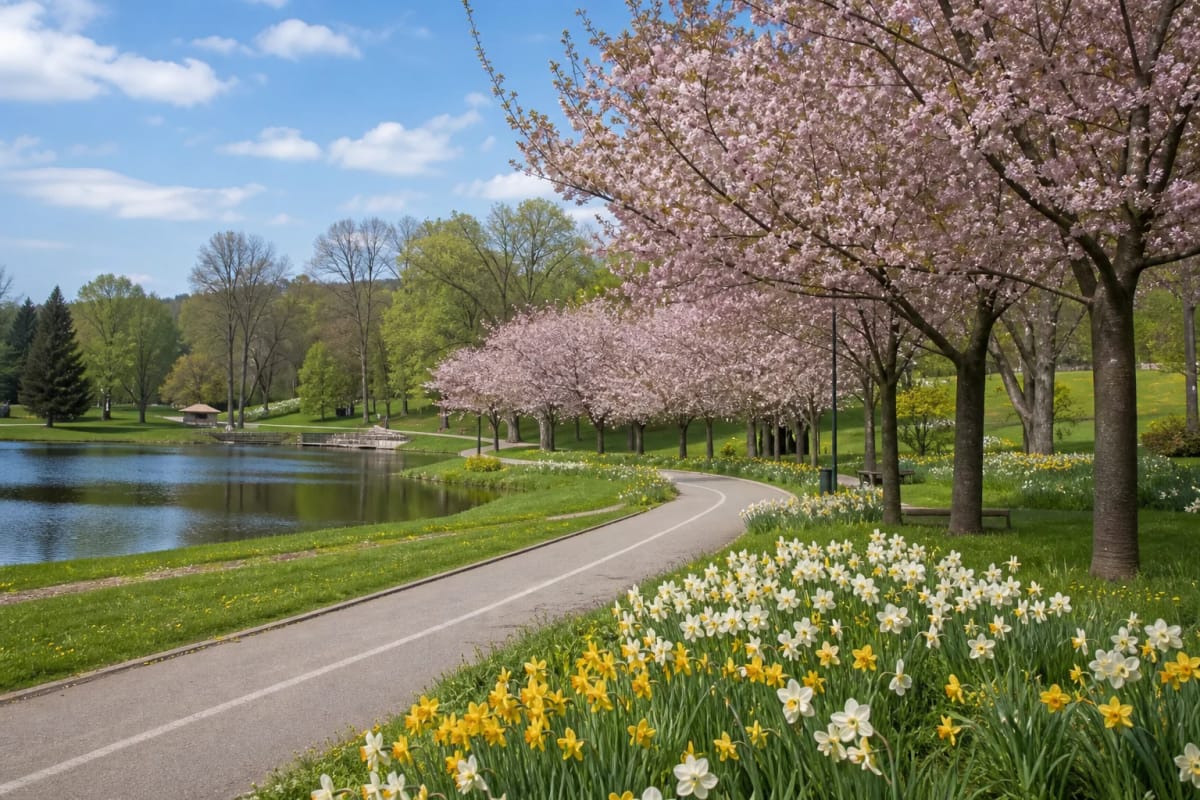
Vijūnėlė Park: a sea of flowers by the pond
Vijūnėlė Park is a landscaped resort recreation park in the south-western part of Druskininkai, surrounding Lake Druskonis and Vijūnėlė Pond to its west. It is one of the most popular active-rest spaces in the resort for both visitors and residents.
Vijūnėlė Pond is artificial. Around 1983, a pond was dug where a marsh had stood, and the present orderly park was shaped by the 2011 reconstruction. Almost half of the park area is water, so views here always revolve around the pond and the lake.
Daffodils and the sakura alley
The park's best-known feature is its daffodils. The first 130,000 bulbs were planted in autumn 2011; by 2014 there were about 220,000; and by 2019 the flowers filled almost all free park space, about half a million blooms. In spring the park becomes a true sea of flowers and is sometimes called Daffodil Park.
In 2012, an alley of Japanese cherry trees, or sakura, was planted along the path by the pond in memory of Bronislovas Lubys, a signatory of the March 11 Act and a businessman; the saplings were donated by his widow. This lakeside path was named after B. Lubys. The sakura blooms soon after the daffodils, so spring in the park comes in two waves.
Pond, beach, and paths
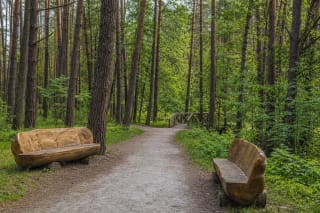
A walking and cycling path of about 4.5 km winds around the pond and Lake Druskonis, popular with cyclists, skateboarders, and walkers. The shore has a sandy beach, wooden piers, a lifeguard post, showers, a children's playground, a volleyball court, and a cafe.
A fountain operates in Druskonis Pond, and the park contains decorative sculptures and rest areas. In summer, the park becomes a beach and active-rest centre; in other seasons it is a convenient place for walks and cycling close to the resort centre.
Daffodil Bloom Festival
At peak bloom, in the second half of April, the Daffodil Bloom Festival is held. In the evenings the flowers are illuminated, and there is live music, theatrical tours, and entertainment for the whole family. It has become a resort-scale spring event that traditionally draws many visitors.
The festival dates vary slightly each year, so check the exact programme on the official Druskininkai page. If you want to see the daffodil sea without crowds, come on a weekday morning.
Visiting
The park is open, free, and accessible at any time; no ticket or registration is needed. It is most convenient to enter from the Turistų Street side, where parking is available nearby.
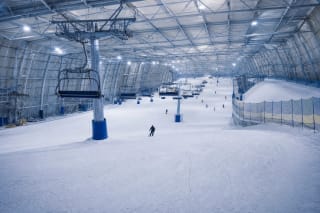
The best time is the second half of April for daffodils and sakura, while summer suits the beach and swimming. A visit is easy to combine with the Lake Druskonis promenade, the resort centre, the water park, or Snow Arena.