- Place
- Sirutėnai, Sudeikiai Eldership, Utena District Municipality
- Region
- Utena District
- Type
- open-air stone-sculpture exhibition
- Address
- Dvaro g. 30, Sirutėnai, Sudeikiai Eldership, Utena District
- Coordinates
- 55.54533, 25.62285
- Visit duration
- 30-60 minutes
- Best time
- the warm season and daylight, when the stone texture and waterside setting are easiest to read
Jono Šimonėlis Sculpture Park in Sirutėnai, Sirutėnai Open-Air Stone Sculpture Park
A park beside Jono Šimonėlis's homestead
Jono Šimonėlis Sculpture Park is not a city square or an enclosed gallery. It is an open-air exhibition in the village of Sirutėnai. The park is at Dvaro g. 30 in Sirutėnai, at 55.545328, 25.622848, so navigation should use the full place identity rather than a generic search for sculpture parks in Utena District.
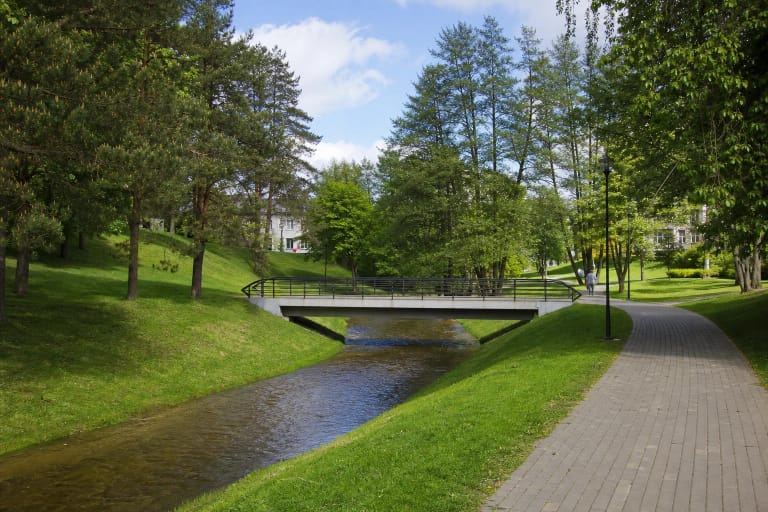
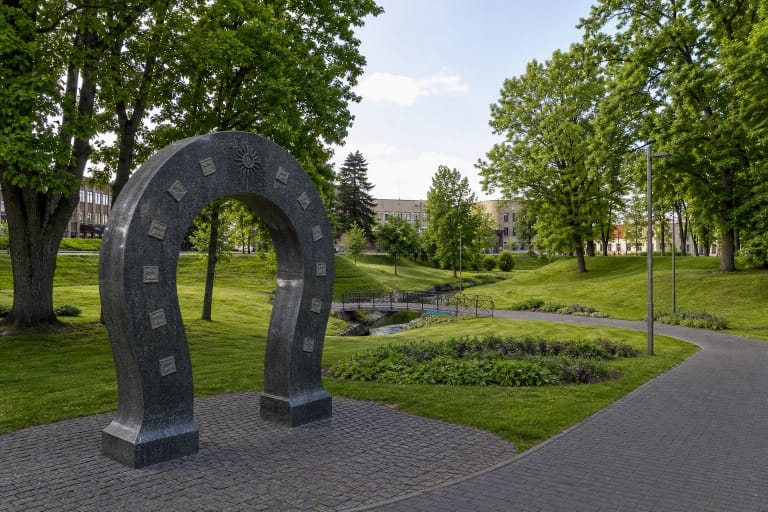
The sculptures stand beside the artist's homestead in a green rural setting by the water. That setting changes the scale of looking: visitors see each work together with grass, trees, and the horizon. The park remains a homestead cultural space, so follow signs and the hosts' current arrangements before entering any part of the grounds.
The artist and the park's beginnings
The Sudeikiai Eldership identifies sculptor Jono Šimonėlis as having lived from 1955 to 2011 and says that he established the stone-sculpture park in Sirutėnai during the last years of his life. Utena District Municipality describes him as an artist and sculptor whose work and activity mattered to Utena's cultural and historical memory.
Municipal cultural material dates the exhibition's establishment to 2008. That date describes the creation of the collection, not the moment when every individual sculpture was made. It is more accurate to understand the park as a developing homestead collection whose core appeared late in the artist's life and was later cared for by his family.
Lithuanian granite and the scale of boulders
All the park's sculptures are made from Lithuanian granite and local boulders. The Eldership description singles out the largest boulder used in the exhibition, which weighed 13 tonnes. The number conveys the physical scale of the place: here stone is not merely a surface for decoration, but the work's material, volume, and weight.
The stones have varied surfaces, from dark grainy faces to lighter polished planes. Look at the works from more than one side and notice how the natural outline of a boulder meets the carved form. After rain, granite becomes darker; side light brings out chisel marks, so photographs are worth taking from more than the first frontal angle.
Themes from the Bible to family memory
Jono Šimonėlis's works are not reduced to one decorative style. Sudeikiai Eldership says that the exhibition brings together biblical motifs, stories of family members, and people's personal achievements. This lets visitors read the park as a set of memory narratives in which stone is both an abstract form and a mark of a particular life.
Begin by taking in the whole arrangement, then return to details: faces, body silhouettes, cuts, and the stone's natural color. Do not guess individual titles when no information board gives them. A better visit describes what is actually visible and respects both the artworks and the homestead around them.
Valentinas Šimonėlis continues the exhibition
The park is not a frozen retrospective of one artist. Sudeikiai Eldership writes that Jono's brother, sculptor Valentinas Šimonėlis, lives and works at the homestead, cares for the park, and adds his own works. The site's present identity therefore combines Jono's sculptures, family stewardship, and pieces added later.
The same homestead also contains Valentinas Šimonėlis's bell collection, if it is being shown to visitors at the time of your visit. This is an additional layer, but it should not be conflated with Jono's main stone-sculpture exhibition. They are connected experiences in one private cultural setting, not one undifferentiated collection.
Planning a visit to Sirutėnai
This is an outdoor place, so the warm season and daylight are the most comfortable conditions for seeing the carved surfaces and the water setting. The park has no fixed ticket or opening-hours schedule. Check access and reception before travelling, and follow any on-site instructions once you arrive.
Allow about 30-60 minutes to walk around the visible exhibition, pause beside the largest boulders, and examine the smaller works. Stay on paths, do not touch the sculptures, avoid working areas, and do not photograph private homestead spaces without permission. Confirm access arrangements before travelling and follow local signs.