- Place
- Stakliškės Eldership, Prienai District Municipality
- Region
- Prienai District
- Type
- a state-protected botanical natural heritage object - an oak
- Address
- Ąžuolų Street, Pakrovai, Stakliškės Eldership, Prienai District
- Coordinates
- 54.56963, 24.28142
- Visit duration
- 45-90 minutes for the oak, sculptures, and a short rest
- Best time
- a dry day from late spring to autumn; the leafless season reveals the divided trunk best
Gojus Forest Oak, Gojus Oak
Great Gojus Oak stands near Stakliškės in the Verknė forestry
Great Gojus Oak is near Pakrovai in Stakliškės Eldership, Prienai District. Official sources use both the longer Great Gojus Oak name and the Gojus Forest Oak form, so both are useful when searching for the site and planning a route.
The exact site point is approximately 54.569629, 24.281417. The municipal description directs visitors along the A16 Vilnius-Prienai-Marijampolė road, about 3.4 kilometres east of Stakliškės towards Jieznas, then south following the sign for Gojus Forest.
This is one particular tree with its own visitor setting, not a synonym for the whole Verknė forestry or the village of Gojus. Save the tree point before travelling because the turn, parking area, and oak can appear as separate map landmarks.
A roughly 33-metre trunk divides into two stems
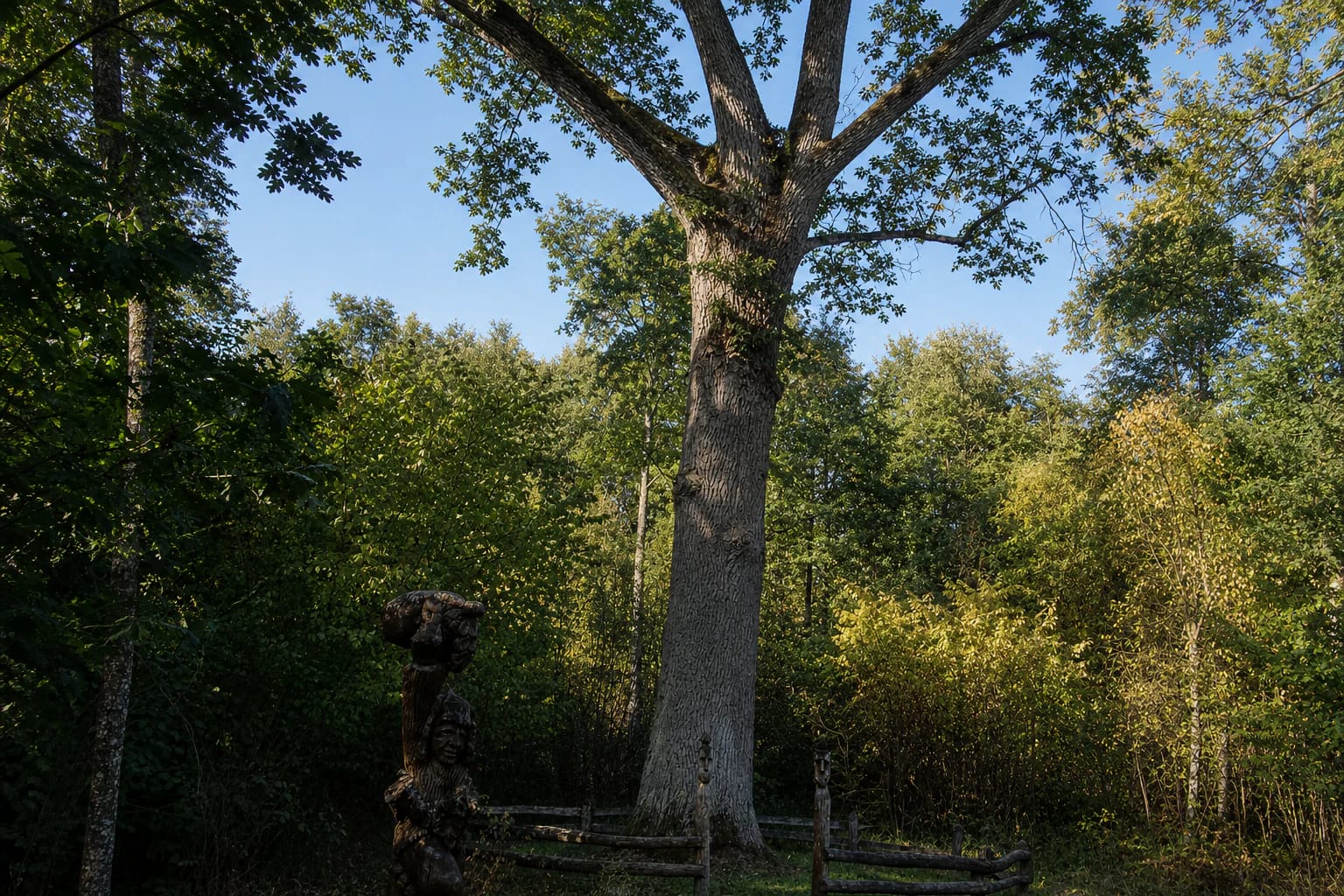
Gojus Oak is about 33 metres tall, with a trunk circumference of roughly 6.7 metres at chest height. The figures establish its scale, but the site silhouette is even more distinctive: at around 14 metres above ground, one trunk divides into two large stems.
The tree's age is generally estimated at about 400 years. This is an approximate figure rather than individual dating, so the fairest description is a centuries-old veteran tree rather than a precise birth date.
The oak remains vigorous, although descriptions mention decay and a historic lightning strike. Those facts are not an invitation to touch the trunk or stand beneath heavy limbs: the condition of old trees changes, and a broad crown can be hazardous in wind.
A natural monument with a folk-art setting
Great Gojus Oak is a state-protected botanical natural heritage object. Its value lies not only in measurable size but also in its distinctive appearance, longevity, and the forest landscape in which it has survived.
Benches, information markers, and wooden folk-art sculptures stand by the parking area and the approach to the tree. They make the stop easy to recognise and add a cultural layer, but the living oak remains the main subject rather than the decorative works.
Leave the car in the parking area, not on the woodland floor or beside the roots. Do not climb the tree, attach objects to branches, light fires outside designated places, or block the sculptures and information markers for other visitors.
The approach is short, but the final road is wooded
The route from the A16 is straightforward, but the final road towards Gojus Forest is local and may be uneven, dusty, or muddy after rain. Judge passability by the day's conditions rather than summer photographs, and park without blocking the road.
The parking area leaves only a short walk to the oak, so the site suits visitors who are not planning a long hike. The forest surface is not guaranteed to be level: gravel, roots, mud, and uneven ground may occur.
The official description lists no separate tree ticket office. Visit in daylight, follow signs, and respect any temporary access or conservation restrictions that may be posted.
What to notice through the seasons
In summer the wide crown merges with the surrounding woodland, while the clearing helps reveal the tree's height and spread. In autumn the colours outline the two main stems, and the leafless season makes it easier to read the branch structure and old bark.
Step back towards the edge of the clearing when photographing the oak so the whole tree and its setting fit into the frame. There is no need to cross behind the sculptures or enter dense undergrowth for an unusual angle: the root zone and forest floor are part of the protected site.
Allow 45-90 minutes for the oak, sculptures, information setting, and a short rest. A longer Stakliškės day can continue to Lepelionys Hillfort, Jieznas, or other Prienai sites, but give the Gojus Oak its own unhurried stop.