- Place
- Truikinai, Skuodas District Municipality
- Region
- Samogitia
- Type
- private museum of farming and rural machinery in a homestead
- Address
- 34 Muziejaus Street, Truikinai, LT-98332 Skuodas District
- Coordinates
- 56.29239, 21.67613
- Visit duration
- 1-1.5 hours, by prior arrangement only
- Best time
- May to September, when outdoor exhibits and granaries are easiest to visit
Mitkus Farmers' Museum, Virginijus Mitkus Farmers' Museum
A private museum beside a working farm and smithy
Virginijus and Laimutė Mitkus created the museum in Truikinai village. The Skuodas District strategic plan identifies it as a private museum founded by Virginijus Mitkus. It operates within a homestead and farm rather than as a separate public institution with a permanent ticket desk.
Its beginnings are linked with millstones preserved from childhood and a growing collection of old working tools. Public accounts cite both 2005 and 2007, probably marking stages in creating and opening the display. The safest wording is that the museum formed in the mid-2000s.
The farming cycle explained through objects
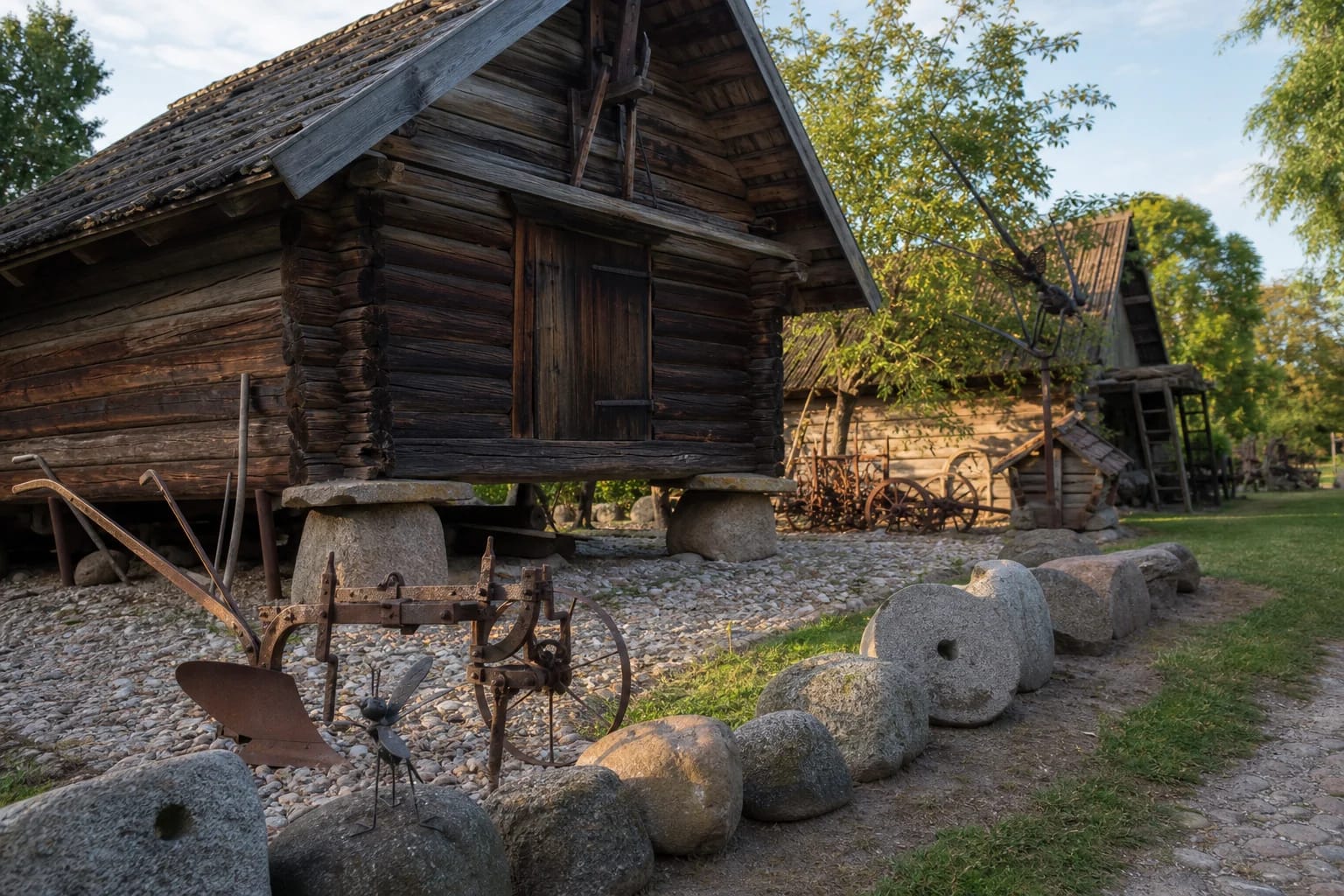
The collection follows the traditional work year through ploughs, several types of harrow, rollers, scythes, horse-drawn mowers and reapers, rakes, potato diggers, carts, horse gears, threshers, millstones, and straw cutters.
Look beyond each implement to its power source. Some depended on human or horse traction, while others used transmissions and horse gears. This comparison reveals the physical labour, repair skill, and animal care behind farming before modern machinery.
Log granaries, household life, motorcycles, and wartime material
The district plan says displays occupy reconstructed log granaries and other museum spaces. Alongside agricultural technology are furniture, domestic utensils, spinning wheels, looms, lamps, and interior details.
Separate parts of the collection include old motorcycles and objects associated with the First and Second World Wars. These broaden the museum beyond agriculture, but should be understood as collected historical objects rather than a display from one documented battle site.
Blacksmithing as a living explanation
The museum is closely connected with Virginijus Mitkus's blacksmithing. The yard combines old iron implements with creative forged insects and fantastic animals, while the working smithy helps explain how tools were made, repaired, and adapted.
The municipal plan also mentions guided visits, camps, Museum Day events, pigeon exhibitions, and educational activities. These are not guaranteed daily services. Confirm any smithing session, group activity, or event separately.
Visit only by prior arrangement
On 21 July 2026 no reliable official source published regular opening hours, a fixed ticket price, or online booking. Times and telephone numbers in older directories may be outdated, so contact the museum or a Skuodas municipal institution before travelling.
The homestead has grass, stones, thresholds, and several buildings. No complete accessibility audit was found. Discuss step-free access, toilets, group size, photography, and payment when arranging the visit.