- Place
- Samylai Eldership, Kaunas District Municipality
- Region
- Kaunas Lagoon Regional Park
- Type
- a state-protected dendrological natural heritage object
- Address
- Girionys and Vaišvydava villages, Samylai Eldership, Kaunas District
- Coordinates
- 54.85013, 24.04101
- Visit duration
- 1-2 hours for the main collections and a leisurely walk
- Best time
- late spring to autumn; different plants and leaf colours emerge in different seasons
Dubrava Dendrological Collection, Dubrava Arboretum near Girionys
Dubrava Arboretum is a protected collection in Kaunas Lagoon Regional Park
Dubrava Arboretum lies near Girionys and Vaišvydava villages in Samylai Eldership, Kaunas District, within Kaunas Lagoon Regional Park. The official natural-heritage entry gives an area of 47.79 hectares, while the mapped point is approximately 54.850130, 24.041012.
This is a large area, so the map point is a representative centre rather than a single gate or guaranteed parking place. Follow local signs when you arrive, do not drive onto closed forestry roads, and leave the car only in a lawful place.
The arboretum is not the same site as nearby Girionys Park or the Dubrava Strict Nature Reserve. Its defining character is a managed and protected dendrological collection that visitors can explore as a park.
A living collection in the open air
The arboretum is an outdoor collection of woody plants. It protects and displays trees and shrubs valued for dendrological, educational, and ornamental reasons, including both native and non-native plants.
Its state-protection status applies not just to one exceptional tree but to the valuable collection and its setting. The plant groups, their forms, growing conditions, and combinations create the site's educational value.
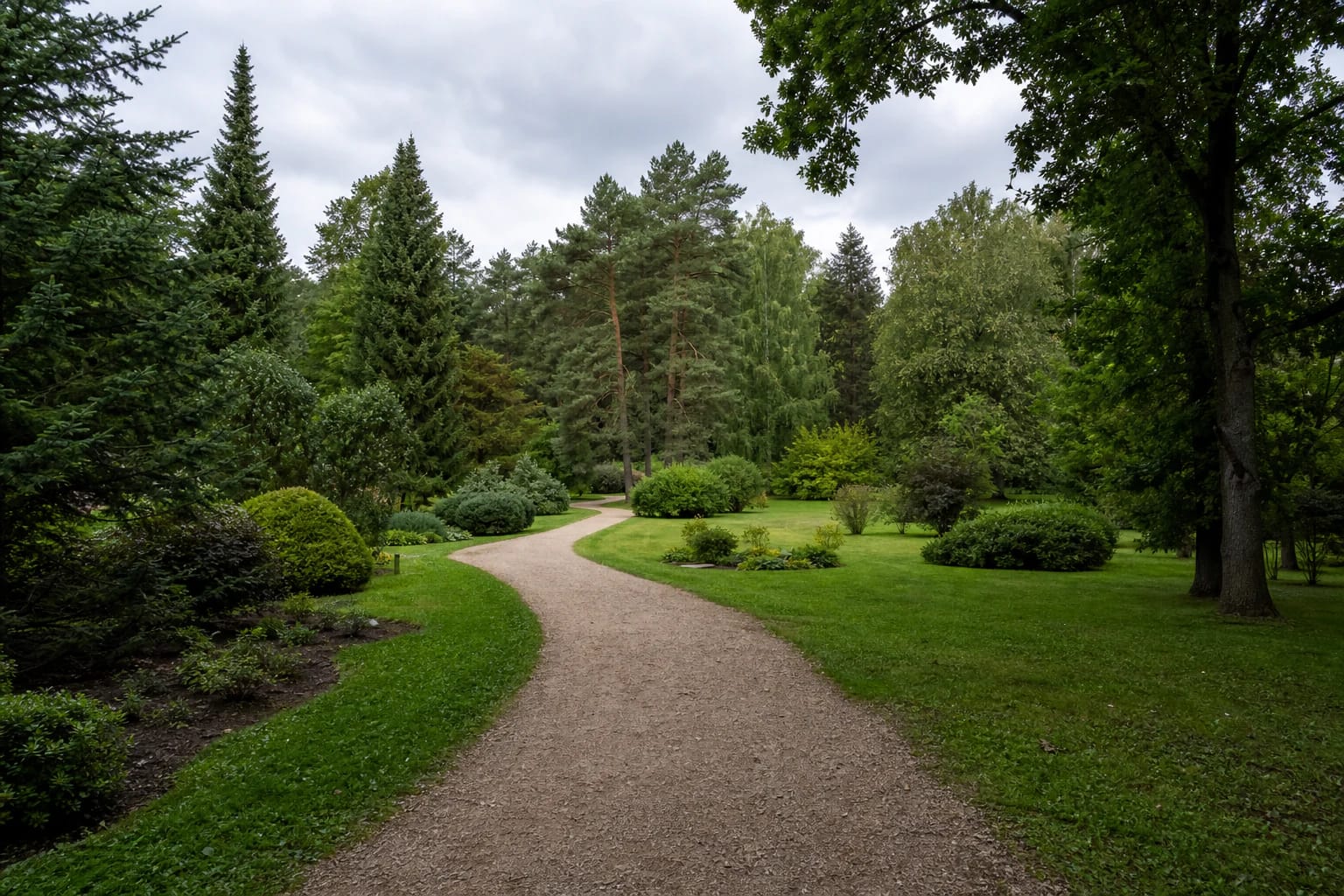
Think of the arboretum as a living outdoor classroom: compare conifer and broadleaf silhouettes, examine shrub structure, look for different leaf shapes, and notice how the collection fits into the surrounding woodland.
Plan your visit as a park walk
The official object description says that the arboretum is visited as a park. Allow about 1-2 hours for a relaxed walk through the main spaces, pauses beside interesting plants, and any information provided on site.
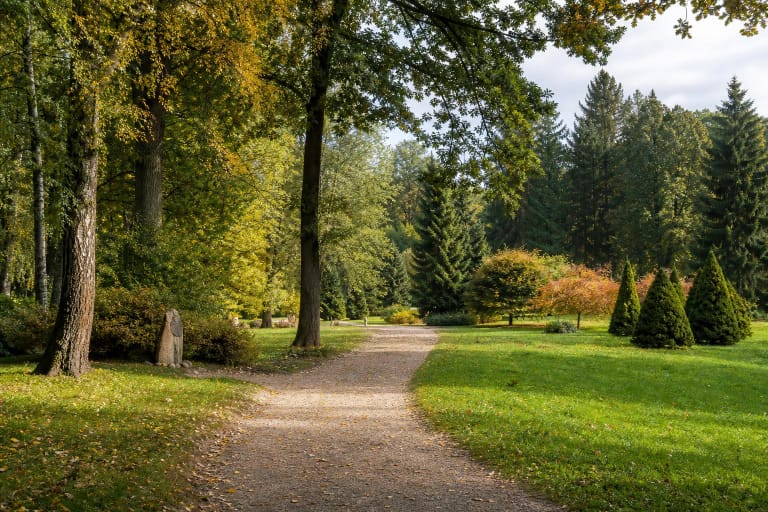
The collection may include gravel tracks, woodland ground, lawns, and uneven edges, so comfortable shoes are useful even in dry weather. After rain, paths may soften, while roots and stones hidden by leaves become harder to see.
This is not one short trail with a single start and finish, so choose your route according to conditions and your own pace. Do not enter fenced or marked-off areas, and follow park or collection-management signs whenever the route is unclear.
Read the plant diversity slowly
Dubrava Arboretum reveals its value through many small observations rather than one panoramic viewpoint. Notice how crown height, bark texture, needle density, leaf colour, and shrub form change from one planting group to the next.
If a plant has a label or information sign, read it before taking a photograph. That pause helps distinguish a non-native species from a local tree and explains why the collection matters for learning as well as recreation.
Do not pick plants, break branches, dig the soil, or move stones and other landscape elements. The arboretum's experience depends on keeping the collection alive for other visitors and for educational use.
The seasons transform the same collection
Late spring and summer invite close attention to active growth, leaf shapes, and differences in planting density. Autumn adds colour, while conifers and evergreen plants stand out more clearly among changing broadleaf trees.
Winter reveals branch architecture, but shorter days, snow, and ice can make walking harder. After a storm or thaw, check whether paths and branches are safe, and do not stand beneath hanging limbs for a better photograph.
Stay on the park paths when photographing and include the scale of the collection in the frame: a plant group, gravel track, or open lawn. A calm 1-2 hour walk reveals more than a quick circuit around the first clearing.