- Place
- Dovilai, Klaipėda District Municipality
- Region
- Klaipėda District
- Type
- Evangelical Lutheran church
- Address
- Minijos g. 4, Dovilai
- Coordinates
- 55.67615, 21.35959
Dovilai Lutheran Church, Dovilai parish
Dovilai church by the Minija
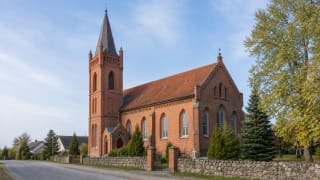
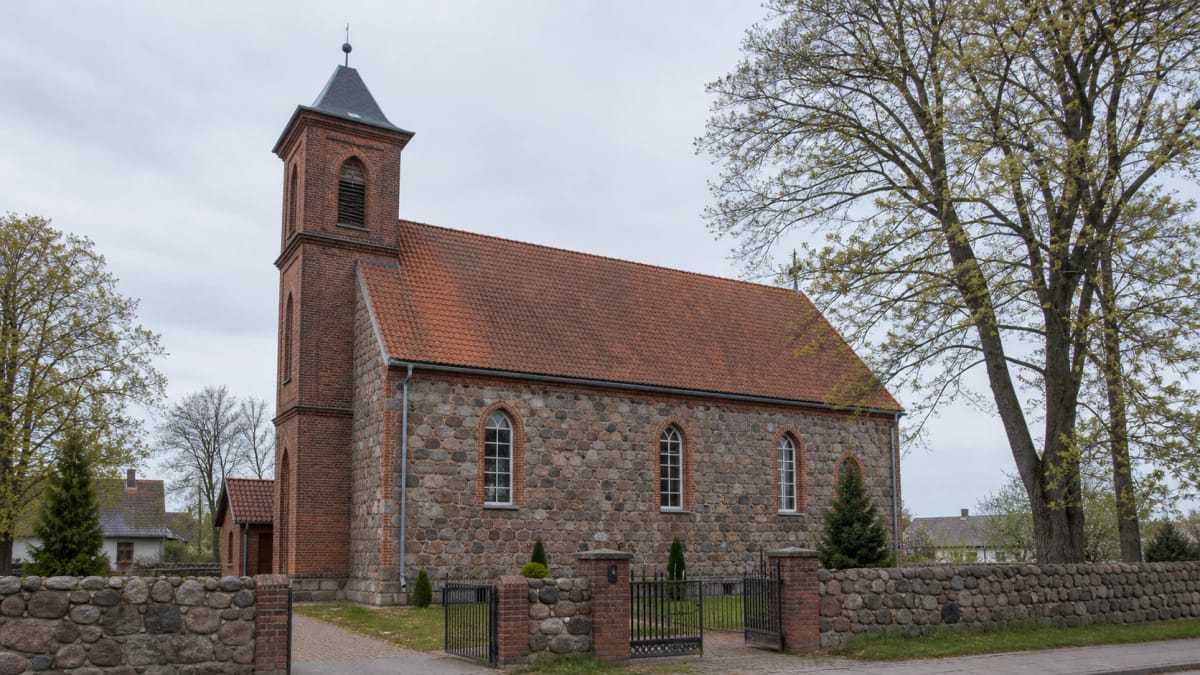
Dovilai Evangelical Lutheran Church stands on a small hill by the Klaipėda-region river Minija, next to the town centre. It is best visited not as an isolated sacral object but as an axis of Dovilai identity - the ethnic culture centre and the road to Dovilai Hillfort are both close by.
The church is listed in the Cultural Heritage Register as a state-protected object of regional significance (unique code 16028). Its value lies in restrained fieldstone-and-brick architecture and a long history as a Lietuvininkai parish.
The parish takes shape from 1784
Back in the eighteenth century, the Prussian king Friedrich Wilhelm I had ordered a church built in Dovilai, arguing that the local Lietuvininkai were poorly prepared for Christianity. The order was not carried out at the time, and Evangelical services in Dovilai began only in 1784 - in a small school hall fitted out with money collected by the Lietuvininkai, where they were led by the schoolteacher himself.
In 1846 deacon Hermann Hahn began pastoral work here; until then Dovilai had been cared for by pastors of the Klaipėda farmers' and Priekulė parishes. An independent Dovilai parish was legitimized in 1854, and only then could the community build its own house of worship.
The 1861-1862 construction and F. A. Stüler's design
The present church - a rectangular fieldstone-and-brick building with a small tower - was raised in about a year: the cornerstone was laid on 17 July 1861, and it was consecrated on 18 September 1862. According to the Register, the church's architect is Friedrich August Stüler (1800-1865), from 1832 the Prussian royal building inspector and later court architect. Local construction was managed by pastor August Harner.
It rose in a fine spot by the Minija; two medium bells called the people of a wide parish of 24 villages to worship. A 12-register organ was soon installed, the altar was adorned with a painted „Blessing Christ,“ and the sacral vessels - a chalice and a paten for hosts - were obtained from the Nida community.
Architecture: fieldstone-and-brick masonry with a tower
The Register describes the church as rectangular in plan, with a five-sided apse on the south-east side and a two-tier tower on the north-west side - rectangular in the first tier and octagonal in the second. The roof of the central body is gabled, the apse five-pitched, and the tower a broken octagonal form.
The foundation and walls are built of split fieldstones and ceramic brick, the stones bound with raised mortar joints. Inside is a single-nave space with a five-sided presbytery, an organ choir joined to side balcony-galleries, all supported by columns decorated with ornate carved details. In the Soviet period intermediate floors were inserted, and the nave's layout was restored during later restoration work.
Trials of war and the Soviet era
The church was not destroyed in the Second World War, but it was ravaged: in the autumn of 1944 a Red Army artillery unit set up a stable in it - the soldiers toppled the altar, tore down the galleries, destroyed the organ, burned the pews to keep warm, and smashed the windows as they left.
In the postwar years its function was changed again: it was turned into a grain warehouse and mill. The revived community was re-registered on 29 January 1990, the first services were held on 20 December 1992, and after difficult restoration the Dovilai house of worship was reconsecrated on 28 May 1995; the restoration project was by architect Vytautas Šliogeris. That return matters when visiting today: you see not only a nineteenth-century building but also the late twentieth-century community effort to recover its space.
Planning a Dovilai church visit
No public tourist opening hours were found during research. The exterior can be viewed independently, while seeing the interior requires checking parish information or arranging a visit in advance.
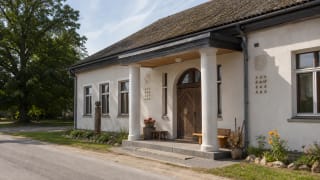
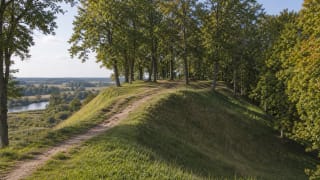
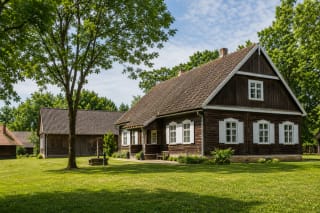
Plan more than one stop in Dovilai: the church, ethnic culture centre, and Dovilai Hillfort create a short but meaningful route through Klaipėda District sacral, living, and archaeological heritage, with Agluonėnai Homestead and the neighbouring Plikiai church on a wider trip.