- Place
- Klaipėda District Municipality
- Region
- Lithuania Minor
- Type
- Lithuania Minor Lietuvininkai ethnographic homestead museum
- Address
- Klojimo g. 9, Agluonėnai village, Klaipėda District
- Coordinates
- 55.58520, 21.39360
Agluonėnai Homestead, Agluonėnai Lietuvininkai Homestead
Agluonėnai Ethnographic Homestead: a living Lithuania Minor farmstead
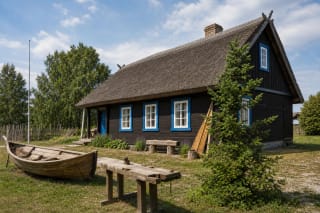
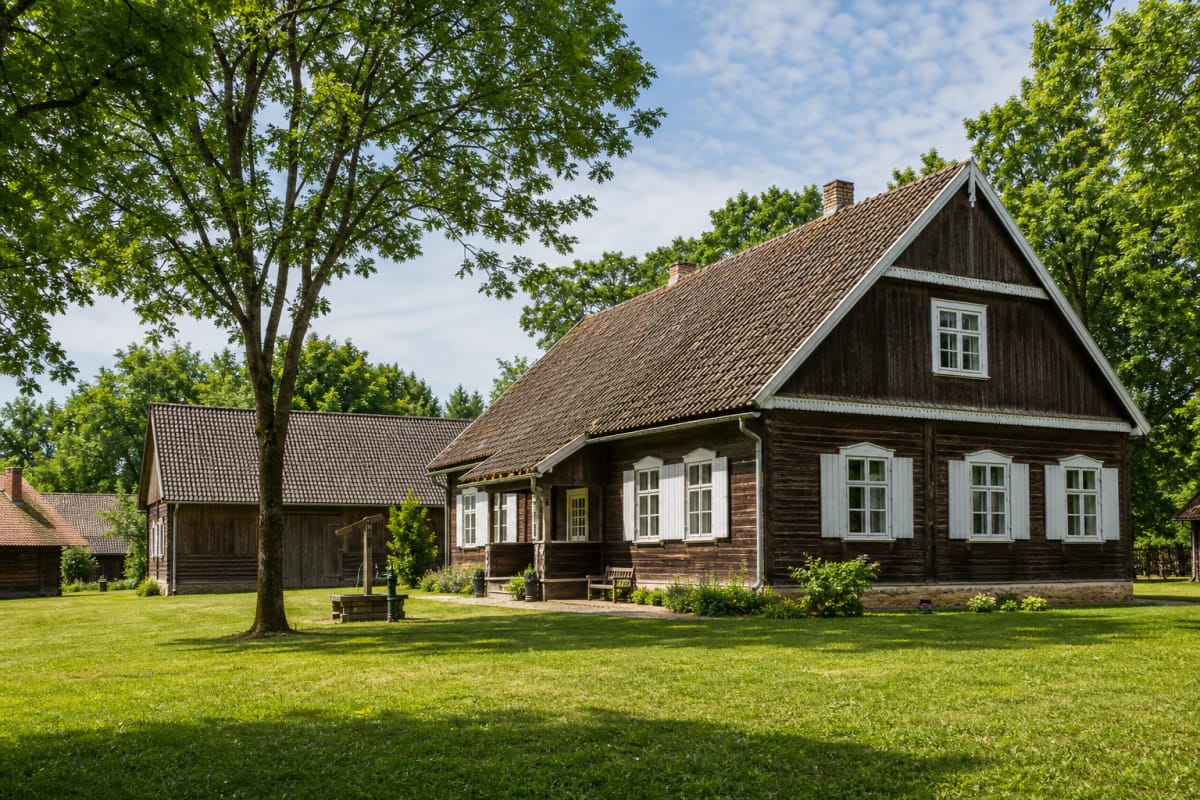
Agluonėnai Ethnographic Homestead is considered one of the finest surviving examples of wooden homesteads of Lithuania Minor in western Lithuania. It is not a single building, but a coherent Lietuvininkai yard showing how local peasants lived, farmed, and arranged their environment.
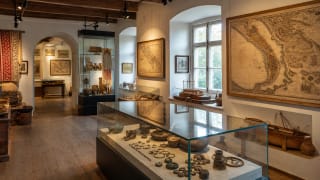
The homestead houses a museum presenting Lietuvininkai daily life and work. Importantly, it is a living place: educational programs, festivals, and barn-theatre events take place here, so the homestead works both as an exhibition and as a cultural space.
Buildings and yard
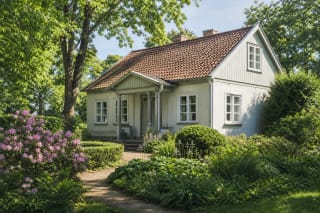
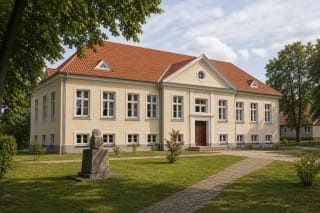
The complex includes several buildings: the dwelling house (1898), with an authentic Lietuvininkai farmer's interior and household and work tools; the barn (1898), where most events take place; a granary (1923) adapted for exhibitions and education; a cellar (1938); and an outdoor exhibition pavilion.
This set of buildings lets visitors read the whole logic of the homestead, from living space to farm buildings. The exhibition 'Klaipėda Region Peasant Homestead' presents Lietuvininkai life and crafts.
The barn-theatre tradition
Agluonėnai Homestead is also important for barn-theatre history: one of Lithuania's first postwar barn theatres was founded here. Barn theatre means performances in a barn or other farm building, closely tied to rural community life. The theatre began in 1983 through the initiative of the 'Jaunoji gvardija' collective farm and Klaipėda University directing students with associate professor Petras Bielskis. The first performance was Vydūnas's comedy 'Piktoji gudrybė ir Numanė' in 1984.
In 1988 the homestead's granary hosted Lithuania's first barn-theatre festival, 'Krivūlė'. It is said that on that day in Klaipėda District the Lithuanian tricolour was publicly raised for the first time in the Soviet period. Festivals continue today, so the homestead is both a heritage object and a living theatre-tradition site.
Museum history
The museum was founded in the homestead in 1983; the initiator was Jonas Čepas, and the idea came from Professor Domas Kaunas. In 2007 Agluonėnai Ethnographic Homestead became a branch of the Gargždai Area Museum. It is listed in the Cultural Heritage Register as a local-significance object. In 2009-2010 it was restored mainly with European Economic Area (Norwegian) financial mechanism funds, recreating authentic late-nineteenth- and early-twentieth-century interiors.
The museum collects and preserves Lietuvininkai ethnocultural objects and runs educational activities: games, exhibitions, calendar festivals, folklore ensemble concerts, and barn-theatre performances. At the time of research the ticket was 2 Eur for adults and 1 Eur concession, with free visits on the last Friday of the month.
The Lietuvininkai oak grove and surroundings
Near the Agluona River, the Lietuvininkai oak grove began to be planted in 1989 as a symbolic place commemorating the people of Lithuania Minor. The first oaks honoured Jonas Bretkūnas, Martynas Liudvikas Rėza, Martynas Jankus, Ieva Simonaitytė, and other regional figures. Nearby is the J. Genys windmill exhibition, run by the same museum.
Agluonėnai was first mentioned in 1540, and in 1758 it was marked on a Prussian map compiled by J. Endersch, reminding visitors that the village has deep Lithuania Minor roots.
How to visit Agluonėnai Ethnographic Homestead
The homestead is most rewarding in the warm season, when the yard and building ensemble are easiest to appreciate, especially during barn-theatre festivals and calendar celebrations. A visit takes 1-1.5 hours; allow more with an educational program or event.
Check opening hours and event programs through Gargždai Area Museum before travelling. The homestead combines well with other Klaipėda District and Lithuania Minor sites.