- Place
- Dapkiškės, Alytus District Municipality
- Region
- Dzūkija
- Type
- private historic manor and venue for events and educational activities
- Address
- Simono Konarskio g. 24, Dapkiškės, Alytus District Municipality
- Coordinates
- 54.36263, 23.81750
- Visit duration
- 45-90 minutes for an arranged tour or activity; events follow their own programme
- Best time
- at a pre-arranged time; confirm that the private property is receiving individual visitors before travelling
Birthplace Manor of Simonas Konarskis, Dapkiškių dvaras
A modest manor house rather than a classical palace
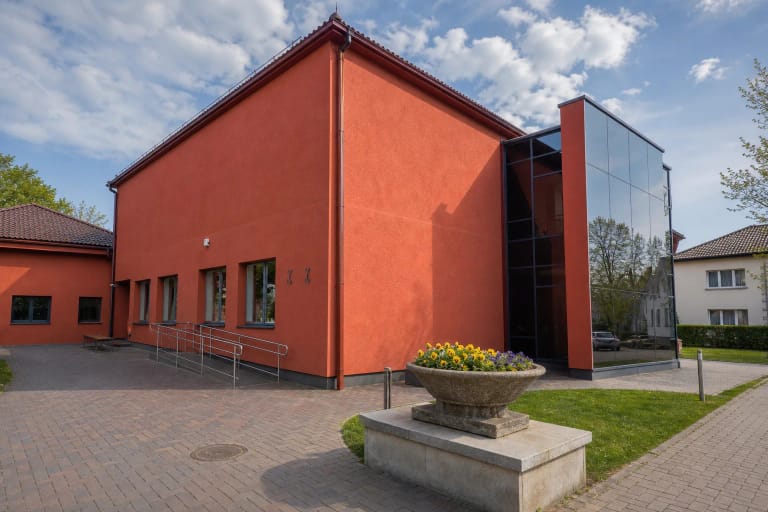
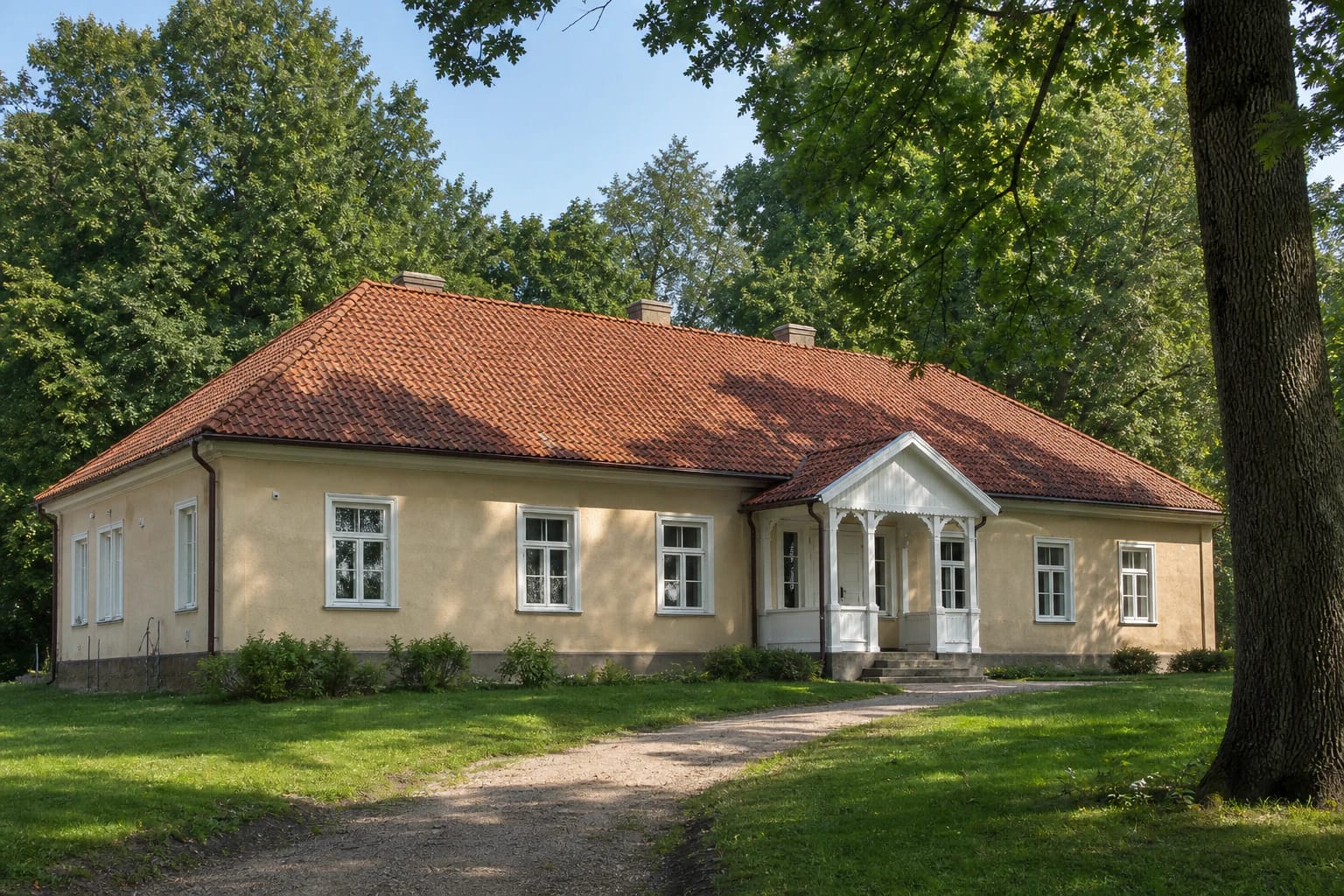
Dapkiškės Manor is recognised by a long, single-storey, pale-plastered house with a red-tile roof, regularly spaced windows, and a small white wooden entrance porch. Its scale resembles a restrained provincial residence rather than a ceremonial palace.
The current owners describe an avenue, old cellar, quiet garden area, and pond on the grounds. Which spaces are accessible on a particular day depends on the arranged programme, camps, and private events.
From eighteenth-century records to the Konarskis family
The manor's official chronology mentions Dapkiškės village in 1581 and 1649, and the estate itself in 1759 when it was transferred to Miroslavas parish. The Konarskis family settled here in 1795.
The manor's account presents Juozas Steponas Konarskis as a justice of the peace and elder of Dapkiškės who acquired the property and built its principal structures. The estate and its Dautartai and Obelytė outlying farms are said to have held about 700 ha, a figure best understood as historical information published by the manor itself.
Simonas Konarskis and the memory of resistance
Simonas Konarskis was born at Dapkiškės Manor on 5 March 1808 into a Protestant Reformed family. He took part in the 1831 uprising and later continued underground activity against Russian Imperial rule.
Konarskis was sentenced to death by firing squad on 31 January 1839, and the family estate was confiscated; the manor website also records the exile of family members to Siberia. The property is therefore a place of personal and political memory, although not every physical detail survives unchanged from his childhood.
Alterations and the present revival
The land was parcelled during the 1922 agrarian reform. The official chronology says the house was altered in 1978 and served as a collective-farm cultural centre, pioneer camp, and museum.
The present owners acquired the manor in autumn 2021 and began reviving it. It now advertises activities for children and adults, tours, family weekends, camp and event hire, and sauna programmes. This is a living privately managed property, so restoration and services can change.
Hours, prices, and booking
On 25 July 2026, the official contact page listed Monday 12:00-18:00, Tuesday-Saturday 10:00-18:00, and closed Sunday. Those hours do not prove that a public tour runs continuously or that visitors may enter the private grounds at any time.
The website does not publish one general admission price because offers range from activities to camps and events. Contact the manor before travelling and confirm the programme, start time, price, group size, and accessibility.