- Place
- Babrungėnai, Plungė District Municipality
- Region
- Samogitia
- Type
- stone and half-timbered watermill, architectural heritage
- Address
- Malūno g. 14, Babrungėnai village, Plungė District
- Coordinates
- 55.99920, 21.86330
Plateliai Manor watermill, Leonardas Černiauskas Art Gallery
Babrungėnai Watermill: the only one in the park
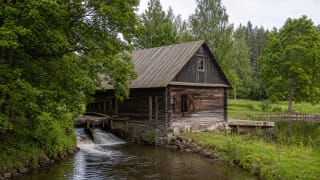
Babrungėnai Watermill stands on the Babrungas River in Babrungėnai village, Plungė District, inside Žemaitija National Park. According to the park description, it is the only watermill in the entire national park and has been declared an architectural monument, which makes it especially valuable.
The Babrungas flows out of Lake Plateliai and through the national park, so the mill is a natural part of the park's landscape and history. It should not be confused with the Plateliai Manor estate buildings in Plateliai itself.
The Choiseul counts' mill
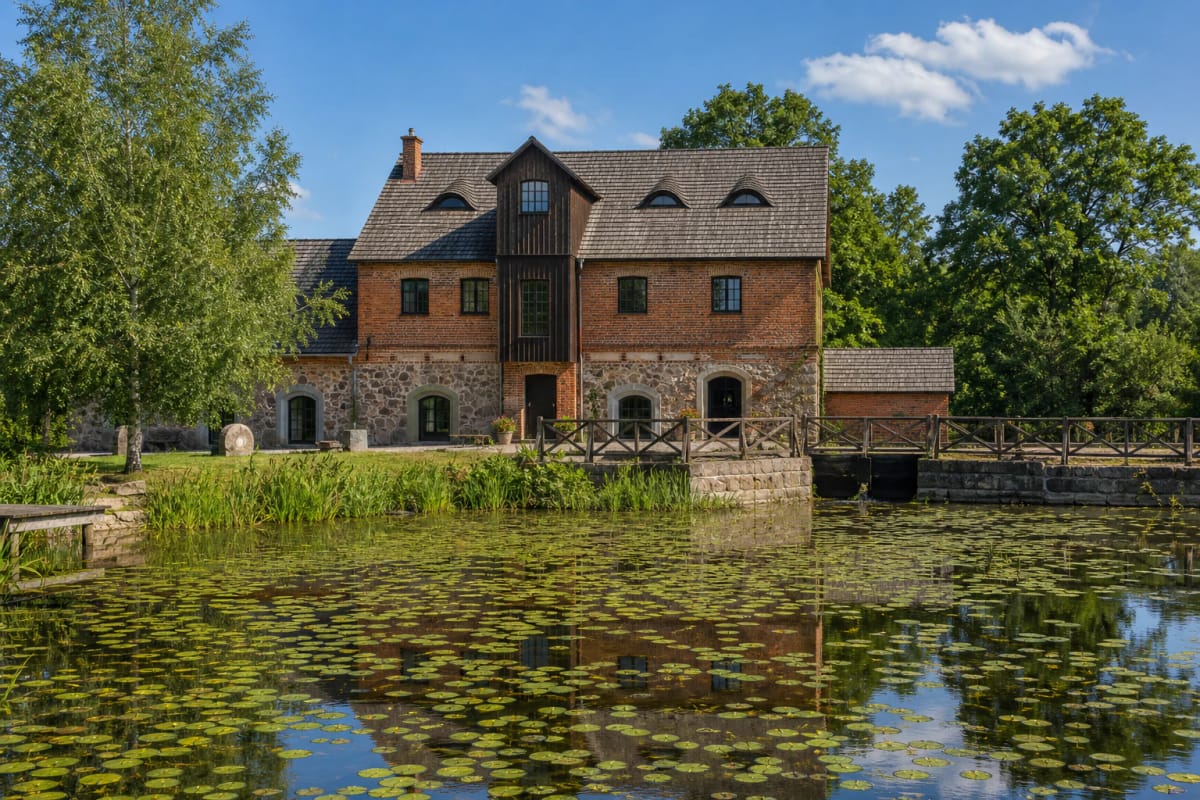
A mill on the Babrungas bank was mentioned as early as the 1791 inventory of Plateliai Eldership. The present stone-masonry mill with half-timbered, or timber-frame, structures on the second floor was built by the Choiseul-Gouffier counts, who ruled Plateliai, by 1816.
The Choiseul connection is reliable: the former royal Plateliai Manor was granted to Count de Choiseul by Tsar Paul I in 1797, and the family held it until 1940. The construction date, by about 1816, therefore falls within this period.
Stone walls, half-timbering, and the chimney
The mill is distinctive for its construction: thick stone-masonry walls, up to about 2 m, and a half-timbered second floor, meaning a wooden frame with infill. The building has an L-shaped plan. This combination of stone and frame is not common in Lithuanian mills.
Between the mill and living quarters an old chimney survives; food was once cooked at its opening on an iron tripod. It is one of the building's most authentic details and helps visitors sense the old life of the mill.
From mill to art gallery
Modernised during the interwar period, the mill ground grain until 1977, later already powered by diesel. Afterwards the building was abandoned and began to collapse.
In 1989 artist Leonardas Černiauskas bought the ruined mill, restored it over several years, and set up his art gallery and creative workshops here. Today the mill can show painting, wooden sculptures, carved saint figures, and collected old objects, turning the old mill into a living art space.
How to visit the mill
The mill is easy to combine with other Žemaitija National Park sites: Plateliai, Lake Plateliai, and Plateliai Manor Park. The building and gallery usually take 30-45 minutes to see.
Its current use is a private artist's gallery and workshop, not a museum open at fixed hours. Official opening hours or ticket prices are not published, so contact ahead or check current national-park information before travelling.