- Place
- Telšiai District Municipality
- Region
- Samogitia
- Type
- museum of Samogitian history, culture, nature, and art
- Address
- Muziejaus g. 31, Telšiai
- Coordinates
- 55.97522, 22.23572
Alka Museum, Samogitian Museum
Alka: Samogitia in one museum
Žemaičių Museum "Alka" in Telšiai is more than a local museum. It works as one of the strongest introductions to Samogitia: the region's history, nature, daily life, art, identity, and cultural memory. Its collections hold more than 155,000 items, from archaeology and numismatics to folk and professional art.
If a journey through Samogitia begins in Telšiai, Alka helps build the map in your head. After the museum, it is easier to understand why the hills, towns, manors, shrines, and dialect of Samogitia have such a distinct regional character.
From the Alka society to the 1938 palace
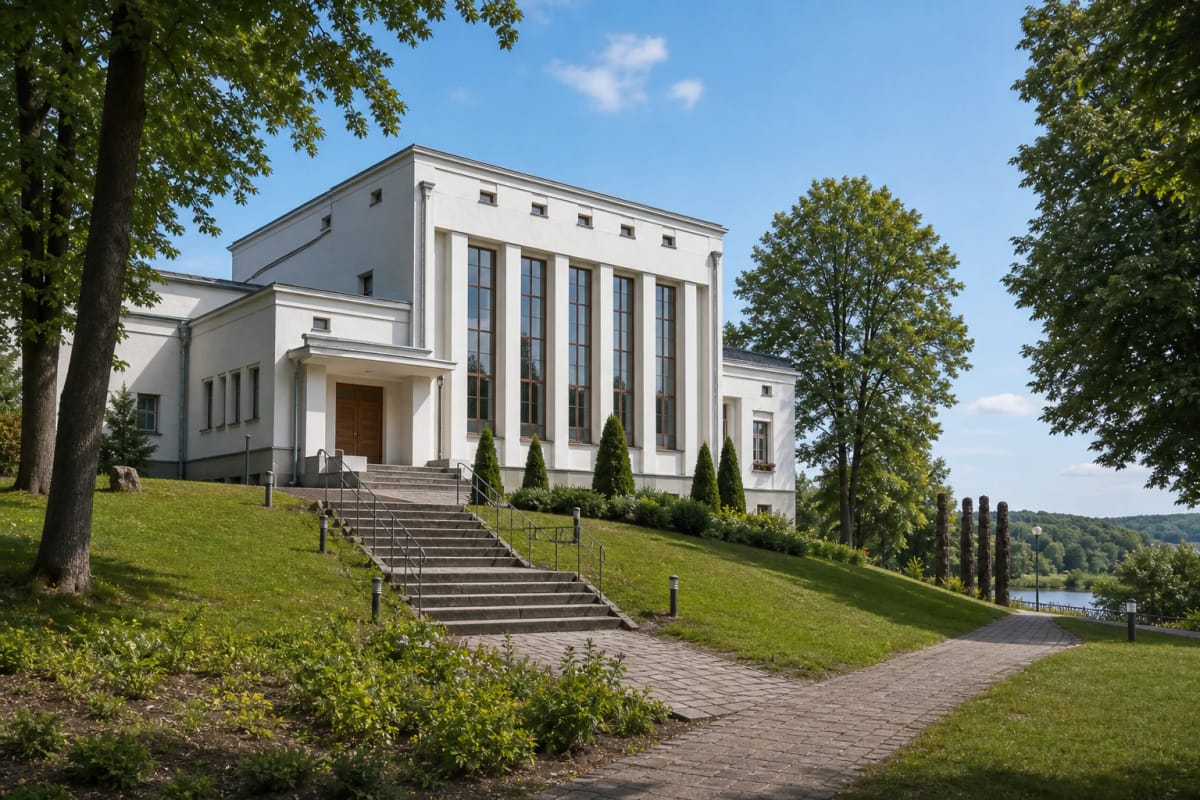
The museum was founded in 1932 by the Alka society and officially opened on 16 February 1932. Its first director was the poet and museologist Pranas Genys. With funds assigned by municipalities and donated by local residents and Lithuanians abroad, the museum palace was built on a Telšiai slope in 1938 to a design by architect S. Stulginskis.
From 1948 to 1988 the museum was called the Telšiai Local History Museum. An extension was built in 1998 by architect A. Žebrauskas, and the old palace was reconstructed in 2002. The museum stands on Muziejaus Street near Lake Mastis as a clearly visible regional cultural institution, not a hidden courtyard building.
Exhibitions and manor archives
The museum collections cover archaeology, ethnography, numismatics, folk art, printed works, manuscripts, and photographs. Especially valuable professional painting, graphic art, sculpture, and applied-art collections reached the museum in 1940-1941 from nationalized Samogitian manors, so Alka preserves an important part of the region's noble culture.
The holdings include more than 70,000 manor-archive documents from the 16th to 20th centuries, over 10,000 books in the library, and more than 15,000 photographic negatives. This makes Alka not only an exhibition museum but also a research site, helping visitors see Samogitia as a historical and social space rather than a folk stereotype.
Samogitian village exhibition and Žemaitukai horses
An important museum branch is the outdoor Samogitian village exhibition, developed from 1967 and opened in 1982. Across 8.5 ha stand 16 authentic late-19th- and early-20th-century buildings moved from Samogitian villages: the homesteads of a wealthy farmer, a middle farmer, and a land-poor peasant, plus a smithy, an English-type windmill with a rotating cap, and a symbolic small cemetery.
The exhibition also keeps Žemaitukai horses, an old local breed connected with Samogitian history. This outdoor part lets visitors understand rural life not only through objects in cases, but through buildings and setting.
Branches: Varniai, Rainiai, yeshiva, and sacred heritage
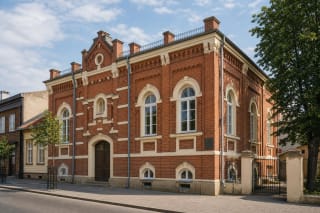
Alka manages several significant branches. Since 2015 it has included the Museum of the Samogitian Diocese in Varniai, founded in 1999 in the former Samogitian priest seminary palace; the Rainiai Suffering Chapel with an exhibition commemorating the Rainiai massacre; and the Telšiai Yeshiva building. A sacred-heritage exhibition operates in the former Telšiai Bernardine monastery rooms.
This network helps explain the wider Telšiai and regional story. A good Telšiai route connects Alka, the old town, the Lake Mastis waterfront, and the Telšiai Yeshiva, so the city appears not only as the capital of Samogitia but also as a place of multicultural memory.
How to visit Žemaičių Museum "Alka"
Allow at least 1.5 hours for the palace exhibitions alone. If you also want to visit the outdoor Samogitian village exhibition and walk by Lake Mastis, plan a half-day in Telšiai. In 2019, the museum received more than 38,000 visitors.
Before travelling, check official opening hours, tickets, and current exhibitions. The museum works best as the first or central point of a Samogitian route linking Šatrija, Plungė, Žemaičių Kalvarija, and Plateliai, not as a rushed stop between two sites.