- Place
- Varniai, Telšiai District Municipality
- Region
- Samogitia
- Type
- museum of sacred heritage and the history of the Samogitian Diocese
- Address
- S. Daukanto g. 6, 88318 Varniai, Telšiai District
- Coordinates
- 55.74417, 22.37222
Varniai branch of Žemaičių Museum Alka
Museum in the old seminary building
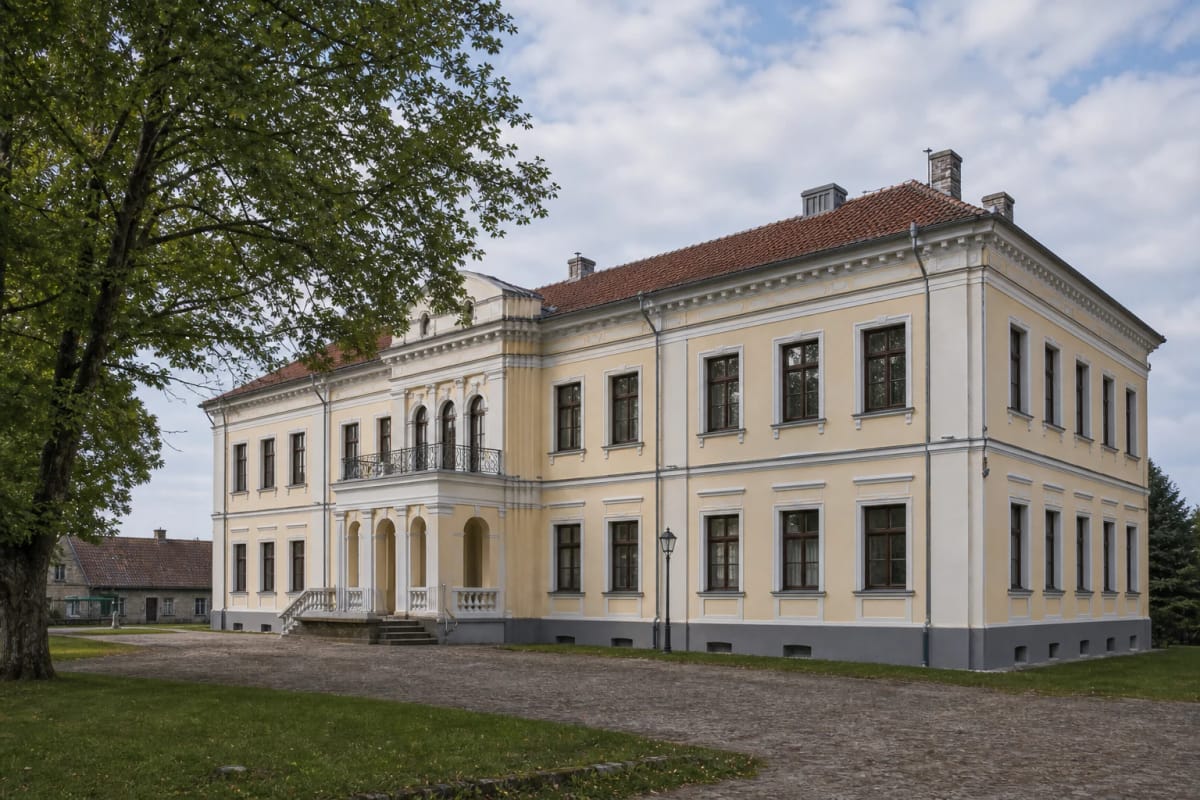
The Museum of the Samogitian Diocese operates in Varniai, in the historic building of the Samogitian Priest Seminary, so not only the exhibition but the building itself is a memory sign of the former diocesan centre. The museum was founded in 1999 and since 2015 has been a branch of Žemaičių Museum Alka, linking Varniai church history with the broader Samogitian museum system in Telšiai.
In front of the building stands the monument to Bishop Merkelis Giedraitis and Canon Mikalojus Daukša, unveiled in 1999 and created by sculptor Arūnas Sakalauskas. It recalls the early Lithuanian writing tradition connected with the Samogitian Diocese.
Seminary building and Glaubitz bell tower
The Samogitian Priest Seminary was established in Varniai around 1622 on the initiative of Bishop Merkelis Giedraitis. It operated with interruptions: in 1628 it was moved to Kražiai, and from 1740 it returned to Varniai. Around 1740 Bishop Antanas Domininkas Tiškevičius began building a masonry bell tower near the former cathedral site, and in 1770 Bishop Jonas Dominykas Lopacinskis built the present seminary palace beside it, considered the work of architect Johann Christoph Glaubitz.
Jesuits, Piarists, and Missionaries taught at the seminary; during Bishop Motiejus Valančius's rectorship in 1845-1850, Lithuanian was also taught here. After the 1863-1864 uprising, tsarist authorities moved the seminary and its famous library to Kaunas, and Varniai lost the role of diocesan centre. The museum building preserves the memory of that institutional history.
What the exhibition tells
The museum presents the history of the Samogitian Diocese, sacred heritage, clerical culture, and church art. Official information emphasizes sacred objects and artefacts whose chronology reaches the 15th-16th centuries, showing that the Varniai museum is not only about 19th-century memory but also earlier layers of Christian culture in Samogitia.
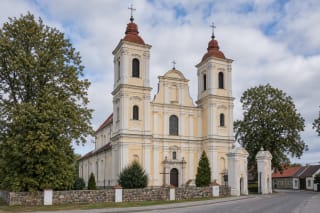
It is a strong place to visit before or after Varniai Cathedral. The exhibition helps connect the cathedral's architecture with the institutional history of the seminary and diocese, so together the two sites explain why Varniai was more than a small town in Samogitia.
Bell tower and the great bells
One of the most distinctive visitor draws is the museum's bell tower. Official information states that it holds the largest ringing bells in Lithuania, decorated with iconographic and historical reliefs.
The bells ring at noon on the last Sunday of each month or by prior arrangement. Climbing the tower expands the museum experience from exhibition rooms to sound, town views, and the feeling of sacred space. Check before travel whether the tower is accessible that day.
Opening hours and tickets
During research, official museum sources listed opening hours as closed Mondays, Tuesday-Friday 9:00-18:00, and Saturday-Sunday 11:00-18:00. Check the official page before travelling, because opening hours and exhibition access can change.
During research, official prices were listed as 8 EUR for the sacred-heritage exhibition with the bell tower, 6 EUR without the tower, reduced tickets of 4 EUR and 3 EUR respectively, and 2 EUR for the tower only. Guide services and free admission on the last Sunday of the month were also offered, so prices should be checked again on the travel date.