
Spring
Atvelykis: Children’s Easter
The Sunday after Easter, seven days later
Atvelykis offers a second Easter encounter: with a child, godchild, neighbour or relative missed during the main celebration. The name Children’s Easter captures its mood without reducing the occasion to a children’s event. Its character becomes clearer when the calendar date, family customs and a contemporary public programme are considered separately.
Tradition context
- When
- The Sunday after Easter, seven days later
- Season
- Spring
- Themes
- Children’s Easter, godparents, decorated eggs, visiting, Easter octave
Atvelykis falls on the Sunday after Easter and is also called Little Easter or Children’s Easter. Godparent visits, gifts of decorated eggs and games extend festive family contact; the customary end of Easter visiting does not mark the end of the Church’s Easter season.
When is Atvelykis?
Count from Easter Sunday to the next Sunday: seven full days have passed, although inclusive church counting, which includes Easter itself, calls it the eighth day. Atvelykis has no fixed date in the month. The Second Sunday of Easter means this immediately following Sunday, not two weeks after Easter. The Universal Lithuanian Encyclopedia and the liturgical calendar connect these names in this way.
Little Easter, Children’s Easter and Pravadai
The Kaunas Centre for National Culture lists Velykėlės, Little Easter, Children’s Easter and Pravadai alongside Atvelykis. This variety helps when talking with older relatives: someone may remember the occasion well under another name. A list of synonyms alone cannot establish which name prevailed in a particular village or when a family used it. That requires a separate local account.
Godparents and godchildren meet
The centre’s account describes children visiting their godparents at Atvelykis and receiving decorated eggs. In the broader context of Easter gifts, Lithuanian National Museum teaching material interprets this exchange as a renewal of the relationship between godparents and godchildren. This draws attention to the encounter as well as the object: who decorated the egg, whom it was intended for and what wish accompanied it.
A family today can preserve that relationship by arranging a visit, choosing an egg to give together and writing down a short memory. This is a suggested present-day activity, not a reconstructed historical rite. Where relatives live far apart, a conversation about the family’s decorated eggs can create an occasion to connect without travelling.
The decorated egg: gift, game piece and memory
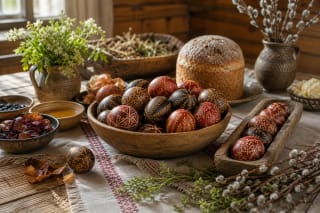
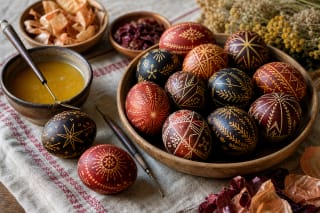
Prepare a small set of decorated eggs for exploring Atvelykis. Use one to tell a story about giving, another to discuss its pattern and a third for an agreed game. Ask children to explain how these purposes differ. The same object can take part in several kinds of activity, so choosing the prettiest design or winning a game does not exhaust its meaning. This learning exercise can be adapted for a family or classroom.
Local customs and the end of Easter visiting
The Kaunas centre also connects Atvelykis with adults visiting relatives they had not reached earlier and associates eating a fried egg dish with Samogitia. The encyclopedia notes a recorded Dzūkian avoidance of preparing a warp during the preceding week, linked with a belief that threads would otherwise tangle. These are particular regional observations, not a timetable followed by everyone in Lithuania or a proven rule of weaving technology.
The octave ends; the Easter season continues
The Catholic liturgical calendar also calls Atvelykis Divine Mercy Sunday. It concludes the Easter octave, while the Easter season continues until Pentecost. A folk-custom account saying that Easter ends at Atvelykis may therefore refer to visiting or family festivities. It should not be read as saying that the entire liturgical season ends after a week.
Family celebration and a city programme
A public event can bring together several motifs from the Easter cycle. For example, the Kaunas Children’s Easter announcement for 2026 planned egg decorating, games, folklore performances and making Palm Sunday bouquets. The announcement documents that event’s proposed programme; it does not establish that every activity historically belonged specifically to Atvelykis. Nor is it a programme for another year or a report confirming what took place.
Collecting your family’s Atvelykis story
Begin with four questions: what did you call the day, where did you celebrate it, whom did you visit and what did you take? Record the speaker’s name, the period recalled and the place. Distinguish personal experience from what they heard from others. If one relative remembers children visiting and another remembers adults gathering around a table, both accounts may be valuable. There is no need to erase the difference by choosing a single “correct” scenario.
A simple timeline also helps learners: Palm Sunday, Good Friday, Easter and, a week later, Atvelykis. In the 2026 ethnic culture olympiad, pupils had to recognise the sequence of these occasions among other Easter-cycle days. Adding a family memory beside a date helps connect the calendar’s order with the way a celebration was experienced in a particular home.
How to read the sources
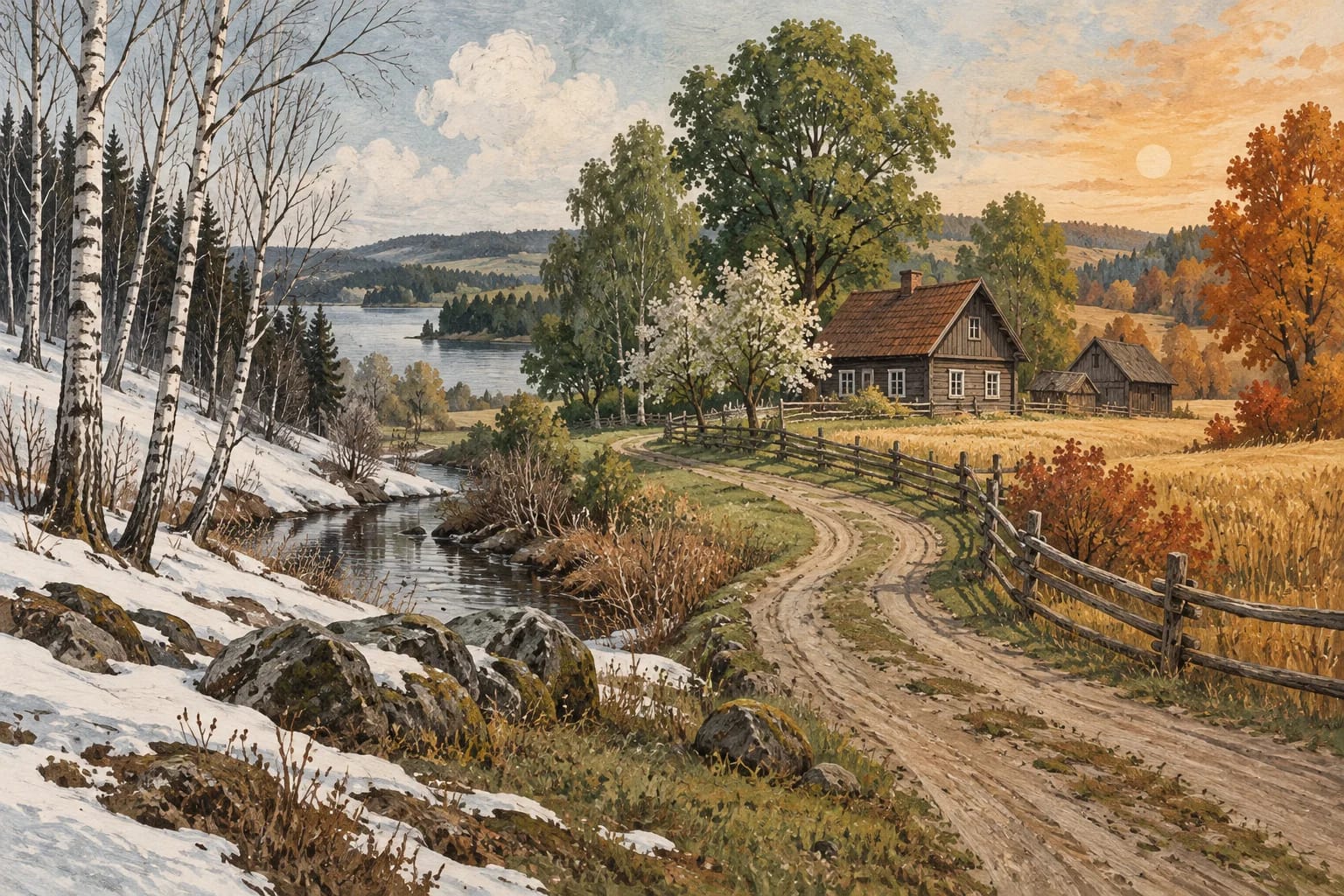
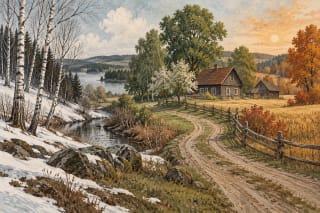
Church timing was checked in the liturgical calendar; the interpretation of customs was compared with the encyclopedia and museum teaching material. The Kaunas centre’s description and event announcement were consulted through text available in the search index. The source verification date refers to preparing this article, not to collecting family testimony. The thematic header illustration is not a documentary photograph of Atvelykis.
Main Atvelykis customs and meanings
These customs provide starting points for exploration. They do not prescribe one celebration for every family: individual memories are best connected with a place and the people who recall them.
Visiting godparents and giving decorated eggs.
Games with decorated eggs and continued Easter visiting.
Passing on local family customs to children through stories and shared activities.
Atvelykis: songs, sutartines, and related pages
The pages on Easter, baptism customs and decorated eggs provide further context. Lalavimas introduces a different Easter visiting custom with its own timing and sung repertoire.
Atvelykis sources and useful pages
- Universal Lithuanian Encyclopedia: Atvelykis
- Kaunas Centre for National Culture: Atvelykis
- Lithuanian Catholic liturgical calendar: Atvelykis 2026
- EKGT: gift customs, slides on Easter
- Kaunas Centre for National Culture: Children’s Easter 2026 programme
- EKGT: 2026 olympiad tasks and answers, years 11–12, p. 5
Atvelykis: frequently asked questions
Is Atvelykis always on a Sunday?
Yes. It is the Sunday after Easter, found by adding seven days to Easter Sunday.
Is Atvelykis only for children?
The name Children’s Easter highlights children’s involvement, but sources also describe adults visiting relatives.
Does the Church’s Easter season end at Atvelykis?
The Easter octave ends. The Catholic liturgical Easter season continues until Pentecost.