
Things to do in Lithuania
Things to do in Trakai
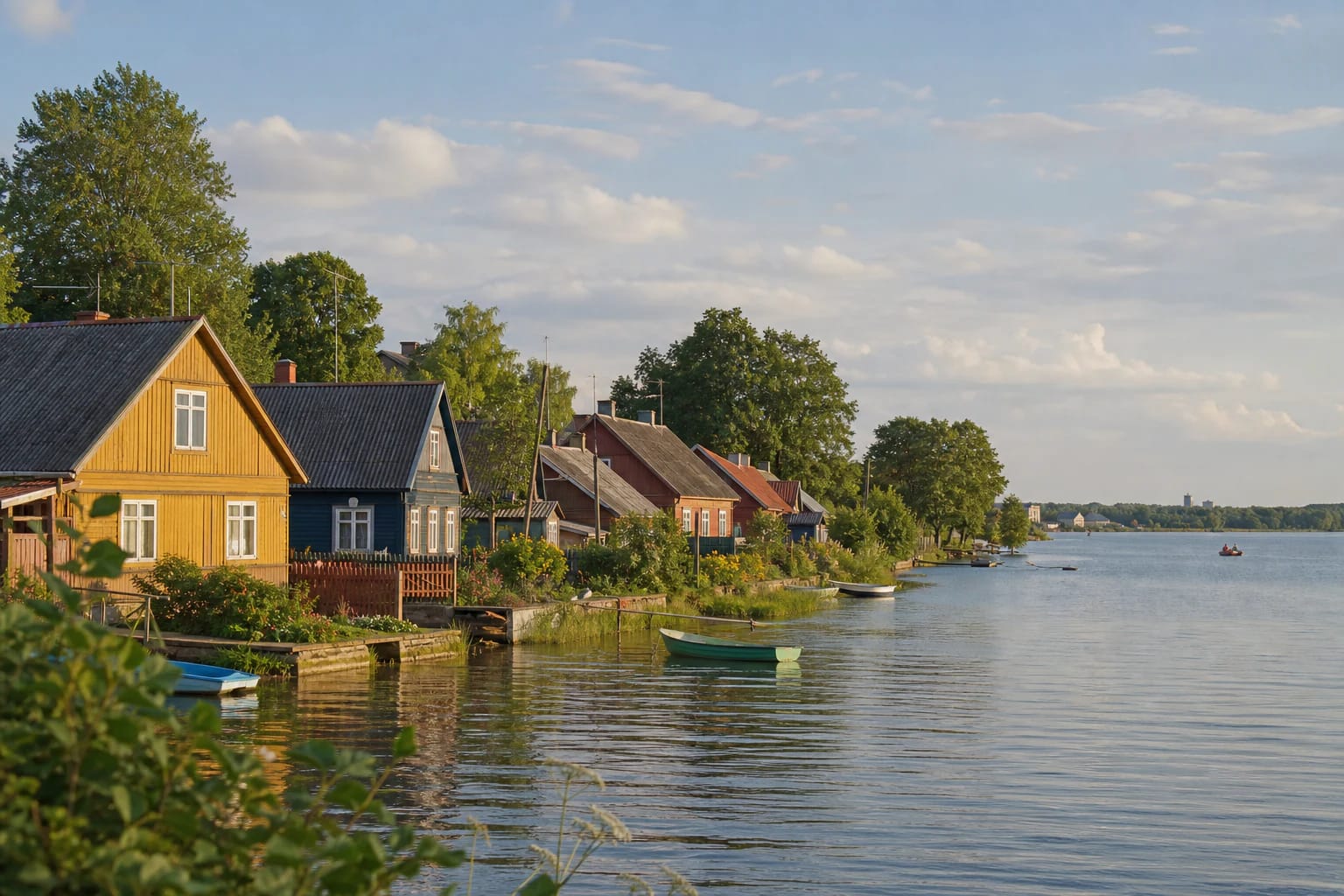
Trakai is a former centre of the Grand Duchy of Lithuania on Lake Galvė, known for its island and peninsula castles, Karaim community, kibinai, and Trakai Historical National Park.
Trakai
Where to start
Choose a place, compare visiting times or explore the area on the map.
Key places to visit in Trakai:
Trakai Island Castle
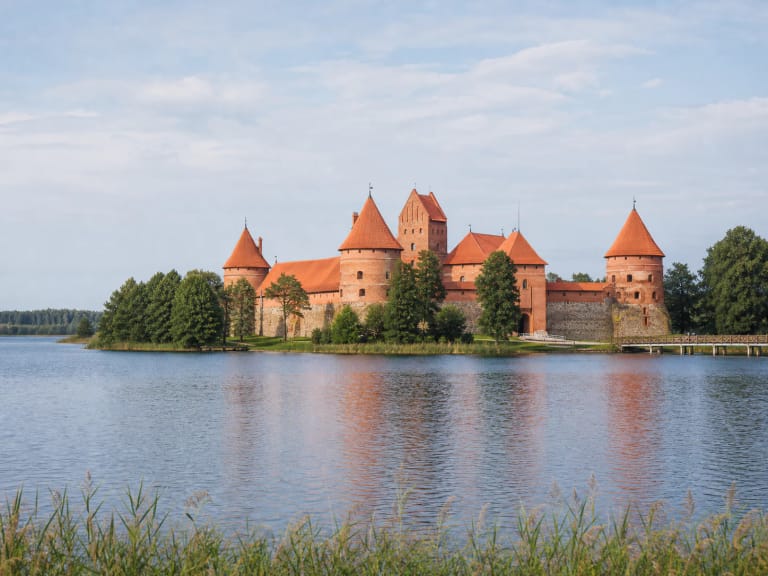
Trakai Island Castle in Lake Galvė is a red-brick Gothic castle begun by Kęstutis and completed by Vytautas, today serving as the core of the Trakai…
Užutrakis Manor
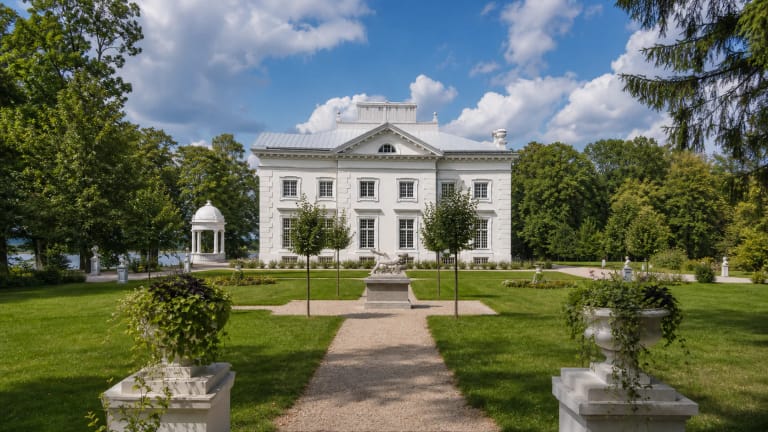
Užutrakis Manor is one of the most beautiful places in Trakai Historical National Park: Tiškevičiai palace, Édouard François André's park, Lake Galvė…
Devil's Pit
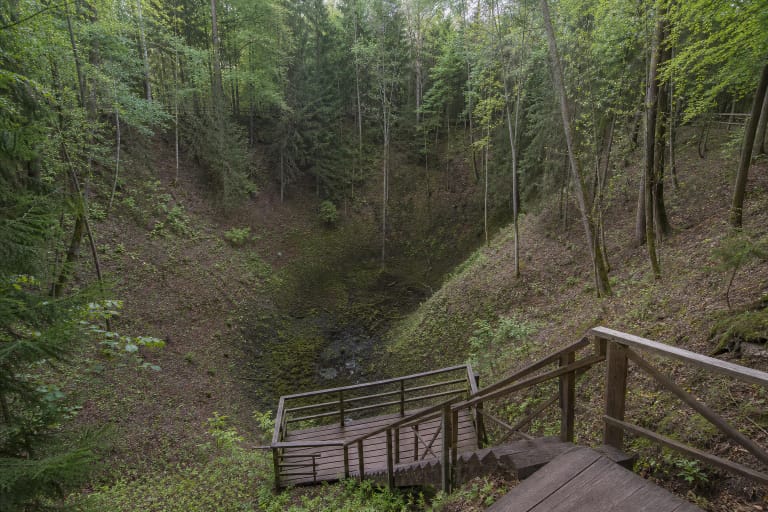
Devil's Pit is one of Lithuania's most striking hollows in Aukštadvaris Regional Park: a funnel-shaped natural monument about 40-42 m deep, with a…
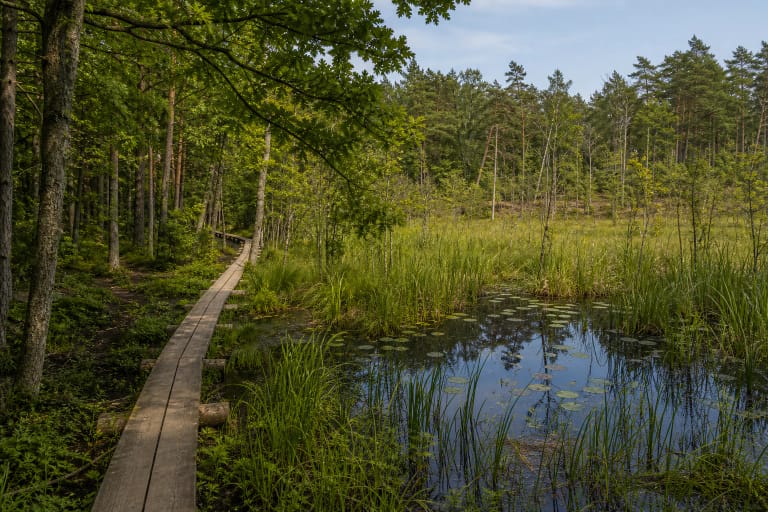
Varnikai Nature Trail
Varnikai Nature Trail near Trakai leads through forest, Ilgelis bog, and a boardwalk, making it a convenient nature route close to Trakai Island…
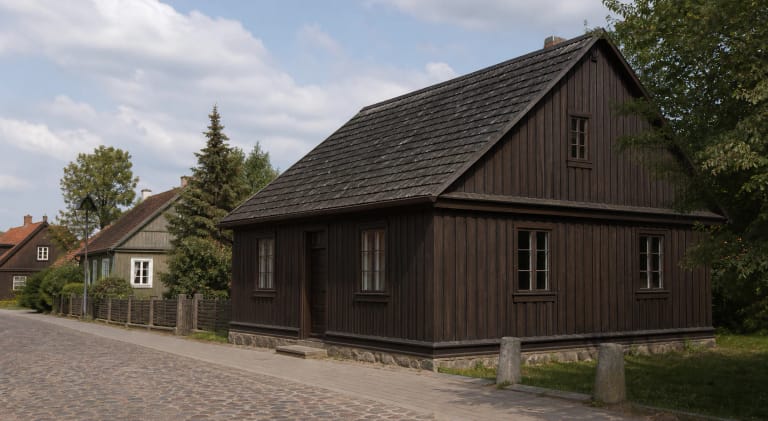
Trakai Karaim Kenesa
The Trakai Karaim Kenesa on Karaimų Street is the first kenesa established in Lithuania, with roots in the fifteenth century, and during the Soviet…
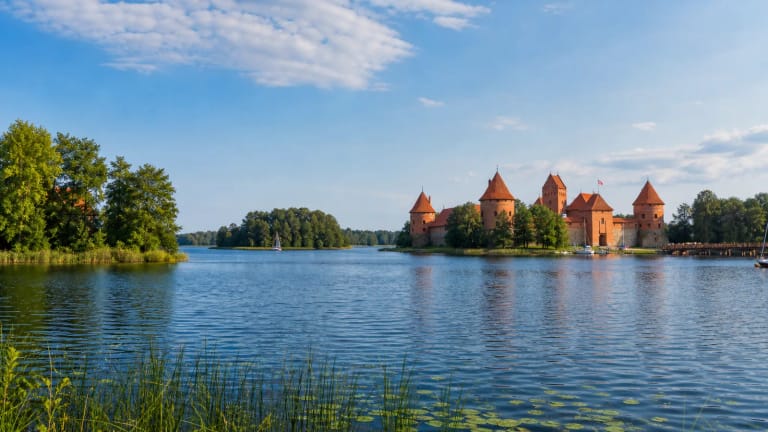
Lake Galvė islands
The islands of Lake Galvė form one of the most recognizable landscapes of Trakai Historical National Park: 21 islands, 14.9 ha in total, in a 361 ha…
All places in this guide
Places on the mapTrakai Island Castle2-3 hoursUžutrakis Manor2-3 hoursDevil's Pit45-90 minutesVarnikai Nature Trail1.5-2 hoursTrakai Karaim Kenesa15-30 minutes for the exterior; longer only if an interior visit is arrangedLake Galvė islands1-2 hours for shore and island views; longer with the castle museum or a boat tripAngel Hill in Trakai30-75 minutes; longer if you read the dedications and combine it with the Galvė areaAukštadvaris Regional Parkhalf a day to a full dayTrakai Peninsula Castle30-60 minutes, easy to combine with Island CastleLentvaris Manor1-1.5 hours for exterior and parkSenieji Trakai Church and Monastery30-60 minutesBasilica of the Visitation of the Blessed Virgin Mary in Trakai45-75 minutes; 2-3 hours with Trakai Peninsula Castle and the historic centreStrėva Sinkhole30–60 minutesStrėva Green Trail3-5 hours; longer after rain or with extended stops at lakes and the sinkholeRūdiškės Sacred Heart of Jesus Church30-60 minutes; longer if you attend Mass and walk through the churchyardChurch of the Nativity of the Mother of God in Trakai15-30 minutes; longer during servicesAukštadvaris Regional Park Visitor Centre45-90 minutes for the exhibition and route planning; longer for a booked education programmeChurch of the Annunciation in Lentvaris20-40 minutes for the exterior and churchyard; 40-60 minutes if there is time to examine the wall paintings quietlyAukštadvaris Hillfort45-75 minutesVerknė Oxbow Spring20-40 minutesOnuškis Church of Saints Philip and James30-60 minutesRykantai Holy Trinity Church30-60 minutesSaidė Nature Trailabout 1 hour; 1-1.5 hours for an unhurried look at the confluence and hillfortStirniai Hillfort40-60 minutes; about 1.5 hours when combined with the Saidė and Neris confluenceLentvaris Lake1-3 hours for the beach, promenade, and recreation zone; longer when combined with Lentvaris ManorIlgai1-2 hours for the landscape and a legally reached shore; longer for a separate recreation stopMošos, Naujasodžių Hillfort with Settlement45 minutes-1.5 hours; longer if walking the Skrebio Forest trailVilsos Stream Waterfallsabout 1-2 hours; up to 4 hours if combined with a longer walk in the Vilsos Valley areaLake Akmenaabout 1-3 hours; longer if combined with a Trakai Historical National Park routeLake Spindžiusabout 1-3 hours; longer if combined with the Strėva Green Trail or other park sitesLake Galvė2-4 hours for shore panoramas and island views; longer with a boat trip or castle visitLake Vilkokšnis2-4 hours for one shore perspective and the Žuklijai hillforts; longer to explore the lake areaLake Margis1-2 hours for a selected lakeshore stop; longer when combined with a Trakai District routeLake Skaistis2-4 hours for one shore or a visit combined with Užutrakis Park; allow longer for the wider Trakai lake district and linked routesLake Akmena Beach2-4 hours for swimming, relaxing, a picnic, and a short lakeside walkLake Stanka30-90 minutes for a quiet stop; longer when combined with a Strėva routeSpindžius-Spindžiukas Lake Channel20-45 minutes for the channel and bridge; longer with a Strėva routeTotoriškės Beach1-3 hours for swimming, relaxing, and a short lakeside walkAukštadvaris Beach1-3 hours for swimming, relaxing by the water, and a short walkAukštadvaris Church of the Transfiguration of Christ30-60 minutes for the facade, churchyard, and a quiet interior visit if it is open
About this area
Trakai is one of Lithuania's most recognizable towns and the classic day trip from Vilnius, drawing visitors to the red-brick Island Castle in the middle of Lake Galvė. It was a residence of the Grand Dukes of Lithuania and a centre linked with Vytautas the Great, where peninsulas between lakes, deep waters with islands, and a living Karaim community create a landscape unlike anywhere else in the country. Trakai Historical National Park protects this whole heritage setting: castles, lakes, old streets, and inhabited places together, not just one photogenic castle.
Why visit Trakai
Trakai lies about 28 km west of Vilnius, the centre of Trakai District Municipality, set on a narrow peninsula between Lake Galvė, Lake Totoriškės, and Lake Luka. That geography shaped the town's importance: in the Middle Ages, it held a residence of the Grand Duke of Lithuania and is remembered as one of the capitals of the Grand Duchy of Lithuania.
The town's pull comes from a two-castle ensemble, a water-ringed old town, and the heritage of three religions and several peoples: Lithuanians, Poles, Karaims, and Tatars. Trakai Historical National Park, established in 1991, protects this whole setting, so Trakai should be read as a historical landscape, not only as a single castle photo.
Because Trakai is close to Vilnius and compact, it works well as a one-day trip. Still, the lakes, cycling paths, and Užutrakis Manor give enough reasons to stay longer.
Trakai Island Castle and Peninsula Castle
The best-known symbol is Trakai Island Castle on an island in Lake Galvė, occupying almost the whole island of about 1.8 ha. According to VLE, the castle was built from the middle or second half of the fourteenth century to the beginning of the fifteenth century and restored in the twentieth century, with the palace rebuilt in 1953-1962. It is a Gothic convent-type castle with a keep, inner courtyard, fore-castle, drawbridge, and traces of fifteenth-century frescoes.
The Island Castle houses the Trakai History Museum, which tells the story of the castle, town, and region. It is closely associated with Vytautas the Great, who is believed to have died here in 1430. In summer, concerts, opera performances, and medieval-style events often use the island setting.
The second, often overlooked site is Trakai Peninsula Castle between Lakes Galvė and Luka, covering about 4 ha. Towers, defensive walls, and Dominican monastery buildings survive there, and medieval festivals have been held in the area since 1999. Seeing both castles helps visitors understand Trakai as a fortified town rather than one isolated monument.
Lake Galvė and Užutrakis Manor
Lake Galvė is one of Lithuania's deepest and most famous lakes, with more than twenty islands. It gives Trakai its postcard view. In summer, boats, kayaks, and other water activities make the castle landscape easier to read from the water, where the Island Castle looks strongest.
On the northern shore of Lake Galvė, on the Užutrakis peninsula, stands Užutrakis Manor: the Tiškevičiai palace with a park planned in the early twentieth century by French landscape architect Édouard François André. It is the right place for a slower walk and a view of Island Castle from the opposite shore.
The wider Trakai area can be extended with Old Trakai, including the church and Benedictine monastery. Old Trakai is traditionally treated as Vytautas' birthplace and as an older core of Trakai than the present town.
Karaim heritage and kibinai
Trakai is the most important centre of the Karaims in Lithuania, a small Turkic-origin community. According to historical tradition, Vytautas brought Karaims from Crimea at the end of the fourteenth century and settled them near the castles. Their community, language, and religious heritage still endure today.
On Karaimų Street, traditional wooden houses stand with three windows facing the street, alongside the eighteenth-century wooden Karaim Kenesa, a prayer house that preserves one of the few active Karaim religious sites in Europe. The Trakai History Museum also presents Karaim life through its Karaim-studies exposition.
The best-known food connected with Trakai is kibinai, baked pastries with meat or other fillings. Eating them in the eateries on Karaimų Street has become an inseparable part of a Trakai visit.
Practical tips: how to get there and when to visit
From Vilnius, Trakai is easiest by train or bus; the journey takes about half an hour, and from the station you can walk through the old town to the Island Castle. By car, Trakai is straightforward, but parking near the castle fills quickly on summer weekends.
The best season is May to September, when boats, cafes, and events are active. Spring and early autumn bring fewer crowds, while winter, when Lake Galvė freezes over, opens a different, calm view of the castle.
Entry to Trakai Island Castle and the Trakai History Museum is paid, and opening hours and ticket prices vary by season, so check them before travelling. When visiting the castle, it is convenient to combine the route with a boat trip on the lake and a kibinai lunch on Karaimų Street.
Trakai: frequently asked questions
How do you get to Trakai from Vilnius?
The easiest options are train or bus, and the trip usually takes about half an hour. From Trakai station, walk through the old town to the Island Castle. By car, Trakai is easy to reach, but summer parking fills quickly.
What is Trakai Island Castle famous for?
It is a red-brick Gothic castle on an island in Lake Galvė, built in the fourteenth and fifteenth centuries and restored in the twentieth century. It houses the Trakai History Museum and is associated with Vytautas the Great, who is believed to have died there in 1430.
What is the difference between Trakai Island Castle and Peninsula Castle?
Island Castle stands on a Lake Galvė island and is a restored residential castle with a museum. Peninsula Castle stands between Lakes Galvė and Luka, covers about 4 ha, and preserves towers, walls, and monastery buildings.
Who are the Karaims and what are kibinai?
The Karaims are a Turkic-origin community traditionally said to have been brought to Trakai by Vytautas at the end of the fourteenth century. They preserved their language, Kenesa, and cuisine; the best-known dish is kibinai, baked pastries with filling.
Can you go boating on Lake Galvė?
Yes. In summer, Lake Galvė has boat trips and rentals for boats, kayaks, and other water activities. The view of Island Castle from the water is one of the strongest Trakai views.
What should you see at Užutrakis Manor?
Užutrakis Manor is the Tiškevičiai palace on the northern shore of Lake Galvė, with a park planned by Édouard François André. It is good for a calm walk and a panorama of Island Castle from the opposite shore.
How much does a Trakai Island Castle ticket cost?
Entry to Island Castle and the Trakai History Museum is paid, and ticket prices and opening hours change by season. Check the official museum site before visiting.
When is the best time to visit Trakai?
From May to September, boats, cafes, and events are most active. Spring and early autumn are less crowded, while winter gives a different, quieter castle view if the lake freezes.
How much time should you spend in Trakai?
You can see Island Castle, the old town, and eat kibinai in half a day or a day. To add Peninsula Castle, Užutrakis Manor, and a boat trip, plan a full day or longer.
Trakai: what else to see
Trakai Island Castle
The famous Gothic castle on Lake Galvė island, with the Trakai History Museum inside.
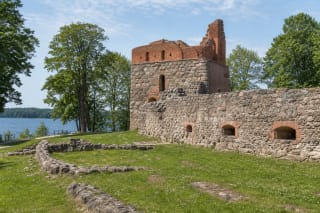
Trakai Peninsula Castle
The larger, older castle remains on the peninsula, with towers, walls, and the Dominican monastery layer.
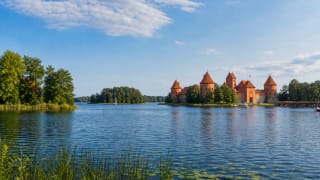
Lake Galvė islands
More than twenty islands in Trakai's deep lake, best understood from the shore and from the water.
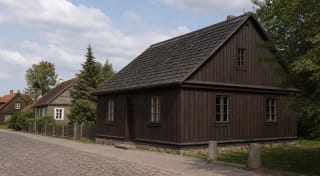
Trakai Karaim Kenesa
The eighteenth-century wooden Karaim prayer house on Karaimų Street, a rare living heritage site in Europe.
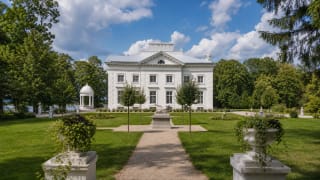
Užutrakis Manor
The Tiškevičiai manor and André park across Lake Galvė, with a different view of the castle landscape.