
Things to do in Lithuania
Things to do in Varėna
Varėna is a Dzūkija town and the main gateway to Dzūkija National Park: Dainava Forest pinewoods, Marcinkonys, Čepkeliai Mire, the ethnographic villages of Zervynos and Musteika, Merkinė, mushroom country, and Dzūkian culture.
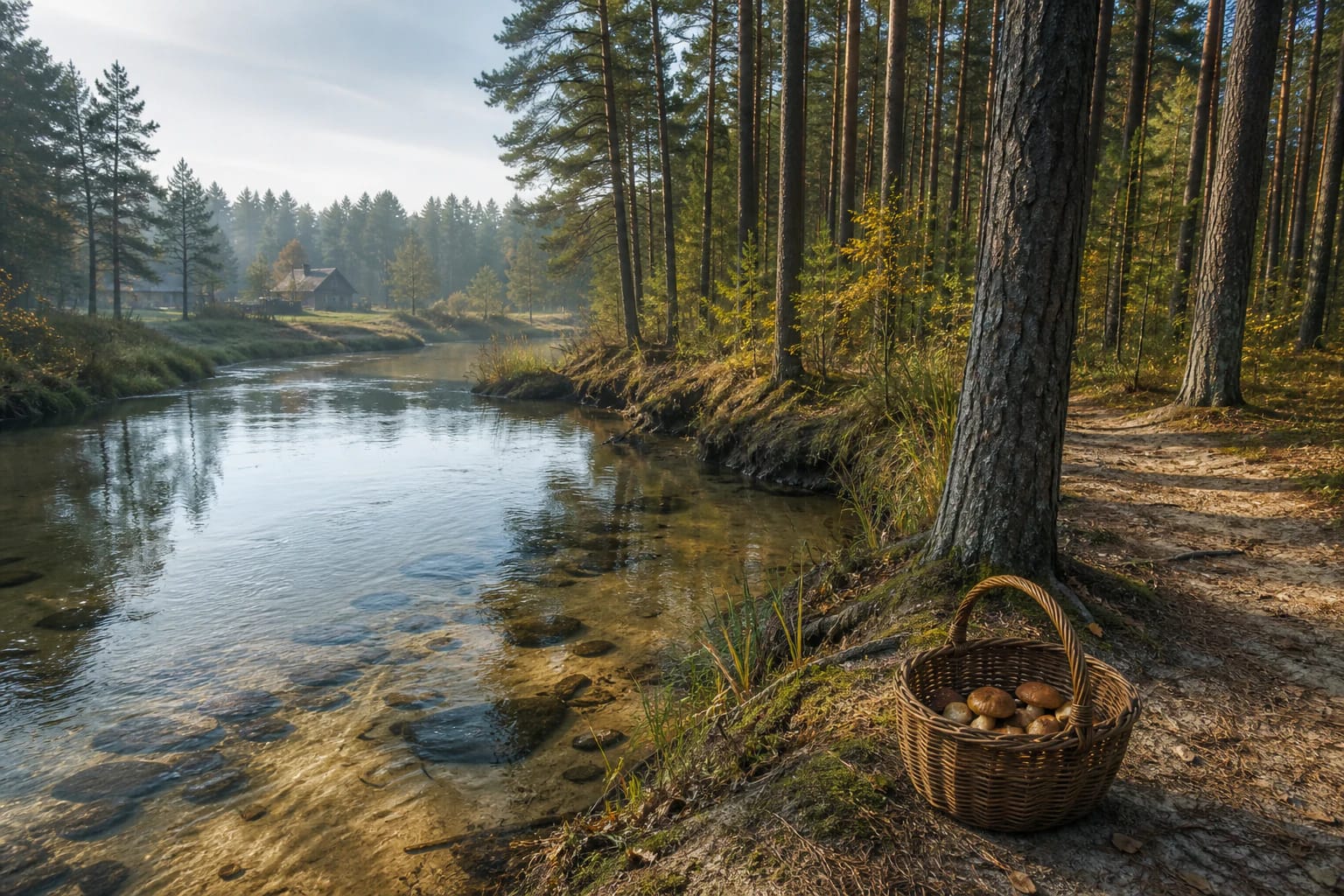
Varėna
Where to start
Choose a place, compare visiting times or explore the area on the map.
Key places to visit in the Varėna area and Dzūkija National Park:
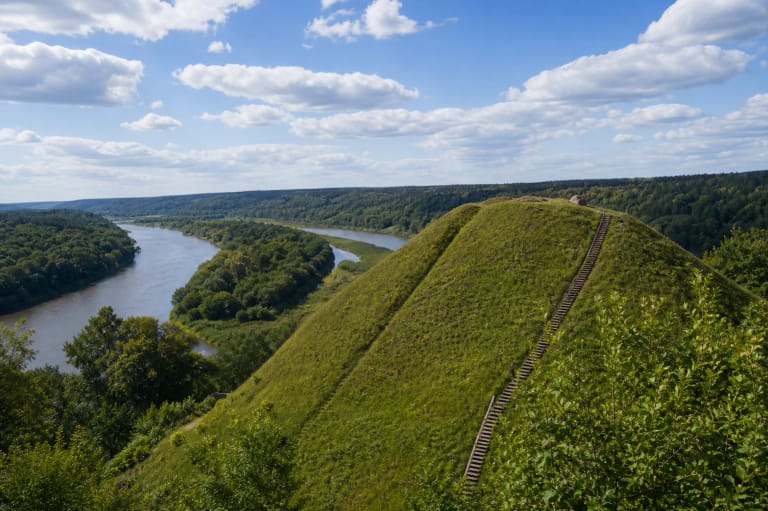
Merkinė Hillfort
Merkinė Hillfort stands near the Nemunas and Merkys confluence on a steep-sided hill that in the fourteenth and fifteenth centuries held one of the…
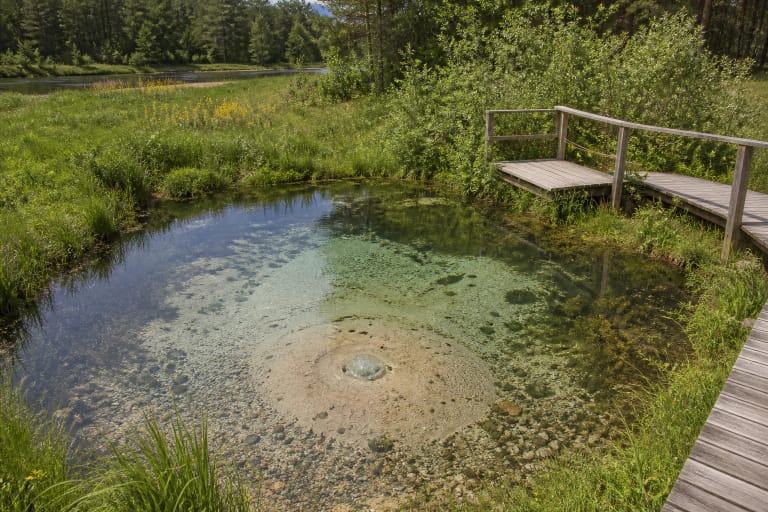
Ūla Eye
Ūla Eye is a Dzūkija National Park spring where water rises from deep layers and constantly stirs sand in a small suffosion hollow.
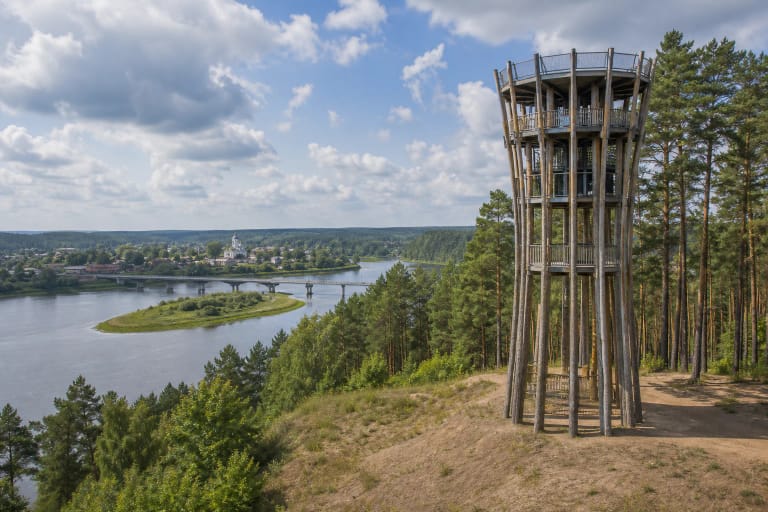
Merkinė Observation Tower
Merkinė Observation Tower, also called Pušų gojelis, is a 26 m viewpoint above the Nemunas landscape in Dzūkija National Park.
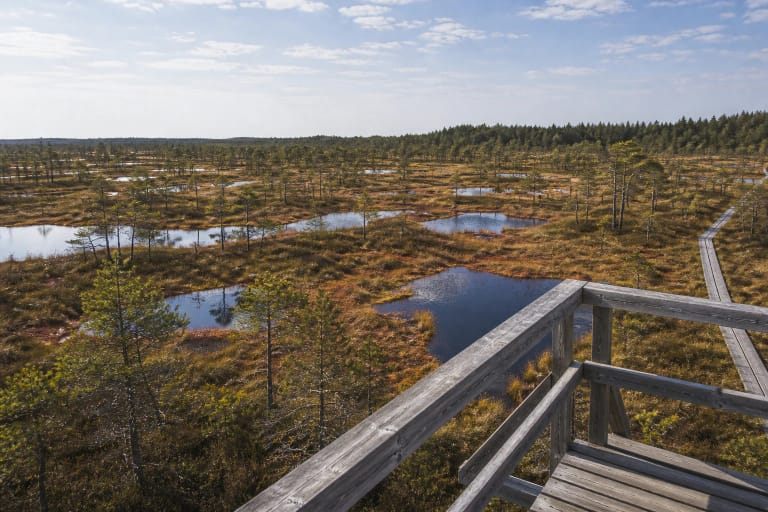
Čepkeliai Mire
Čepkeliai Mire is Lithuania's largest raised bog and a strictly protected nature reserve, where visitors experience the wetland only on a marked trail…
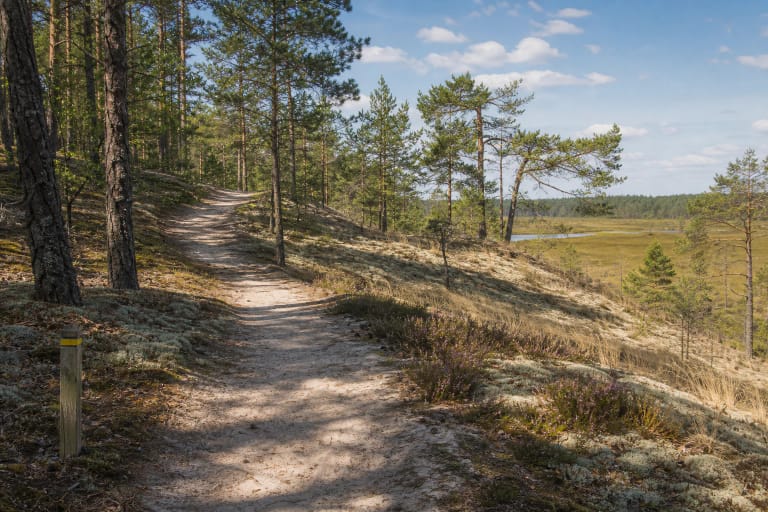
Zackagiris Nature Trail
Zackagiris Nature Trail from Marcinkonys is a long Dzūkija National Park route through sandy pinewoods, dunes, wetland stretches, the Grūda valley,…
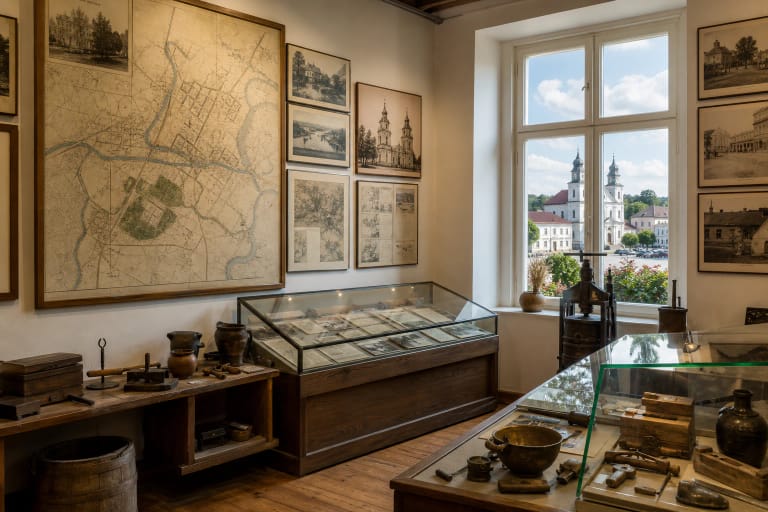
Merkinė Region Museum
Merkinė Region Museum operates in an 1888 Orthodox church built on the foundations of the sixteenth to seventeenth-century town hall, and since 1968…
All places in this guide
Places on the mapMerkinė Hillfort45 minutes to 1.5 hoursŪla Eye30-60 minutesMerkinė Observation Tower30-60 minutesČepkeliai Mire1-2 hours for the educational trail, longer with a guideZackagiris Nature Trail3-6 hours, depending on the chosen optionMerkinė Region Museum45 minutes to 1.5 hours, longer with Merkinė Hillfort and the observation towerSubartonys Vincas Krėvė-Mickevičius Memorial Museum45 minutes to 1.5 hoursMarcinkonys Ethnographic Homestead45 minutes to 1.5 hours, longer with an education programme or specialist talkMargionys Barn Theatre30 minutes without an event; 1.5-2.5 hours during a performance or eventPuvočiai Village Observation Tower30-60 minutesMerkinė Pyramid30-60 minutesSkroblus Springs30 minutes to 4 hoursLiškiava Hillfort45 minutes to 1.5 hours, longer with the church and monastery ensembleHollow Pine in Musteika45-90 minutes with the tree-beekeeping trail; shorter by the apiaryZervynos45 minutes to 2 hours, longer with the Ūla valley or a hikeMusteika1-2 hours, longer with the tree-beekeeping exhibitionMarcinkonys1-3 hours; half a day with the visitor centre and Zackagiris trailLynežeris Nature Trail45 minutes to 1.5 hours for a short village and lake walkŽiūrai Village30-60 minutes for a short stop, longer with park routesDubininkas Village30-60 minutes, longer with the Skroblus valleyLiškiava Monastery Ensemble1-2 hours, longer with a tour, crypts, and hillfortBakanauskai Bog30-60 minutes as a Skroblus trail stop; the full loop trail takes a daySkroblus Stream30 minutes to 4 hours depending on the chosen section; the full loop trail takes a dayMargionys Village45 minutes to 2 hours, longer with the Skroblus trail or a theatre eventPerloja Vytautas the Great Monument30-60 minutes with the townGaidžiai Dune (Klonių Hill)30-60 minutes at the dune; about 3 hours for the full trailGlynas Landscape Reserve1-2 hoursMančiagirė Cliffs3-4 hours for the roughly 9-kilometre circuit from Mančiagirė, including the viewpoint and time to observe the different cliffs; allow longer if wet ground slows the walkŠaudzyklos Hill30-60 minutes for the viewpoint, stairs, and Grūda footbridge, excluding the approach; 4-6 hours for the complete 13.8-kilometre Zackagiris TrailLiškiava Sacred Hill35-60 minutes for Church Hill; 1.5-3 hours with Liškiava Hillfort and the monastery ensembleStėgaliai Bison Sanctuary45-90 minutes for the viewing walkway, keeper's hut, and unhurried wildlife watching; allow the time confirmed by the park if booking an educational visitGirinio Nature Trail1-1.5 hours for the 3.6 km loop, longer for quiet birdwatching and a stop by the pondMergelės Akelės Birdwatching Centre1.5-2.5 hours for the 2.4 km trail and unhurried birdwatching; the 1.2 km shortcut takes less time, while accommodation is booked separatelyGlūkas Lake1-3 hours for the bathing area, forest-shore views, and rest; longer for lawful campingOath Hill in Kasčiūnai20-45 minutes as a separate stop; 4-7 hours for the selected 14 or 28 km Vanago kovų takais route, depending on pace and stopsLietuvio Lime Tree10-20 minutes at the tree; 1-2 hours when combined with Margionys and the Skroblus springsAntončikas Spring20-40 minutes at the spring; several hours when combined with the full 12.4 km Skroblus Nature TrailAklažeris20-40 minutes as a route stop; about 3 hours for the 10.9 km Per šventas agles route, longer for the 13.8 km Zackagiris TrailMikniūnai Hillfort45-90 minutes for the final walk, the foot settlement, and the wooded moundBarčiai Hillfort45-75 minutes for the pine-covered mound, enclosure, terraced earthworks, and the cross commemorating Juozas UlbinasMarcinkonys Hollow Pine, Forest Compartment 12710-25 minutes to view the tree safely from the roadside; longer only when combining it with routes around MarcinkonysKrūminiai Hillfort40-75 minutes for the approach, the foot of the mound, two lines of earthworks, and the small enclosureValkininkai Nature Trail45-90 minutes for an approximately 1-1.5 km route, allowing extra time for navigation and a pause beside the MerkysDzūkija National Park Visitor Centre in Marcinkonys45 minutes-1.5 hours for the centre; 3-6 hours when combined with a chosen Zackagiris Trail circuitDargužiai Crafts Centre30-45 minutes for an exhibition or display; 1-1.5 hours with a pre-booked workshopM. K. Čiurlionis Birthplace Memorial20-40 minutes; up to 1 hour with the full churchyard and church when openChurch of the Visitation of the Blessed Virgin Mary in Valkininkai30-45 minutes for the church and churchyard; 1-1.5 hours together with historic Valkininkai squareVarėna Legends and Folktales Park45 minutes-1.5 hours, or longer with the playgroundsVytautas Butkevičius Stone Park45-90 minutesNedzingė Church of the Holy Trinity30-60 minutes; longer if you explore the church-complex settingVarėna Song Valley30-90 minutes outside an event; according to the programme during an eventŽiežulis Trail45-60 minutes there and back; longer with time by the lakeGlūkas Railway Bridge Remains20-40 minutesGlėbas Hydrographic Reserve30-90 minutes from a chosen lawful access pointBabriškės Church of Saint Michael the Archangel30-50 minutes for the fieldstone masonry, twin-towered facade, chapel, and a respectful circuit of the churchyard and cemeteryAkmuo Church of the Crucified Jesus30-50 minutes for the towerless log architecture, open bell tower, and a respectful circuit of the cemetery churchyardThe Ramanauskas-Vanagas and Vitkus-Kazimieraitis Command Postabout 30-60 minutes for the command-post site alone; roughly 4-7 hours for the 14 km circuit or a full day for the 28 km routeGlėbas1-2 hours at the water and forest shoreČepkeliai Bog Educational Trailabout 1-2 hours with stops at the interpretation boards, tower, and bog viewing platformVarėna Pedestrian Alley30-60 minutes for a walk along the alleyPirčiupiai Mother Memorial30-60 minutesJuozo Balčiaus-Balučio Headquarters and Partisan Bunker30–45 minutes while reading the memorial information at an unhurried pace
About this area
Varėna is a town in Alytus County, deep in Dzūkija, and the main gateway to Dzūkija National Park, Lithuania's largest national park. Around Varėna stretch the pine forests of Dainava Forest, sandy roads, and protected ethnographic villages such as Marcinkonys, Zervynos, and Musteika. The region is known for mushrooms, berries, Dzūkian song, and the fact that Mikalojus Konstantinas Čiurlionis was born nearby in Old Varėna. It is a place for slow journeys through forest, rivers, and villages.
Varėna and Dzūkija National Park
Varėna lies in Alytus County, southeastern Lithuania, in the depth of Dzūkija. The town is surrounded by the pinewoods of Dainava Forest, sandy ground, and river valleys. To the south and west spreads Dzūkija National Park, Lithuania's largest national park, established in 1991. For travellers, Varėna is therefore usually a starting point for understanding the forest region, not the final destination.
The character of this region is shaped by sand and forest. Poor arable land meant that Dzūkians long relied on forest work, mushroom picking, and berry gathering, while villages remained wooden and closely connected with nature. The Varėna region means pinewoods, the Ūla, Merkys, and Grūda rivers, mires, and villages where the old Dzūkian speech and song still matter.
Marcinkonys: the park gateway
Marcinkonys is one of Lithuania's largest villages by area and the most practical gateway to Dzūkija National Park. When the park was established in 1991, its directorate settled here. The village therefore has a visitor centre, an ethnography museum, and a Čepkeliai Reserve nature museum, while the Marcinkonys ethnographic ensemble, known for Dzūkian singing, has existed since 1971.
The village landmark is the wooden, twin-towered neo-Gothic Church of Sts Simon and Jude Thaddeus, dating to around 1880. Marcinkonys is also important as a centre of mushroom and berry country: VLE notes that from the late nineteenth century forest produce gathered here was carried by train as far as Saint Petersburg and Warsaw, and that a small mushroom-drying enterprise operated here in 1912. From Marcinkonys it is easy to plan trips to Čepkeliai, Zervynos, Musteika, and the Skroblus valley.
Čepkeliai Mire and Dzūkija nature
Čepkeliai Mire is Lithuania's largest raised bog and a strictly protected nature reserve about 4 km east of Marcinkonys. VLE gives the mire area as 5,858 ha, with about 20 relict small lakes and more than 80 sandy islands. Čepkeliai became a reserve in 1975 and, since 1993, has also been protected as a wetland of international importance under the Ramsar Convention.
The mire may be visited only on the marked educational trail and according to seasonal rules: from March 1 to August 1 only when accompanied by a directorate specialist, and from August 1 to March 1 independently, during daylight hours. Beyond Čepkeliai, Dzūkija nature is revealed by the Ūla valley, Ūla Eye, and the Skroblus springs, where forest, sand, and water meet.
Ethnographic villages: Zervynos and Musteika
Dzūkija National Park protects some of Lithuania's best-preserved ethnographic villages. Zervynos, by the Ūla River, is a sparse street-plan village with 11 protected homesteads and about 35 wooden buildings from the late eighteenth to early twentieth centuries; Lithuanian cinema classics were filmed here because of the authentic setting. Nearby Musteika is another protected southern Dzūkija forest village, known also for hollow pines.
These villages should be visited respectfully: they are living settlements, not open-air museums. Walk public sandy roads and observe the proportions of wooden houses, granaries, and barns, but do not enter yards without permission. This simplicity and integrity are precisely what make Zervynos and Musteika benchmark Dzūkija villages.
Merkinė, mushrooms, and Dzūkian culture
The western edge of the Varėna region is marked by Merkinė, an old town near the confluence of the Nemunas and Merkys, with a famous hillfort and a broad panorama of the Nemunas valley. Merkinė Hillfort and the observation tower show how Dzūkija forests shift into the Nemunas landscape, so they combine naturally with a national park trip.
The Varėna region is inseparable from mushrooms: the town is often called the mushroom capital, and the traditional Mushroom Festival is held here in autumn. Varėna is also connected with Mikalojus Konstantinas Čiurlionis: the composer and painter was born in 1875 nearby, in Old Varėna, where his father worked as an organist. Together these layers create living Dzūkian culture, from song to forest foods and folk crafts.
Practical tips: getting there and when to go
Varėna is easy to reach by car from Vilnius or Alytus, and also by train: the Vilnius-Marcinkonys railway stops at Varėna, Zervynos, and Marcinkonys, which is useful for reaching ethnographic villages without a car. For travel across the national park, however, a car or bicycle is usually still helpful.
The best season is spring through autumn; autumn is especially good for mushrooms, berries, and forest colour, while summer suits the Ūla, rivers, and village visits. Villages and forest roads are generally open, but visitor centre, museum, education programme, and especially Čepkeliai Reserve access rules, hours, and prices change, so check official Dzūkija National Park sources before going.
Varėna: frequently asked questions
Where is Varėna?
Varėna is in Alytus County, southeastern Lithuania, in Dzūkija. It is surrounded by the pinewoods of Dainava Forest, with Dzūkija National Park nearby.
Why is Varėna considered a gateway to Dzūkija National Park?
Lithuania's largest national park lies in Varėna District, and the park directorate and visitor centre are nearby in Marcinkonys. From Varėna it is convenient to reach the park's villages, mires, and river valleys.
What is Marcinkonys?
Marcinkonys is one of Lithuania's largest villages by area and the most convenient park gateway. It has the park directorate, visitor centre, ethnography and Čepkeliai Reserve museums, a neo-Gothic church, and old mushroom and berry trade history.
Can you visit Čepkeliai Mire?
Yes, but only on the educational trail and under seasonal rules: from March 1 to August 1 with a directorate specialist, and from August 1 to March 1 independently during daylight hours. It is a strict nature reserve.
Which ethnographic villages near Varėna are worth visiting?
The strongest examples are Zervynos by the Ūla and Musteika, both protected wooden Dzūkija villages. Visit them respectfully, walk public roads, and do not enter private yards.
Why is Varėna famous for mushrooms?
Dzūkija's sandy soils were poor for farming, so people long relied on mushroom and berry gathering. Varėna is often called the mushroom capital, and the traditional Mushroom Festival is held here in autumn.
How is the Varėna region connected with Čiurlionis?
Mikalojus Konstantinas Čiurlionis was born in 1875 near Varėna, in Old Varėna, where his father worked as an organist. The region is linked with the early life of the composer and painter.
How do you get to Varėna?
The easiest options are by car from Vilnius or Alytus, or by the Vilnius-Marcinkonys railway, which stops at Varėna, Zervynos, and Marcinkonys. A car or bicycle is useful inside the park.
When is the best time to visit the Varėna region?
Spring through autumn. Autumn is especially good for mushrooms, berries, and forest colours; summer is good for the Ūla, rivers, and village visits.
Varėna: what else to see
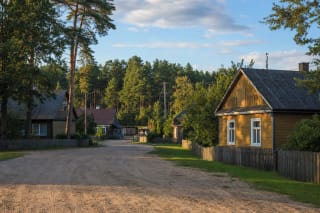
Marcinkonys
The gateway village of Dzūkija National Park, with the park directorate, visitor centre, museums, and old forest-products trade.
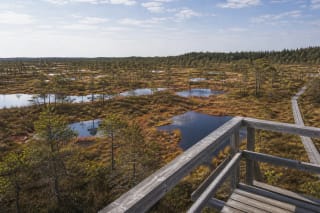
Čepkeliai Mire
Lithuania's largest raised bog and a strict nature reserve, visited only on the educational trail under seasonal rules.
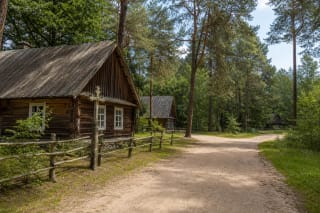
Zervynos
One of Lithuania's best-preserved ethnographic villages, set by the Ūla River with a traditional wooden street layout.
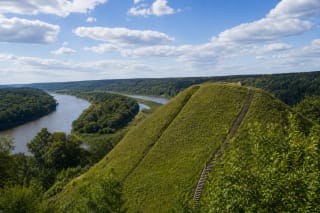
Merkinė Hillfort
A hillfort above the Nemunas and Merkys confluence, with a wide valley panorama on the western edge of the region.
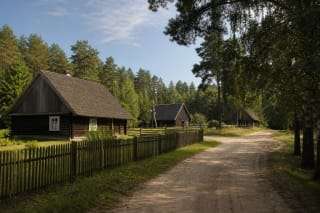
Musteika
A protected southern Dzūkija forest village with hollow pines, useful for comparing with Zervynos.