- Field
- Traditional clothing and footwear
- Type
- traditional craft
- Heritage status
- well attested
- Context
- bast, plaiting, ties
Bast is not yarn
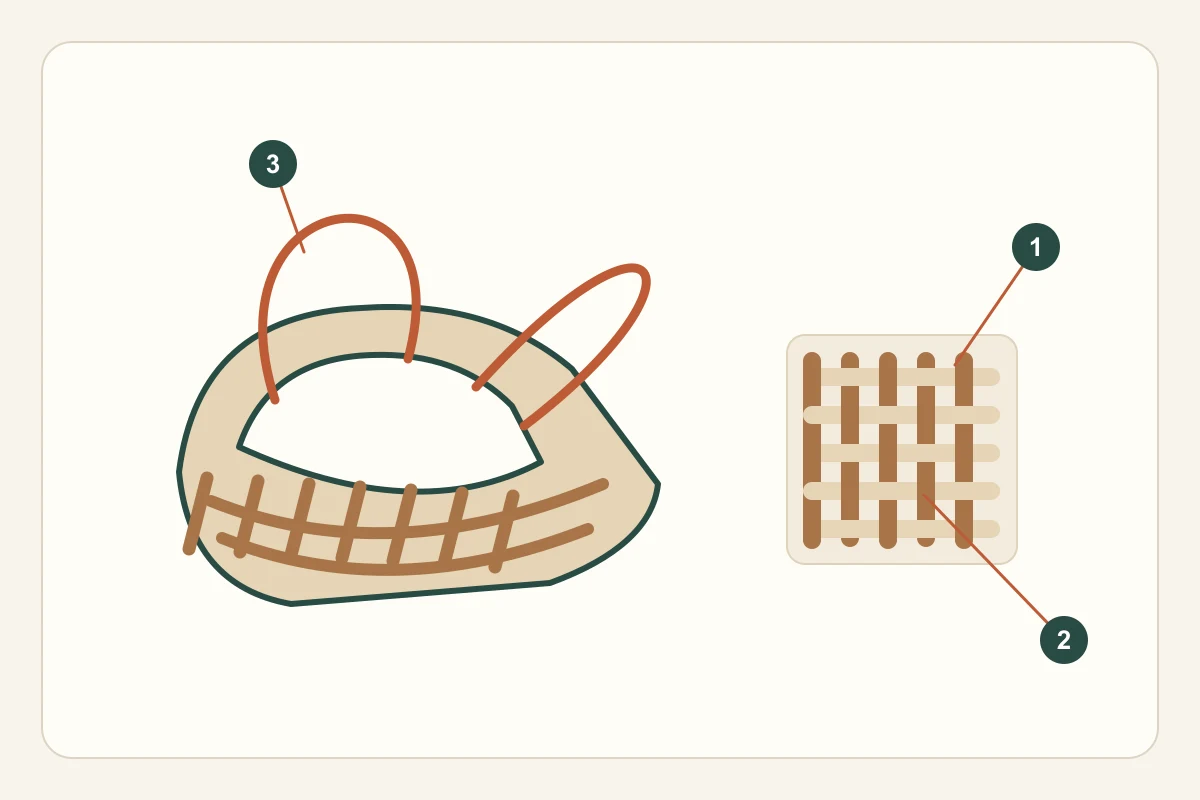
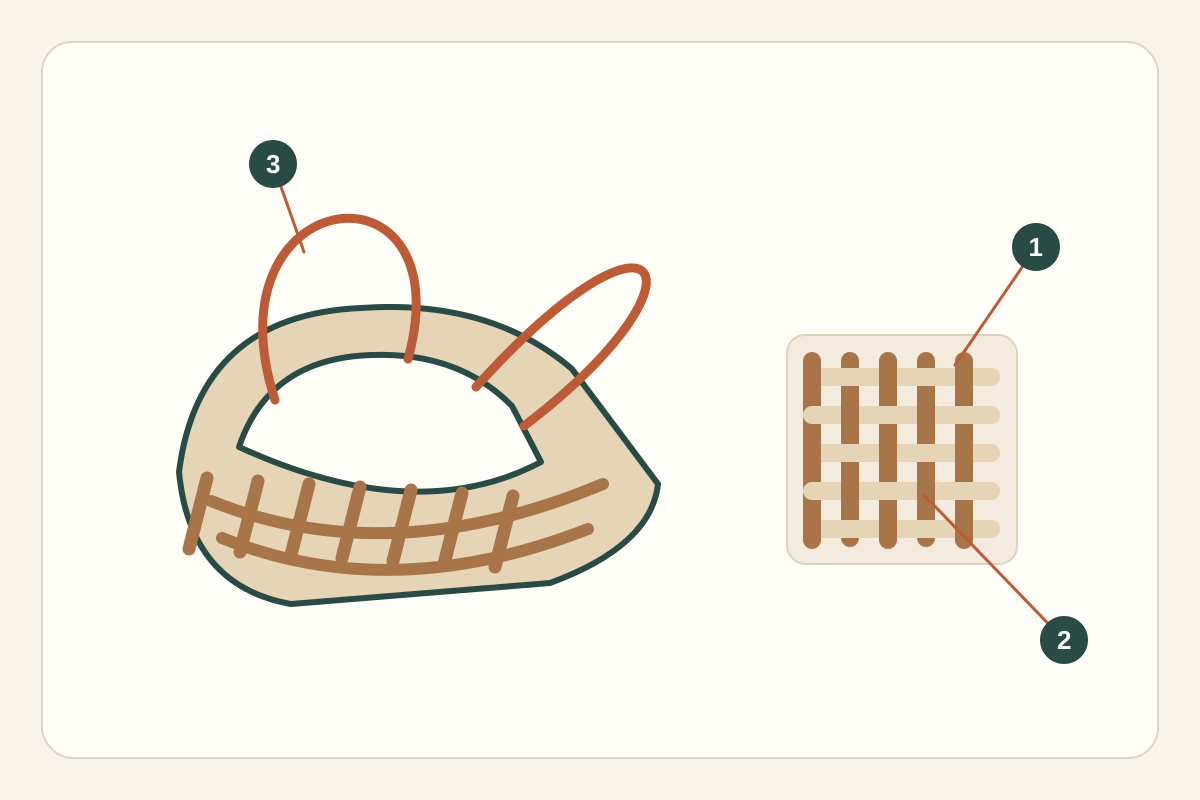
Vyžos use strips of tree bast; consult the museum record for the species. A broad strip and its interlacing matter more for identification than a brown colour.
Examine an edge: does the strip turn back, end or disappear beneath a later repair? This separates construction from wear.
How they stayed on the foot
Ties held the footwear in place. A loose cord in a photograph does not reveal the complete tying method; a modern demonstration may represent another locality.
Compare both shoes and their undersides. Darkened areas, holes or additional leather can belong to use and repair rather than the original plaiting.
Place and date
Use of vyžos declined at different times across Lithuania. One museum specimen should not stand for the everyday footwear of every region at the same date.
Record manufacture, use and collecting place separately. If only one location is known, leave the others unknown rather than filling the gaps by assumption.
Reading the comparison
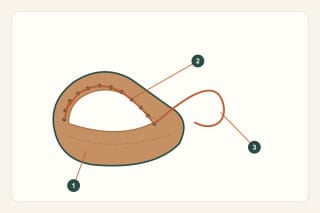
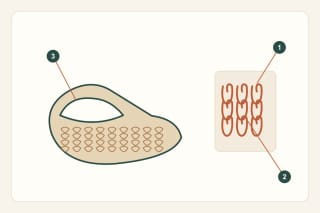
1 marks bast strips, 2 interlacing and 3 a fastening cord. This original explanatory illustration is neither a copy of an exhibit nor a plaiting pattern.
Distinguish vyžos from leather naginės by the plaited surface, and from čempės by strips rather than yarn loops. Read the inventory alongside the object.