- Field
- Traditional clothing and footwear
- Type
- traditional craft
- Heritage status
- well attested
- Context
- crochet, yarn, loops
Yarn loops, not strips of bast
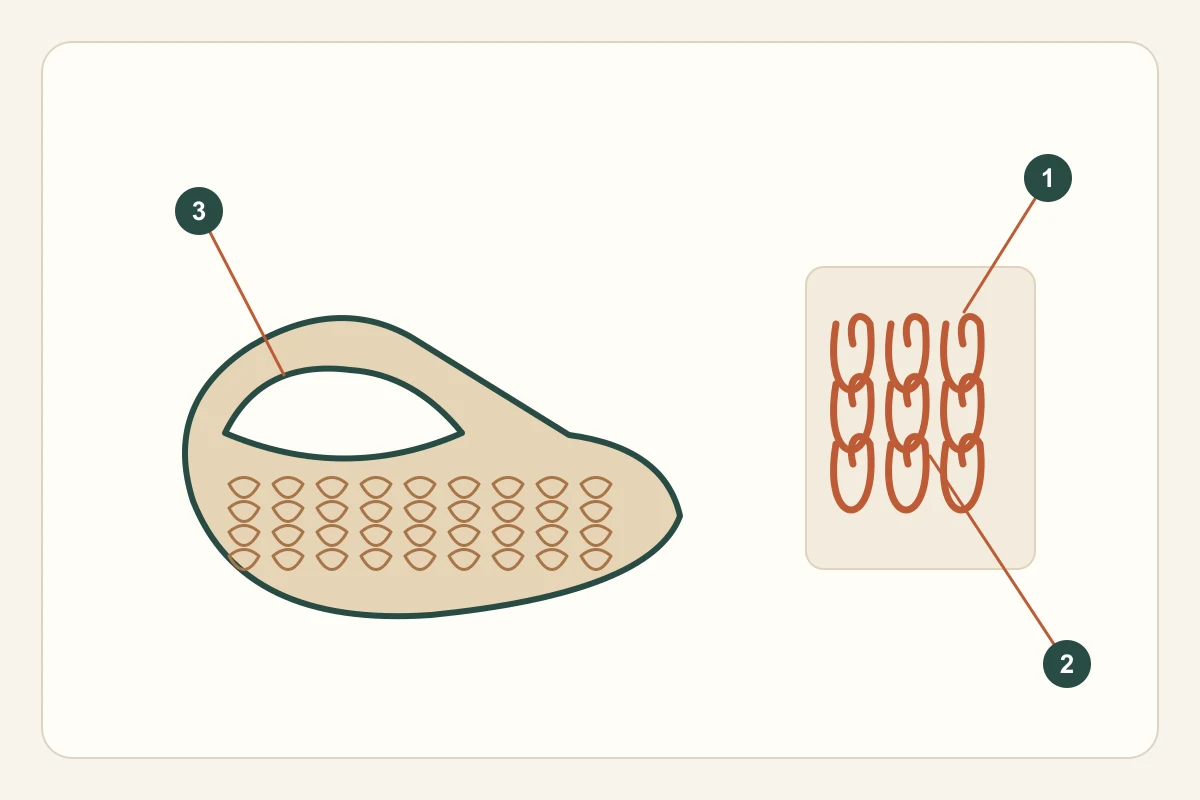
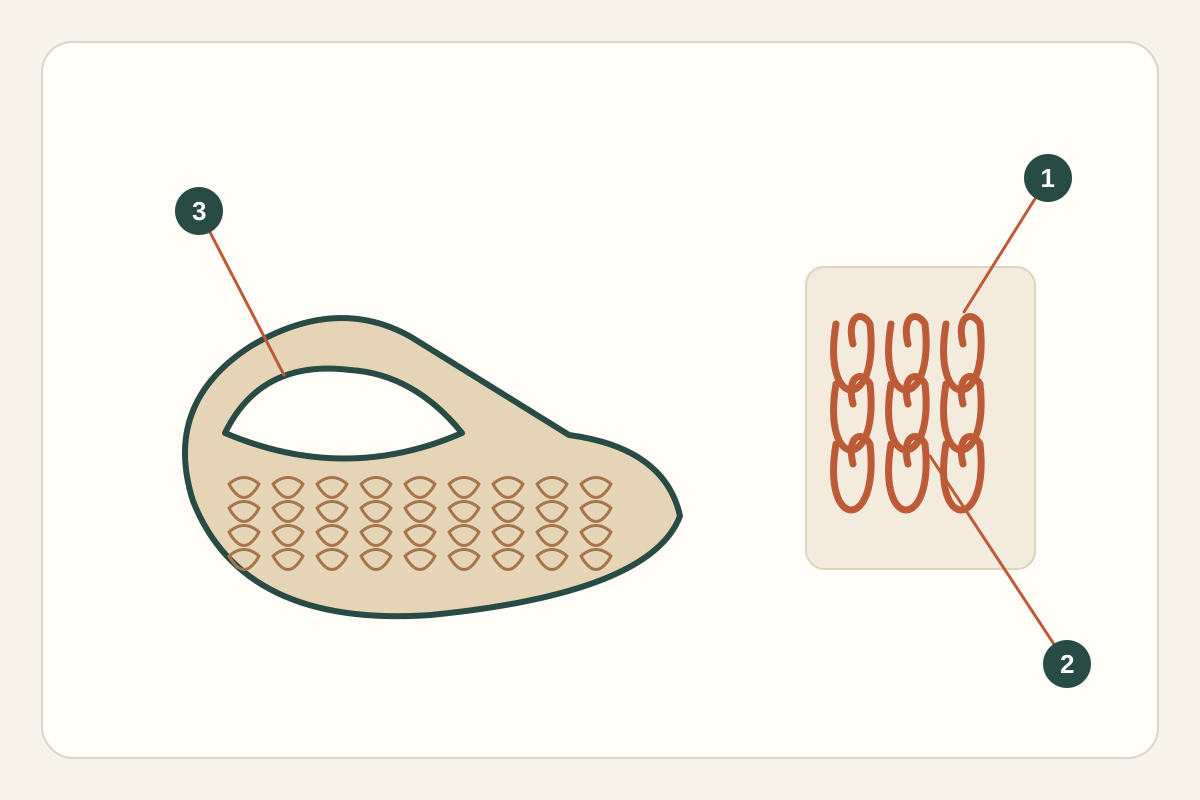
Thick tow-linen or hemp yarn was used for čempės. Crochet produces an interconnected loop structure, unlike the interlacing of broad strips in vyžos.
A photograph can reveal loop direction, but fibre identification requires documentation. A modern woollen pair does not establish the material of an older specimen.
Changing forms
Descriptions record different fastening, depth and sole-reinforcement arrangements. Later indoor footwear and earlier outdoor footwear should not be flattened into one unchanging pattern.
Check whether an added sole belongs to manufacture or repair. List the main and reinforcing materials separately when captioning an object.
Learning from a pair
Compare size, edges, soles and wear on both shoes. A difference in stitch density may reflect making or mending; it does not prove a different maker.
When learning the technique, begin with a small separate swatch in new yarn. Do not unravel a historic shoe to count its stitches.
The loop diagram
1 marks yarn, 2 interconnected loops and 3 the footwear edge. This enlarged structural explanation is not an authentic čempės crochet pattern.
Keep observations separate from catalogue information. That distinction allows reliable identification even when the exact manufacturing date remains unknown.