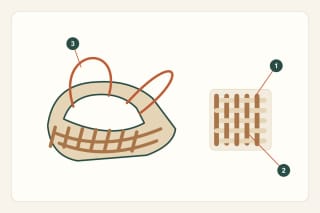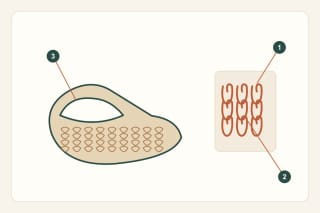
- Field
- Traditional clothing and footwear
- Type
- traditional craft
- Heritage status
- well attested
- Context
- leather, gathering, cord
Leather and gathered edges
The defining feature is a leather body shaped around the foot. Edge holes and their cord explain its form better than the outline alone.
Do not compare every surviving pair with one modern pattern. Describe the toe, heel, seams and gathering of the particular object.
An observation sequence
Start with the whole shoe, then inspect the toe, heel and sole. Note continuous leather, seams and added pieces separately.
A hairy or smooth surface does not by itself identify the animal or tanning process. Record these only from reliable documentation or specialist identification.
Use and repair
Creases indicate movement of the material, but a photograph cannot reliably establish a wearer’s age or occupation. A cord may also be a later replacement.
Separate a family recollection such as “grandfather wore these” from an observation such as “a leather patch is present”. Both matter, but they support different claims.
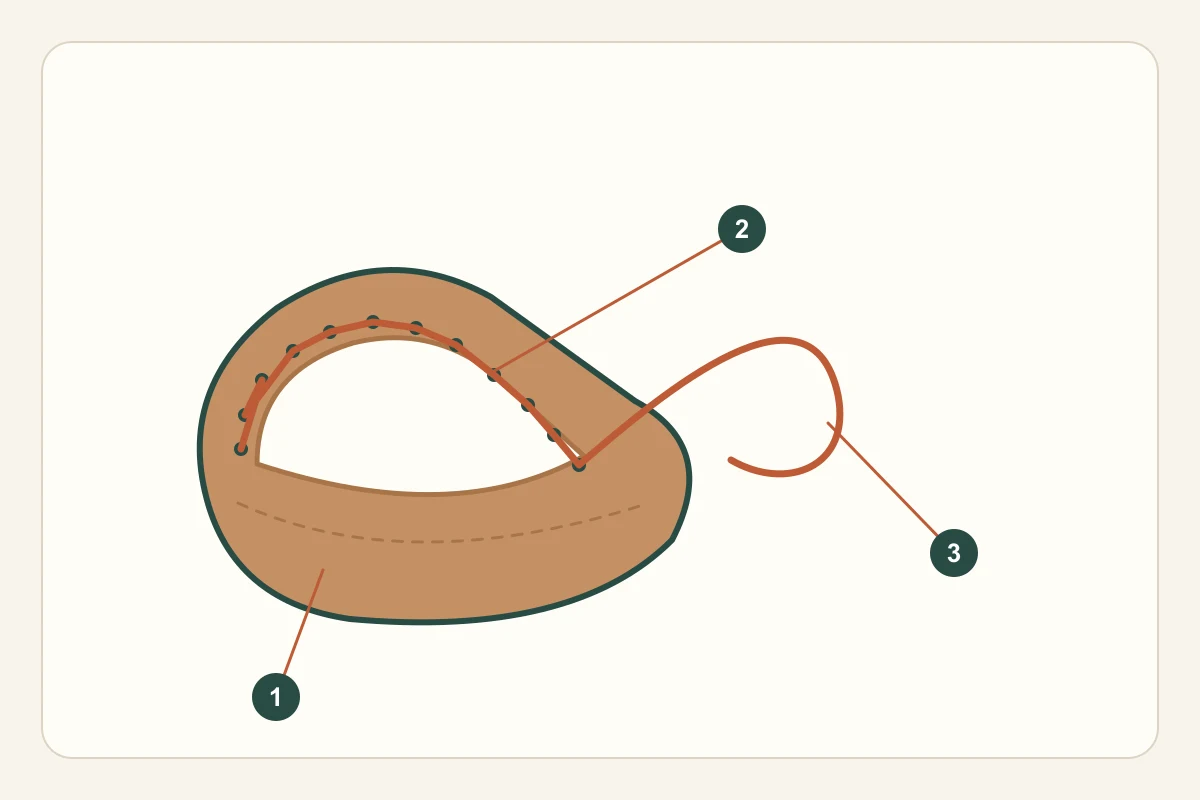
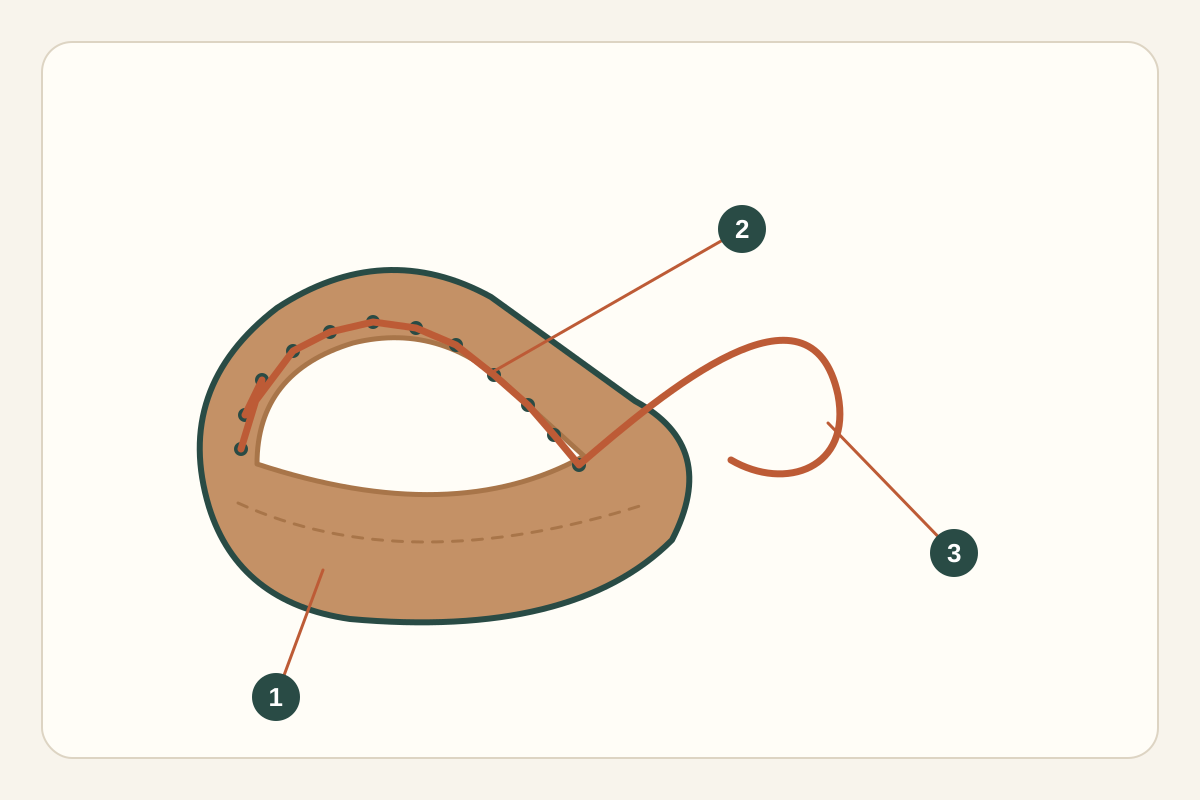
Construction diagram
1 indicates the leather body, 2 edge holes and 3 the gathering cord. This illustration supplies no measurements and does not represent a documented local cutting pattern.
Compare naginės with vyžos and čempės by material and how it is joined. Identification then rests on features rather than a general impression of old-fashioned footwear.