- Field
- Weaving and yarn preparation tools
- Type
- traditional craft
- Heritage status
- well attested
- Context
- hank, winding, yarn
Yarn after spinning
A lanktis winds yarn into a hank. That differs from spinning fibres into yarn and from weaving yarn into cloth.
Explain the object through a sequence: where the yarn comes from, what supports it and how it is removed. This works even when the tool is not operating.
More than one form
Sources describe handheld reels with crosspieces or forked ends as well as rotating forms. One museum specimen does not represent every local variant.
Look for supports, a handle or axle, joints and missing parts. Ornament can enrich the description but cannot replace an explanation of function.
Reeling and warping
A lanktis makes a hank; warping equipment prepares the lengthwise threads of a cloth. Both organise yarn, but the tasks are different.
Record a family’s alternative name in quotation marks and identify who used it. A local term remains useful evidence even when it differs from catalogue terminology.
The winding path
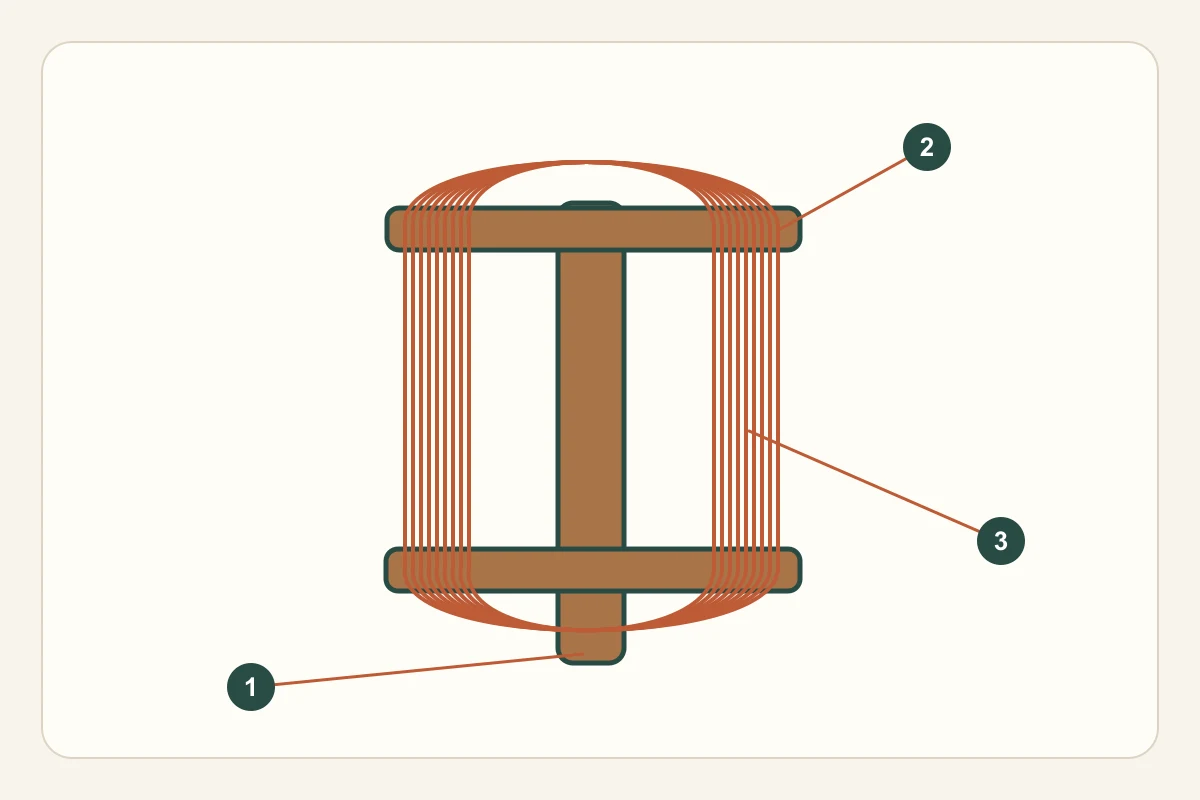
1 marks the hand-held shaft, 2 yarn supports and 3 the repeated yarn path. This is a simplified handheld reel, not a measured replica of a museum object.
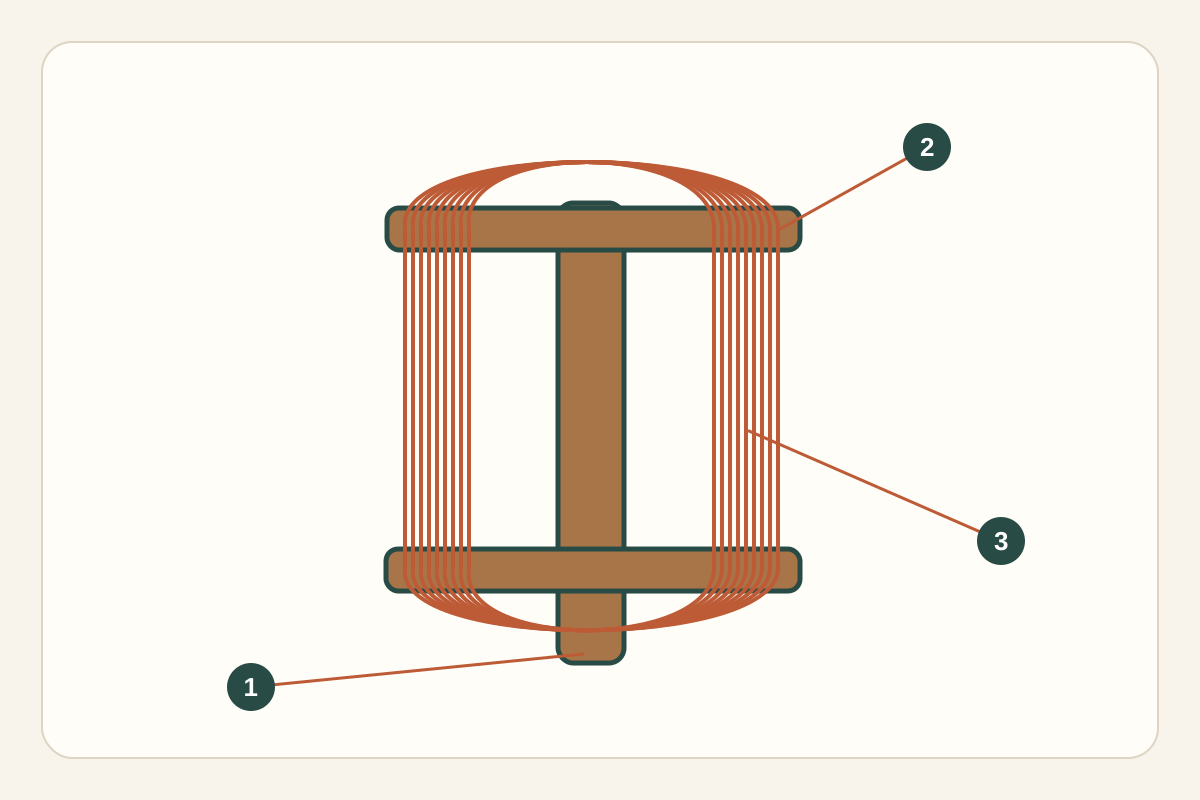
Exercise: trace one full circuit with a pencil. Do not calculate yarn length from an unscaled diagram; that requires actual tool dimensions and a turn count.