- Field
- Weaving and yarn preparation tools
- Type
- traditional craft
- Heritage status
- well attested
- Context
- warping, warp, thread order
Work before the loom
Cloth needs more than a quantity of yarn: its lengthwise threads must be prepared as an ordered warp. Warping establishes their route and length before subsequent loom dressing.
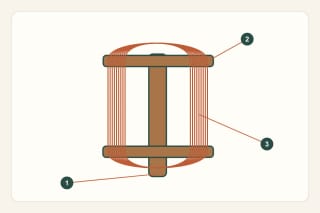
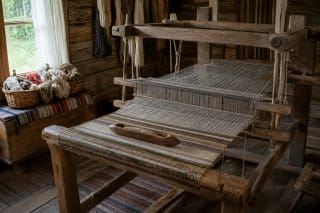
Record the stage shown in a photograph. An empty frame and the same equipment carrying yarn can look surprisingly different without an explanation of the process.
Different arrangements
Warp could be prepared using pegs or rotating frames. The documented form and locality matter more than a single “old Lithuanian” model applied everywhere.
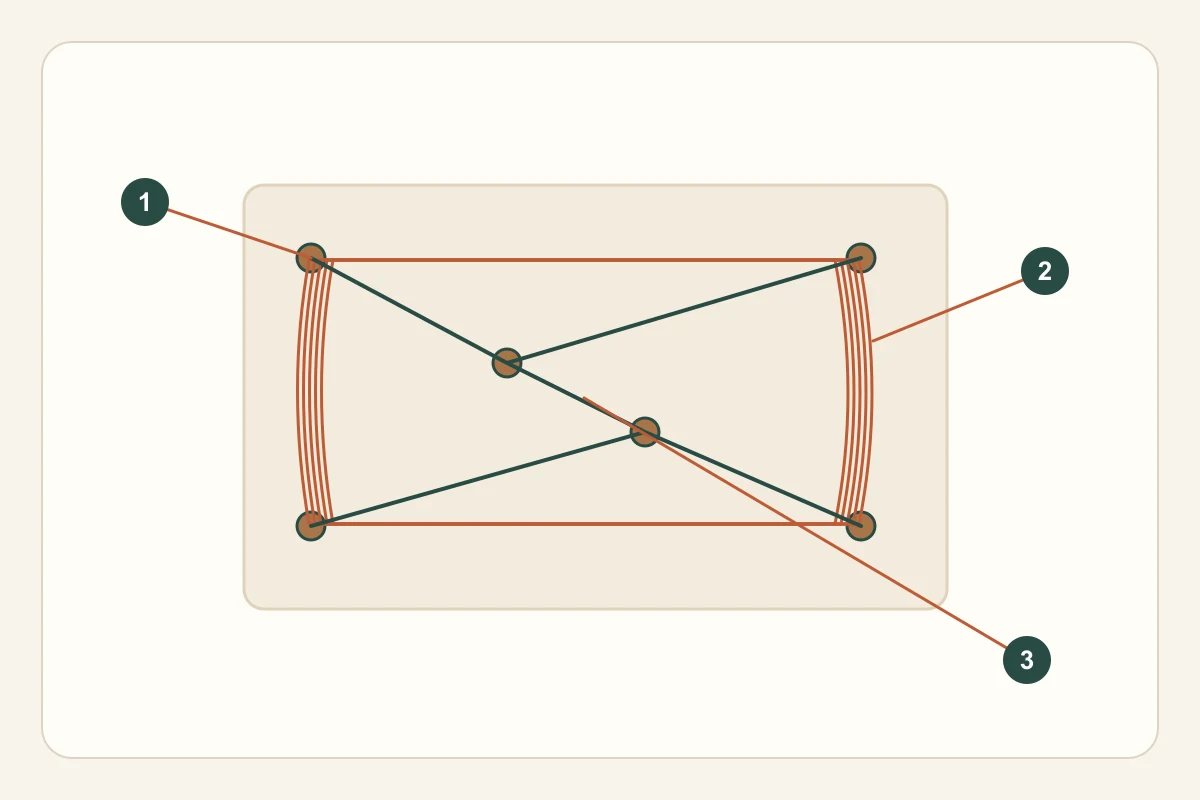
Photograph the complete yarn path, then a turn around a support. An isolated wooden crosspiece can be misidentified without the overall view.
Keeping thread order
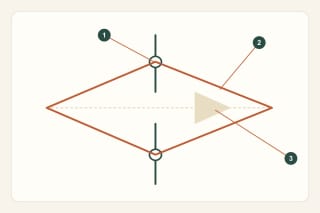
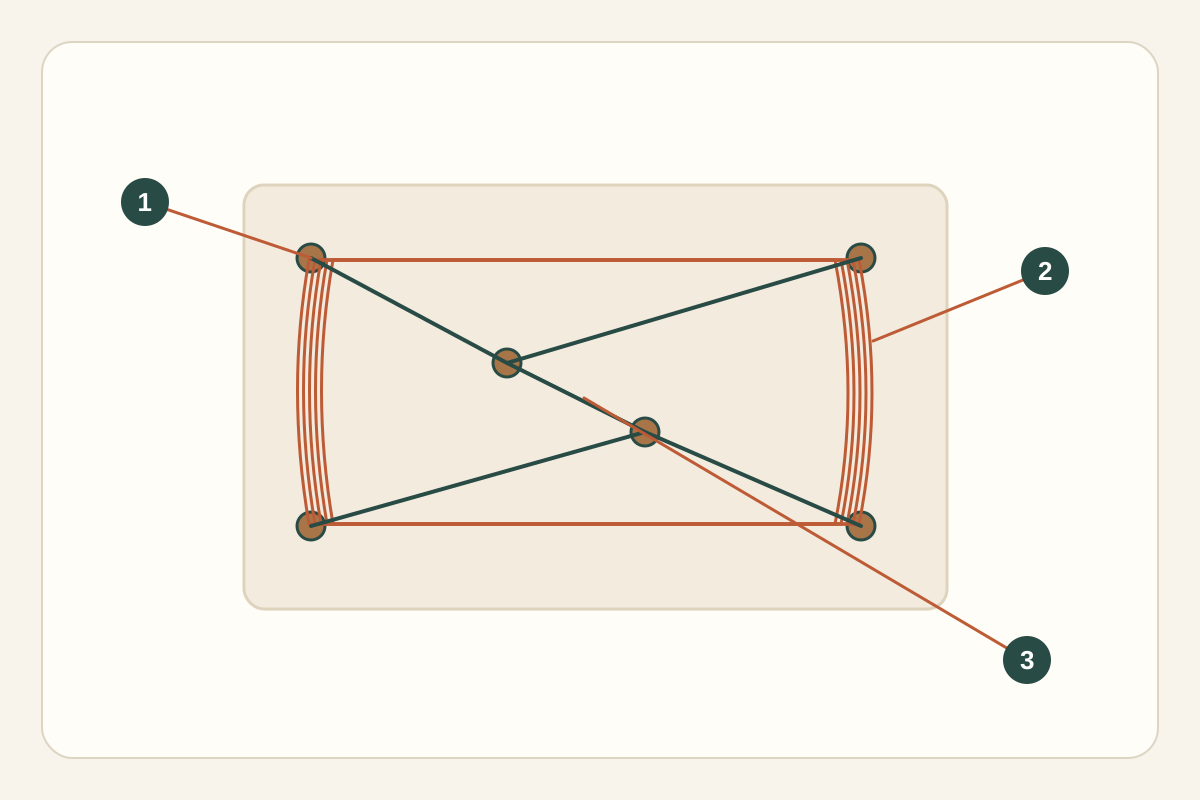
A warp cross helps preserve the sequence of threads. It serves an organisational purpose and is not automatically a symbolic cross motif.
Practical warping needs a teacher’s specific instructions for thread count, length, tension and transfer. This introductory diagram does not supply those settings.
Route and supports
1 marks supports, 2 the warp route and 3 a simplified indication of where thread order is maintained. This does not reproduce the construction or dimensions of a museum specimen.
Exercise: explain the difference between a hank on a reel and a warp prepared for cloth. Describe their purposes rather than merely comparing tool sizes.