- Place
- Vilnius City Municipality
- Region
- Vilnius
- Type
- seasonal university garden with more than 1,800 plant names, historic avenues, and greenhouse heritage
- Address
- M. K. Čiurlionio g. 110, Vilnius
- Coordinates
- 54.68296, 25.23201
- Visit duration
- 1-2 hours, or up to three during an exhibition, guided tour, or flowering event
- Best time
- late April for cherries, May for lilacs, or August for dahlias, after checking the bloom calendar
Vingis Botanical Garden, VU Botanical Garden in Vingis
A small garden with more than 1,800 plant names
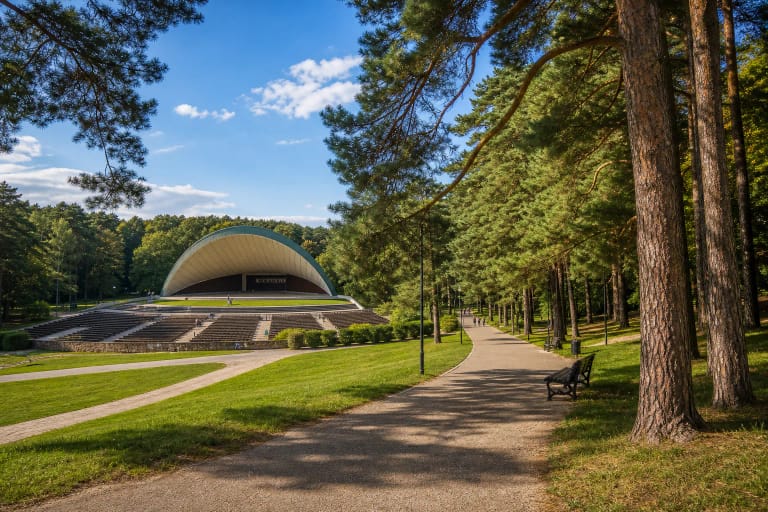
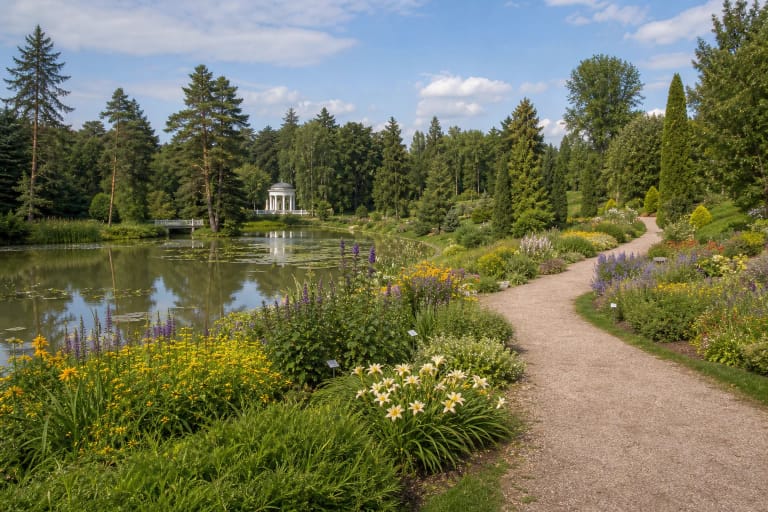
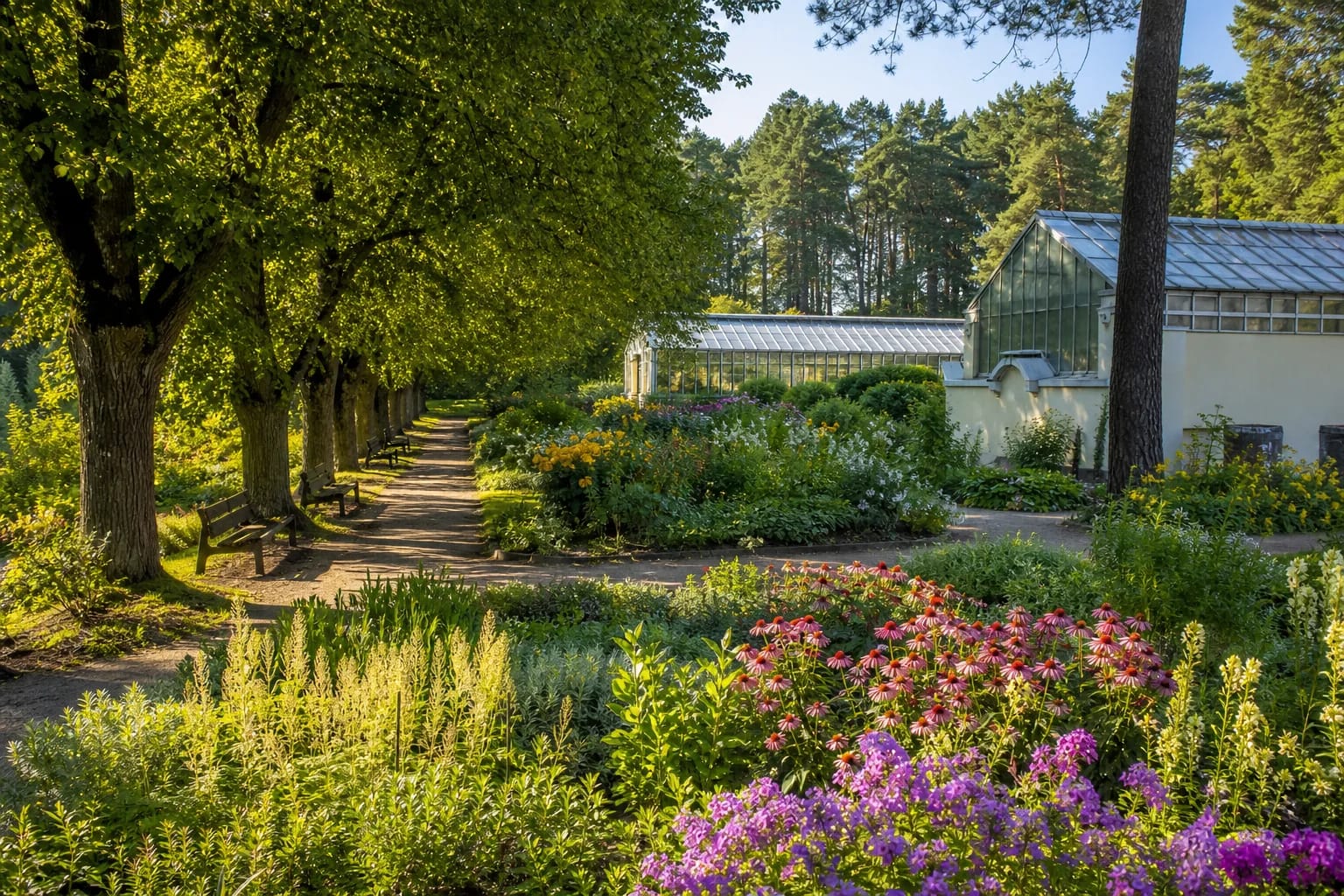
The Vingis Branch covers about 2 ha, a very different scale from the main Kairėnai garden. Dendrological and systematic collections, a lilac avenue, rose garden, dahlias, seasonal beds, and greenhouse spaces fit within the compact grounds. The garden lists over 1,800 plant names.
Value is not confined to peak bloom. Labels and collection structure support comparison of related plants, while mature trees reveal a long landscape history. The small-leaved linden avenue is thought to be more than 250 years old.
From a Radziwiłł manor to Jesuit medicinal plants
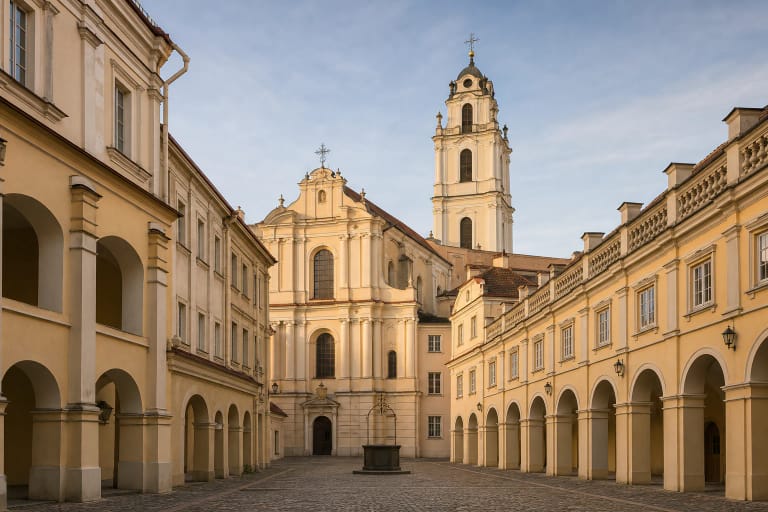
Written history associates the site with Lukiškės. In the sixteenth century it belonged to the Radziwiłł family, and Mikołaj the Black had a wooden palace here. It is linked with Vilnius's early Reformed community and one of its first schools.
From the late sixteenth to late eighteenth century, this was the Vilnius Jesuit Academy's summer residence. Jesuits grew medicinal plants, held academic promotions, and in 1714 enclosed the property with an arched brick wall, fragments of which survive. Official history also records visits by Sigismund and Władysław Vasa.
Palace foundations and revived greenhouses
The old palace was completely demolished around 1870, but archaeology in 2022 exposed foundation fragments from the seventeenth and eighteenth centuries. Former service and stable buildings from the governor-general period survive in staff and utility use.
Different greenhouse complexes mark twentieth-century botanical history. Part of the 1926-1929 Stefan Batory University greenhouses was revived in 2025 for exhibitions and cultural events. A Soviet-period complex is also used for events, but access depends on the programme.
Flowering seasons and events
Ornamental cherries draw attention in late April, followed by lilacs, wisteria, and peonies in May and early June, roses and summer beds, then dahlias. Weather shifts the dates every year, so consult the official bloom calendar rather than a previous year's photograph.
Exhibitions, tours, education, and concerts take place in the Vingis Branch. Event tickets or visitor-flow rules may differ from ordinary admission, and preparation can close the grounds on some days. The current calendar is more reliable than a general seasonal timetable.
2026 hours, tickets, and rules
On 21 July 2026, published Vingis hours were 11 am-8 pm Tuesday-Friday and 10 am-8 pm weekends, with last entry at 7:30 pm and Monday closure. The branch is a warm-season destination. Hours change, so check again that day.
On the same date, adult admission was €6, family admission €12, and pupil, student, or senior admission €3; preschoolers, VU students, and certain groups entered free under listed conditions. Prices can change. Pets are not admitted, and visitors may not pick plants, tread on collection beds, or cross barriers.