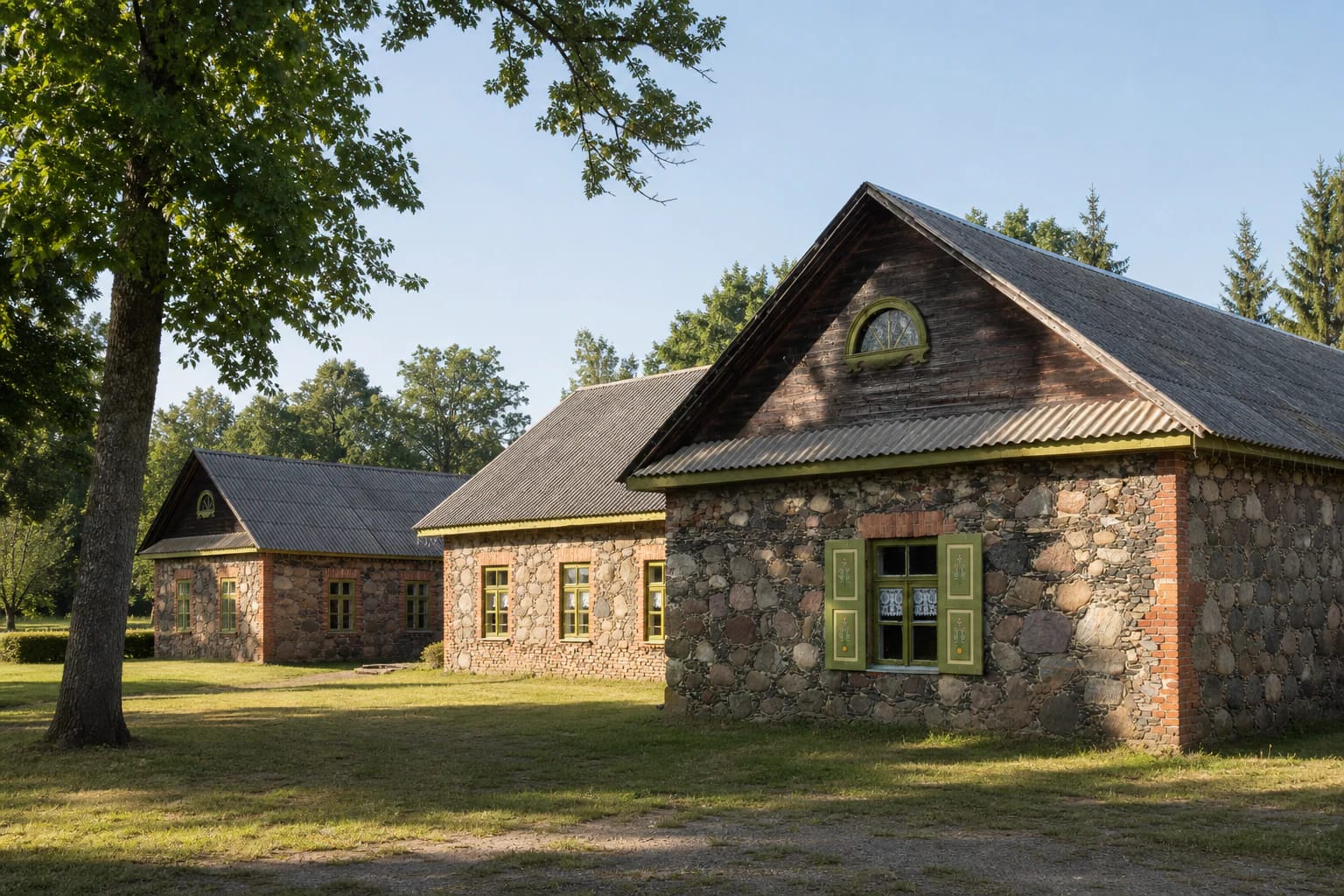
- Place
- Užpaliai, Utena District Municipality
- Region
- Utena District
- Type
- early nineteenth-century manor barn and a space for horse and folk-life heritage
- Address
- 30 Vytauto Street, Užpaliai, Utena District
- Coordinates
- 55.64152, 25.58195
- Visit duration
- 60-90 minutes for a pre-arranged introduction to the building and collections
- Best time
- at a pre-arranged time; in the warmer months it is easy to add a walk through the Užpaliai manor estate
Kamenyčia, Užpaliai Manor Barn, Užpaliai Manor Stables
Kamenyčia is a surviving working building, not manor decoration
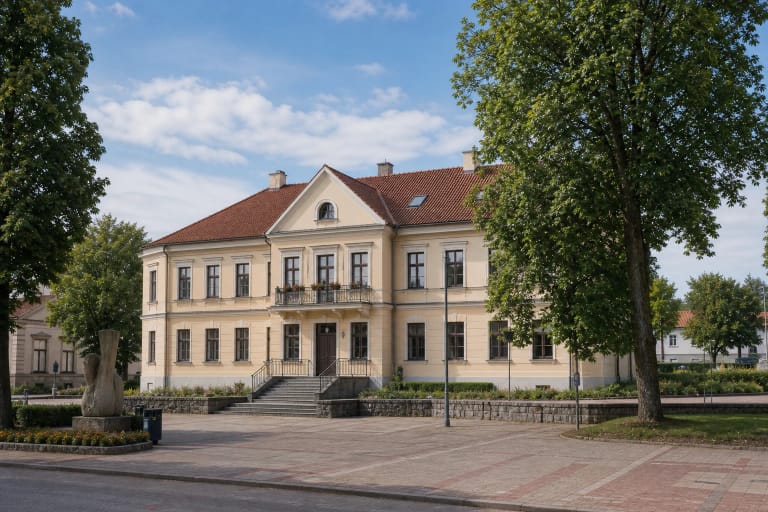
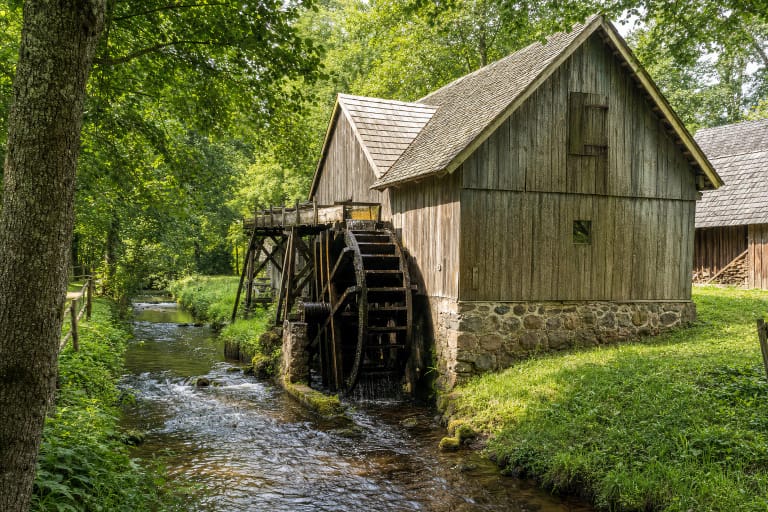
The Register of Cultural Properties formally identifies this building as the barn of the Užpaliai Manor estate and assigns it code 26697. It is one of the complex's three independently protected components, together with the administrator's house and watermill. VLE describes the nineteenth-century ensemble as combining local architecture with Classical features.
The everyday name Kamenyčia refers to the building's substantial stone masonry. Its present value operates on two levels: it is an authentic service building from a former royal manor and a living cultural space preserved by local people, where architecture is inseparable from horse traditions and Aukštaitian domestic life.
The U-shaped stable built in 1808-1809
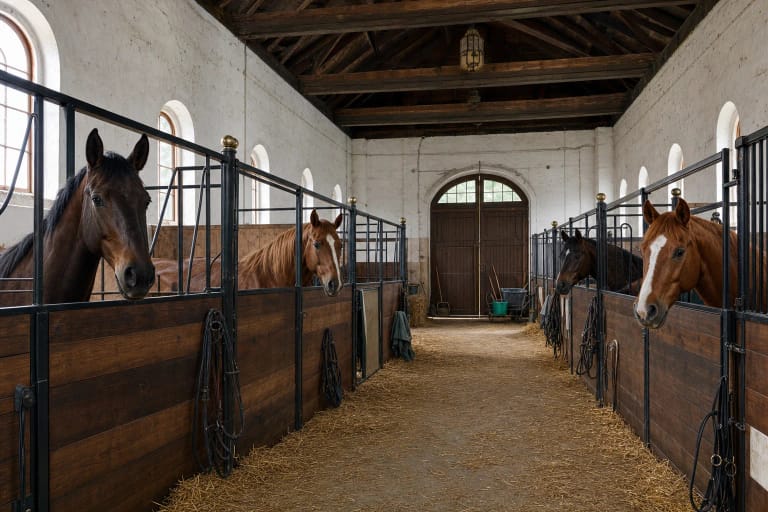
The KVR assessment dates the building to 1808-1809. Its semi-open U-shaped plan has single-storey north, west and south wings enclosing a courtyard, with attic spaces above. The arrangement reveals a working estate building designed for animals, fodder and the daily movement of a manor farm.
Look for restrained details rather than palace grandeur. Brick complements the fieldstone masonry, openings have wedge-shaped lintels, and semicircular window openings survive in the gables. KVR also identifies timber gable-canopy structures, a plaster band, rusticated plaster strips and traditional timber window surrounds.
From a royal manor to Viktorija Jovarienė's cultural space
Užpaliai Manor appears in historical sources from the late fourteenth century and long belonged to the group of state, or royal, estates. The official local history names the Astikas, Radvila, Ogiński and Sapieha families among its successive holders. Mykolas Kazimieras Oginskis held it in 1773-1789, while Eustachijus Sapiega retained it until the 1831 uprising, after which the imperial authorities confiscated the estate.
Užpaliai horsewoman Viktorija Jovarienė later acquired the stone stable building. In 2021 Utena District Municipality made her an honorary citizen for preserving horse traditions, collecting historic domestic, cultural and folk-art objects, and creating a horse museum. Today's Kamenyčia is therefore the product of one person's long cultural work rather than a formal reconstruction of a manor interior.
What you can see inside
A pre-arranged visit can introduce several highly individual rooms. The Hall of One Hundred Abrūsai presents traditional Aukštaitian woven towels. The Elder's Office and Little Bank, the Maidens' Chamber and an old school classroom interpret town life, domestic routines and education. Horse-related objects and details from Jovarienė's own experience bind the rooms together.
The building also hosts community and cultural events as well as pre-booked activities. One programme, Kamenyčia Treats, involves baking yeast buns and sharing tea. Exact content depends on the arrangement and the hosts' availability, so state clearly when booking whether you want an introductory visit or a hands-on workshop.
Planning a visit
The stables stand at 30 Vytauto Street in central Užpaliai. The Google Maps marker identifies the specific building, but its crowd-sourced all-day opening label should not be read as unrestricted access to the collections. Current visitor information asks guests to register in advance by calling +370 614 19339.
No permanent public ticket tariff was published when this guide was researched. Confirm the time, group size, selected programme and current price while booking. Allow about 60-90 minutes for the building and collections; for a longer route, add the administrator's house, the manor watermill and a walk through Užpaliai.