- Place
- Senieji Trakai, Trakai District Municipality
- Region
- Trakai District
- Type
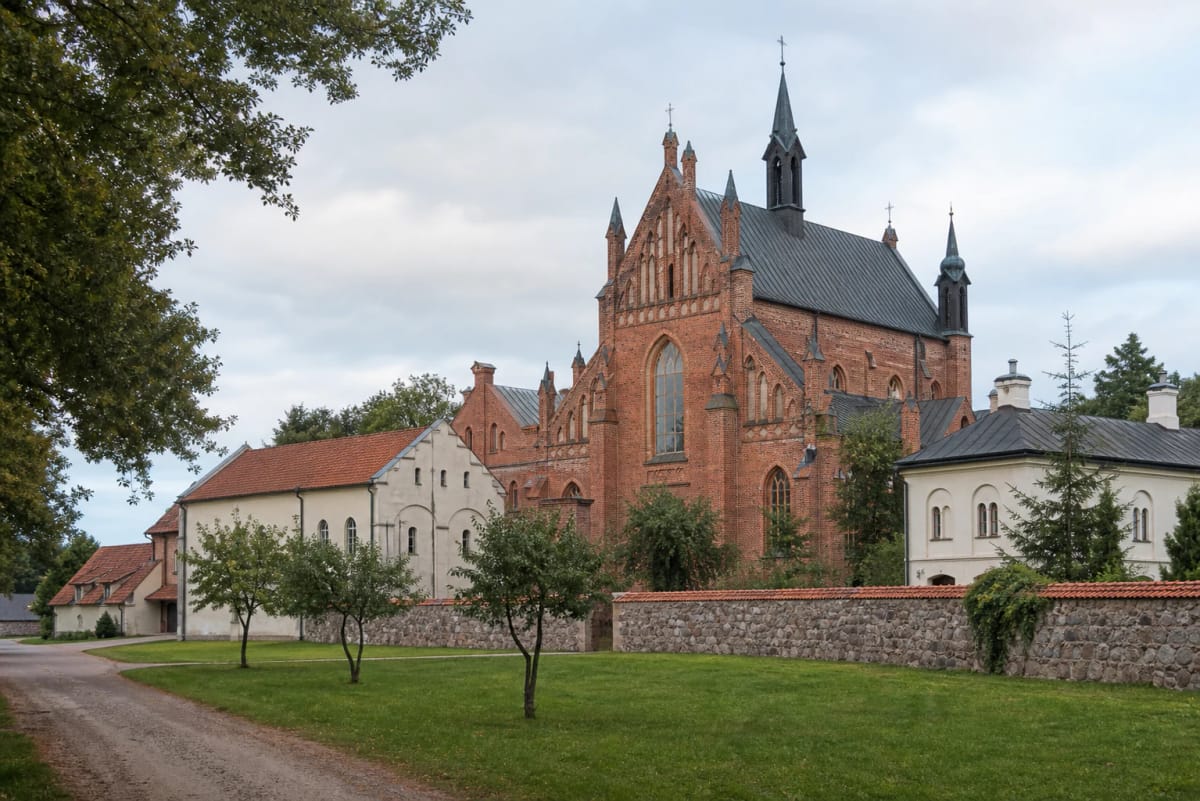
- Neo-Gothic church with Benedictine monastery on a former castle site
- Address
- Pilies g. 1, Senieji Trakai
- Coordinates
- 54.61720, 24.96990
Senieji Trakai Church, Church of the Annunciation of the Blessed Virgin Mary
Senieji Trakai: Cradle of the Lithuanian State
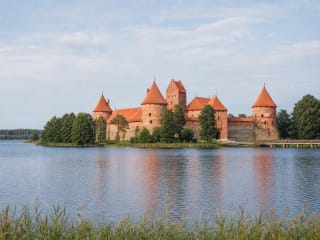
Senieji Trakai lies a few kilometres from the town of Trakai and should be distinguished from the famous lake castles. According to Lithuanian chronicles, Gediminas founded Senieji Trakai around 1316, and for several years it was the capital of the Grand Duchy of Lithuania after the seat moved from Kernavė.
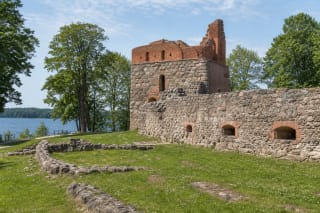
After Gediminas, Senieji Trakai became the centre of Kęstutis' Trakai duchy. Once the lake castles of Trakai were built, its importance declined. The castle was destroyed by the Teutonic Order in 1391 and was not rebuilt, so today church and monastery stand on the castle site.
Vytautas' Birthplace and the 1405 Monastery
Senieji Trakai is traditionally considered the birthplace of Vytautas the Great, probably around 1350. This should be presented as tradition because precise documents are lacking.
In 1405 Vytautas invited Benedictine monks from Tyniec near Kraków to the ruined castle site and built a church, creating one of Lithuania's oldest monasteries. A miraculous image of the Mother of God with Child is also linked with the place; according to legend, the Byzantine emperor gave it to Vytautas, and since 1859 it has been kept in Vilnius Cathedral. Russian authorities closed the monastery in 1845, and in 2010 a contemplative sisters' community settled here again.
Church on the Castle Site
The present Neo-Gothic church was built in 1898-1899 to a design by Apolinary Mikulski, by rebuilding part of the old eighteenth-century masonry monastery wing. Four small towers rising above the main facade give the church its ceremonial silhouette.
The church preserves valuable works, including an eighteenth- to nineteenth-century image of the Virgin and Child, four eighteenth-century wooden evangelist sculptures, a nineteenth-century Crucified Christ, and bells cast in 1712 and 1732. It was damaged in 1915 during the First World War and later restored.
Castle Site and Archaeology
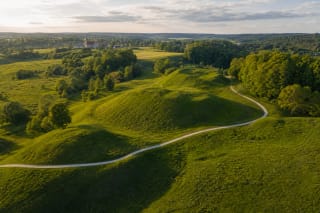
Under and around the church lies the Senieji Trakai castle site, one of the key early Lithuanian-state places. The castle platform was about 130 x 150 m and was surrounded on three sides by a broad ditch up to 6-8 m deep; an outer ward and foot settlement also existed.
Lithuanian Institute of History expeditions researched the site in 1994-1997 and 2008. They found a cultural layer up to 2.2 m thick with weapons, tools, ornaments, and coins from Vytautas' and later rulers' periods. Finds are kept at the National Museum of Lithuania and Trakai History Museum.
How to Visit
Senieji Trakai combines easily with Trakai town and its castles, within Trakai Historical National Park. Usually 30-60 minutes is enough to walk around the church, look at rampart and ditch contours, and imagine the castle.
A contemplative sisters' community lives in the monastery, so visitor access is limited and there is no standard museum timetable. Check official monastery or parish information for service times and access possibilities.