- Place
- Panevėžys City Municipality
- Region
- Aukštaitija
- Type
- cathedral of the Diocese of Panevėžys and Neo-Baroque church
- Address
- Katedros a. 1, Panevėžys
- Coordinates
- 55.72285, 24.35642
Panevėžys Cathedral
Cathedral of the diocese
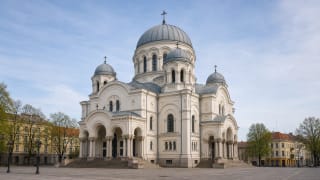
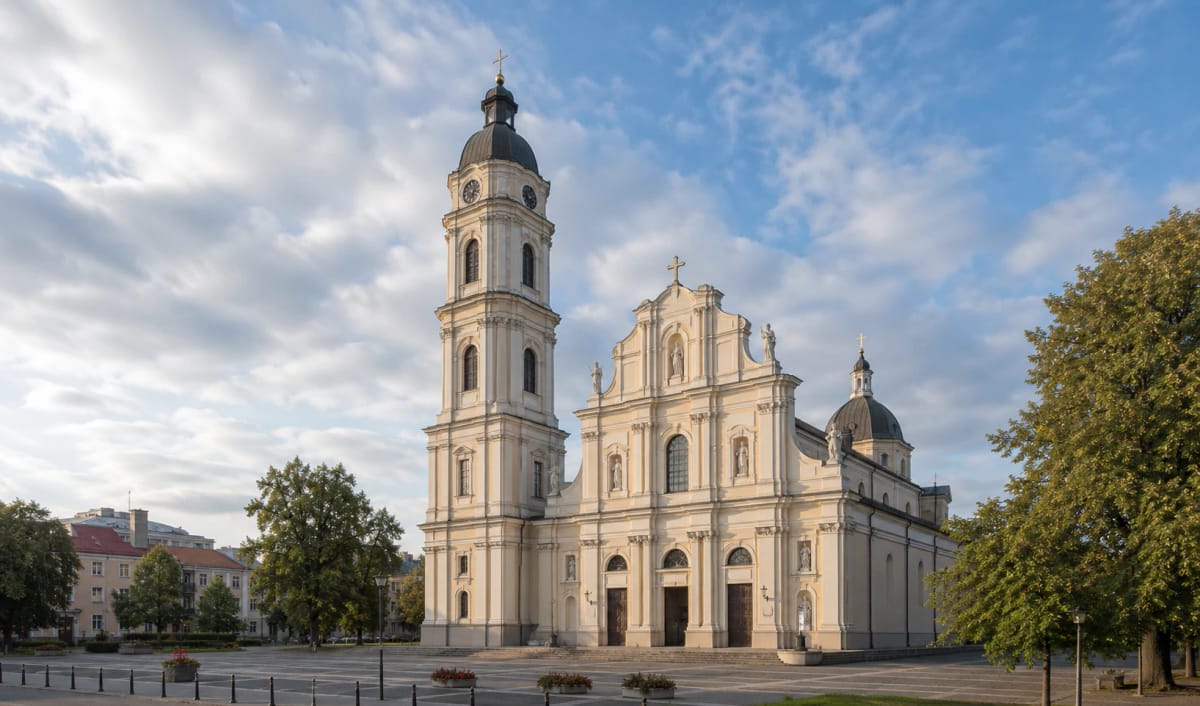
Panevėžys Cathedral of Christ the King is the centre of the Diocese of Panevėžys. Its history began as a church project for the south-western part of the city: permission to build was received in 1904, and the foundations of the future Church of St. Stanislaus the Martyr were laid in 1908.
On 4 April 1926, Pope Pius XI established the Diocese of Panevėžys from the north-eastern part of the Diocese of Samogitia by the bull Lituanorum gente and designated the unfinished church as the future cathedral, giving it the title of Christ the King. Kazimieras Paltarokas became the first Bishop of Panevėžys; the decision changed both the building's status and its meaning for the region. In 1997 the cathedral was entered in the Cultural Heritage Register, unique code 4705.
Kazimieras Paltarokas and completion of the building
Bishop Kazimieras Paltarokas personally donated 1,000 litas in 1926 and appealed to the diocese for construction support. Architect R. Steikūnas and engineer Gordevičius modified the 1908 plan, strengthened the foundations, raised the walls, and added columned extensions and crypts.
The cathedral was blessed on 4 March 1930 by Maironis, who wrote a Christ the King hymn for it; the music was composed by Teodoras Brazys. On 30 June 1933, the cathedral was consecrated by Juozapas Skvireckas, Metropolitan Archbishop of Kaunas.
Neo-Baroque architecture
The official cathedral source describes the exterior as Neo-Baroque. The building is 55 m long, 27 m wide, 16 m high, and its tower reaches 55 m. These dimensions explain why it appears so monumental in the urban space of Panevėžys.
It should not be called medieval or Baroque in the old historical sense. This is a church of the first half of the twentieth century, deliberately using Neo-Baroque forms to create a representative image for a diocesan centre.
Fresco, bells, and Goebel organ
In 1931, four cathedral bells were cast in Apolda, Germany, at the Schilling bell foundry. The same year, an organ made by the firm of the noted master Bruno Goebel in Königsberg was installed: a pneumatic organ with 25 stops. In 1931-1933 a large fresco was created depicting the miracle of St. Casimir at Polotsk for the Lithuanian army; it was restored in 2004.
In 1938-1939, artist Povilas Puzinas decorated the cathedral interior with compositions featuring sibyls and prophets. These details show that the interior and liturgical equipment were conceived as an important representation of the new diocese.
Mass and visiting
During research, the official cathedral schedule listed Sunday Mass at 8:00, 9:15, 10:30, 12:00, and 18:00; weekday Mass at 8:00 and 18:00; and Saturday Mass at 8:00, 9:00, 10:00, and 18:00.
The cathedral is not a ticketed museum. Respect the liturgy when visiting the interior, and check the official contact page for office or other practical matters, because opening information can change.