- Place
- Stirniškiai, Kupiškis District Municipality
- Region
- Aukštaitija
- Type
- Classical manor ensemble with dolomite buildings
- Address
- Dvaro g. 7, Stirniškiai, Kupiškis District
- Coordinates
- 55.78200, 24.83000
Komarai Manor, Paulianka Manor
Palėvenė (Komarai) Manor by the Lėvuo
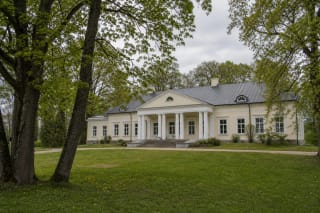
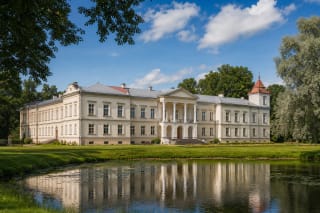
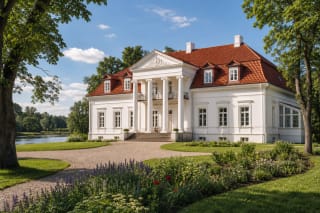
Palėvenė Manor stands beside the Lėvuo River in Stirniškiai village, Kupiškis District. The site is also called Paulianka or Lower Palėvenė Manor. It is one of the best-known estates of the noble Komarai family in north-eastern Aukštaitija and lies within the Lėvuo Landscape Reserve.
It should be distinguished from the Dominican monastery and Church of St. Dominic in nearby Palėvenė town. The manor is a riverside village estate, while the monastery is a separate heritage ensemble in the town centre.
An estate of the Komarai family
Palėvenė Manor is first mentioned in documents in 1586. It became a Komarai estate in 1654, when Mykolas Komaras settled here, and Komarai descendants owned it until 1940. The last owner, Bogdanas Komaras, was deported to Siberia by the Soviets.
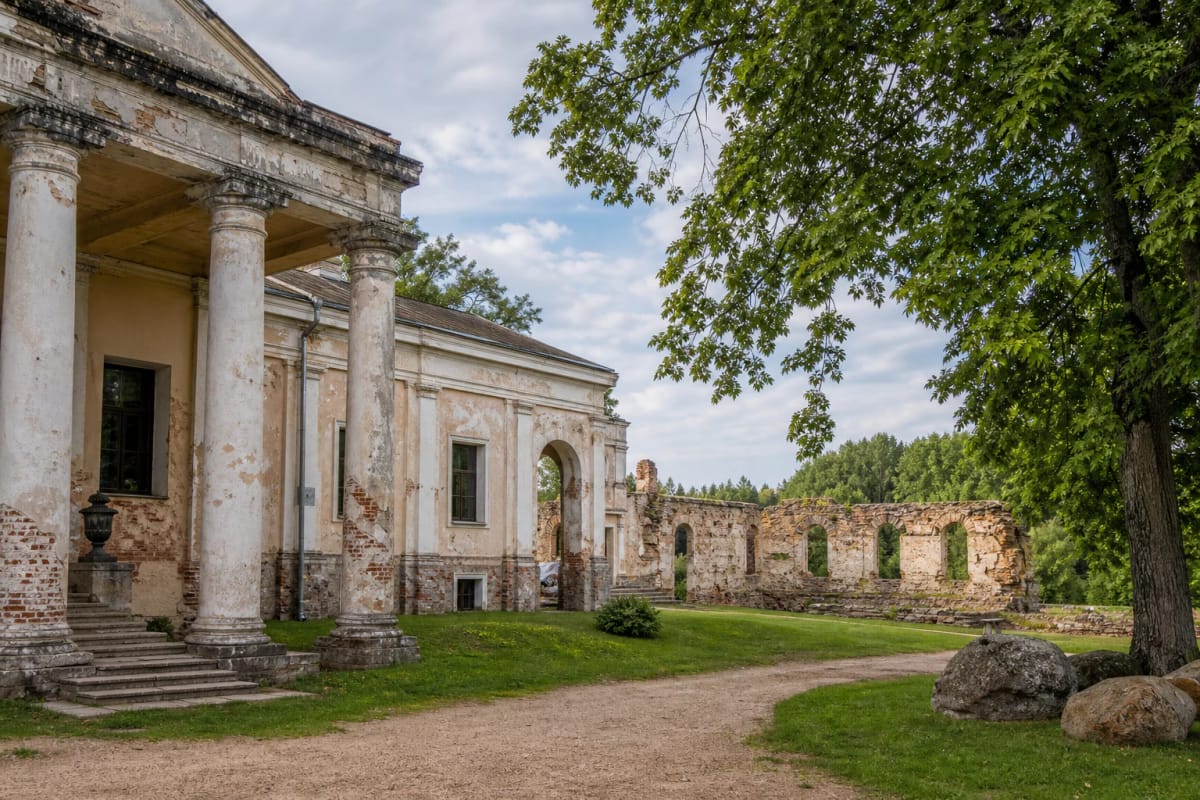
In 1940 the manor was nationalised, its valuables were looted, and the buildings were damaged. After Lithuanian independence was restored, the estate was returned to a descendant of the Komarai family, who began reviving it. Today the officina has been rebuilt, while the main palace still awaits restoration.
Buildings, dolomite columns, and park
The ensemble is distinctive because its farm buildings were constructed from local dolomite. A rebuilt officina, dolomite buildings, the remains of the manor house, and about 2 ha of English-style park with old lime and birch alleys survive.
One of the most interesting accents is a four-dolomite-column portico by the river, beside the manor barn. It stands near the Stirniškiai outcrop, where Devonian dolomite is visible. This use of dolomite in building is rare and gives Palėvenė Manor its particular character.
Palėvenė: manor and monastery
Palėvenė is known for more than the manor. Nearby, in the town, stands the Palėvenė Dominican Monastery with the Church of St. Dominic, founded in 1676 and closed in 1865 after the 1863 uprising. It is separate but highly valuable, and easy to see on the same trip.
The surrounding Lėvuo Landscape Reserve also includes Stirniškiai hillfort, Palėvenė Stone, and the Stirniškiai outcrop. Together with the manor, they form a practical nature-and-heritage route.
How to visit Palėvenė Manor
The manor territory, park, dolomite buildings, and riverside columns usually take 30-60 minutes to see; combined with the monastery and outcrop, the route can take half a day. The manor stands near the road between Subačius and Noriūnai.
Note that the manor is private, managed by Komarai descendants, and used for events and arranged excursions. Public opening hours or ticket prices were not officially listed during research, so arrange a visit in advance before travelling.