- Place
- Rokiškis, Rokiškis District Municipality
- Region
- Aukštaitija
- Type
- Classical manor ensemble and regional museum
- Address
- Tyzenhauzų g. 5, Rokiškis
- Coordinates
- 55.96457, 25.59975
A manor that houses a museum
Rokiškis Manor is visited today not as an empty representative building but as the home of the Rokiškis Regional Museum. Manor architecture, city history, family memory, art collections, and regional culture are seen here together.
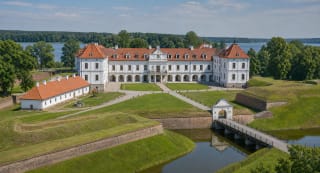
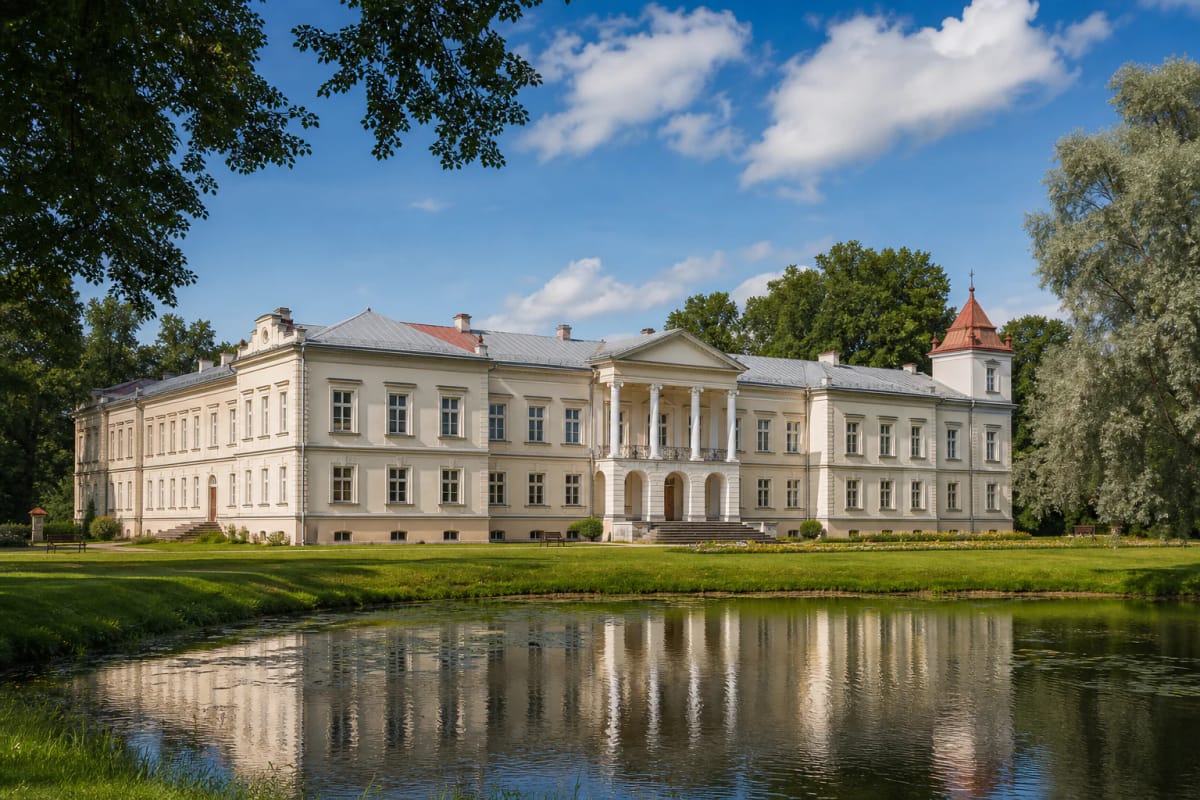
The ensemble extends along Tyzenhauzai Street beside the park and ponds. On arrival, do not stop at the palace facade alone: the manor impression emerges by walking through the whole composition of palace, officinas, park paths, avenue, and water.
Tyzenhauzai and the Classical ensemble
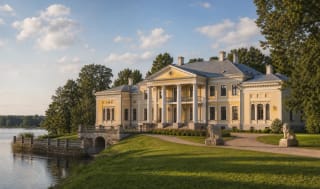
Rokiškis is first mentioned in 1499 and belonged to the Tyzenhauzai family from the eighteenth century. Construction of the masonry Classical manor ensemble began in the late eighteenth century, around 1792, and the palace itself was built in 1801. In 2026 the manor therefore marks its 225th anniversary. The palace design is traditionally, and cautiously, attributed to architect Laurynas Stuoka-Gucevičius.
A famous owner was Konstantinas Tyzenhauzas (1786-1853), a naturalist who established a natural-science laboratory in the park and began a zoological garden. His sister Sofija Tyzenhauzaitė de Choiseul-Gouffier was a writer. The Cultural Heritage Register protects the estate as a complex, so the representative and service buildings matter alongside the palace.
Przeździecki period and the museum
In the second half of the nineteenth century, through Marija Przeździecka-Tyzenhauzaitė, the manor passed to the Przeździecki family; Reinoldas Tyzenhauzas was a founder of Rokiškis Church of St. Matthew. In 1905 architects Karolis Jankovskis and Pranciškus Lilpopas reconstructed the palace for Jonas Przeździecki, adding the Neo-Gothic arcaded terrace on the west facade.
Rokiškis Regional Museum was founded in the town in 1933, moved into the manor palace in 1940, and was finally returned after the war in 1952. In 1958-1959 Lithuania's first skansen, or folk-life section, was established in the manor park. Since 1961 the museum has preserved and shown the carvings of sacred woodcarver Lionginas Šepka (1907-1985): about 300 works in five rooms of the northern officina.
What to see on site
The palace is the main object, but the Cultural Heritage Register protects the manor as a 16-object complex: palace, two officinas, kitchen, icehouse, brewery, orangery, workers' houses, granary, cellars, steward's house, fence with gates, and park. Read the site as an ensemble, not as isolated buildings.
Inside the museum, visitors can move from manor history to Rokiškis regional culture and Šepka's carvings. The structure works well: first you see the building, then understand its owners and the city's development, and finally step into the park where architecture becomes landscape.
Opening hours and tickets
During research, the official museum page listed opening hours as Tuesday-Sunday 10:00-18:00 from April to December, and Tuesday-Saturday 10:00-18:00 from January to March. Hours may be shortened before holidays.
During research, a ticket for all exhibitions cost 8 EUR for adults and 4 EUR discounted. Because the museum can change prices, event schedules, and visiting conditions, check the official opening-hours and ticket page before travelling.