- Place
- Palėvenė, Kupiškis District Municipality
- Region
- Aukštaitija
- Type
- late Baroque Dominican church and monastery ensemble
- Address
- Vienuolyno g. 6, Palėvenė, Noriūnai eldership, Kupiškis District
- Coordinates
- 55.80316, 24.88160
Palėvenė Church of St. Dominic, Palėvenė Dominican monastery building ensemble
A Baroque highlight of Aukštaitija
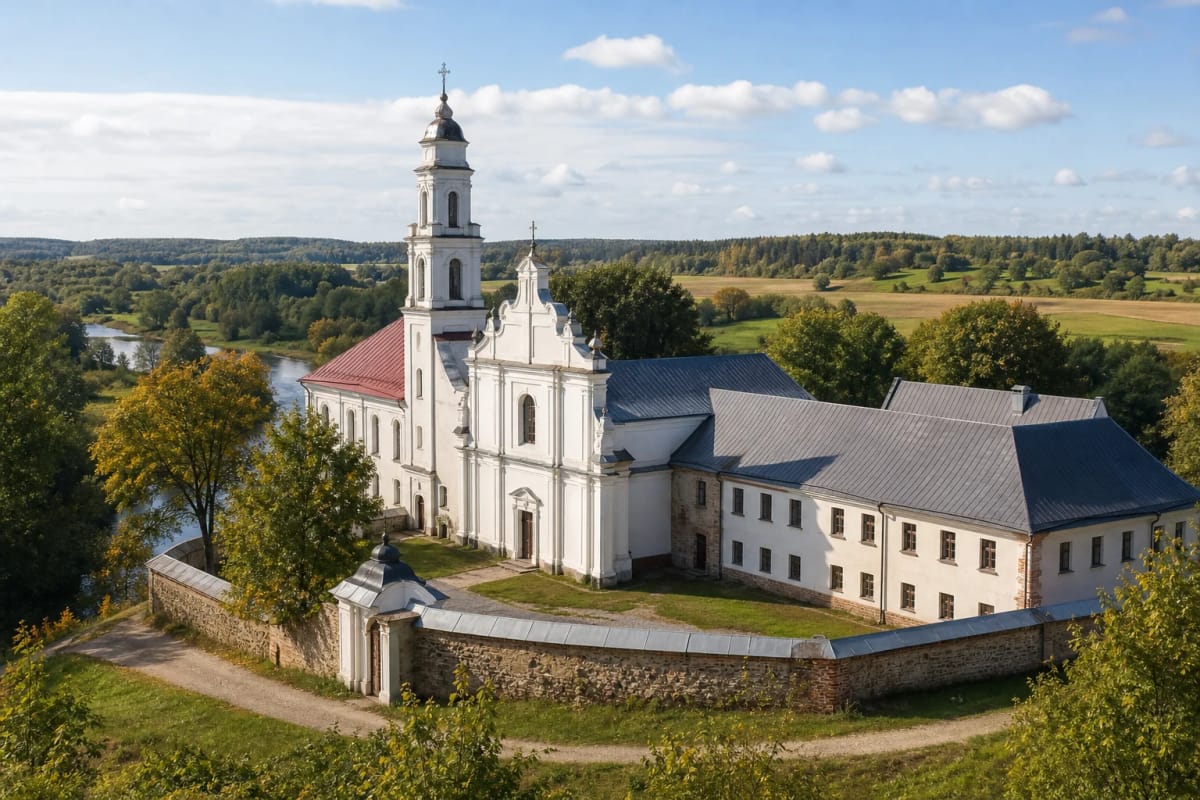
Palėvenė Church of St. Dominic and the Dominican monastery stand in Palėvenė, Kupiškis District, near the Lėvuo River, about 7 km south-west of Kupiškis. VLE and heritage literature treat this ensemble as the most important, and one of the most vivid, examples of late Baroque in Aukštaitija.
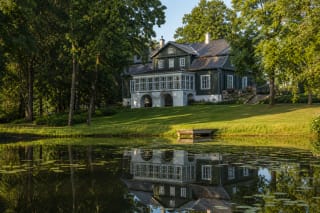
Do not confuse two Palėvenė sites: this page describes the church and Dominican monastery ensemble, while the separate Palėvenė (Komarai) Manor stands nearby. Both can be visited on the same trip.
From 1676 to Valančius's temperance movement
The monastery was founded by Palėvenė owner Mykolas Laurynas Počobutas and his wife Marijona Siesickaitė, who gave the Dominicans the Palėvenė and Lamokai estates. The foundation act was confirmed in 1676 by the Bishop of Vilnius and the Seimas, so 1676 is considered the date of the Dominicans' arrival in Palėvenė. The masonry church and monastery were built later, from the late seventeenth into the eighteenth century.
The monastery had a school and a large library with sixteenth-century publications. In 1858, during a visit to Palėvenė, Bishop Motiejus Valančius founded one of the first temperance brotherhoods in Lithuania here. In 1865, after the 1863-1864 uprising, the tsarist authorities closed the monastery and dispersed the monks.
Folk-Baroque altars
The church has a cross plan, a three-part apse, one tower above the main facade, and a three-naved interior with barrel vaults. Its greatest treasure is the altar ensemble. VLE describes the interior as one of Lithuania's most original examples of so-called folk Baroque; sources mention about nine altars dedicated to saints important to the Dominicans.
The ensemble has been conserved in recent years: the high altar was restored in 2005-2009, its authentic gilding was recreated, and later work covered side altars, the pulpit, and wall painting. This makes it possible to see one of the region's most authentic Baroque interiors.
Visiting
The church is an active parish church of the Diocese of Panevėžys. Concerts, exhibitions, educational activities, and, in summer, the Palėvenė International Art Festival take place in the ensemble. Entry to the church is free, but public visiting hours or ticket prices may not be formally published.
Excursions and visits are usually easiest to arrange through the parish or Kupiškis tourism information, and Mass times should be checked in advance. Allow 30-60 minutes; Palėvenė combines well with the manor, Kupiškis Reservoir, and other Kupiškis-area sites.