- Place
- Biržai District Municipality
- Region
- Aukštaitija
- Type
- karst park, mineral spring, and natural heritage object
- Coordinates
- 56.20010, 24.62350
Smardonė Spring, Likėnai Park
A karst spring in the park
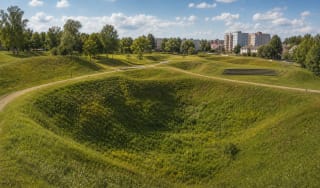
Likėnai Park and Smardonė Spring are among the clearest places to see the karst nature of the Biržai region without a long hike. Smardonė rises in Likėnai Park, within the setting of Biržai Regional Park, and flows into the Smardonė, a right tributary of the Tatula.
VLE states that since 2000 Smardonė Spring has been a hydrogeological natural heritage object and natural monument. The key point here is not only a pleasant park but the geological process shaping the whole karst landscape of northern Lithuania.
Sinkhole basin, discharge, and water composition
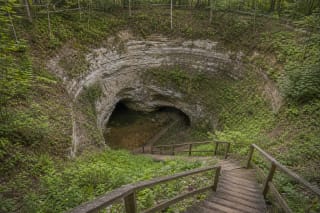
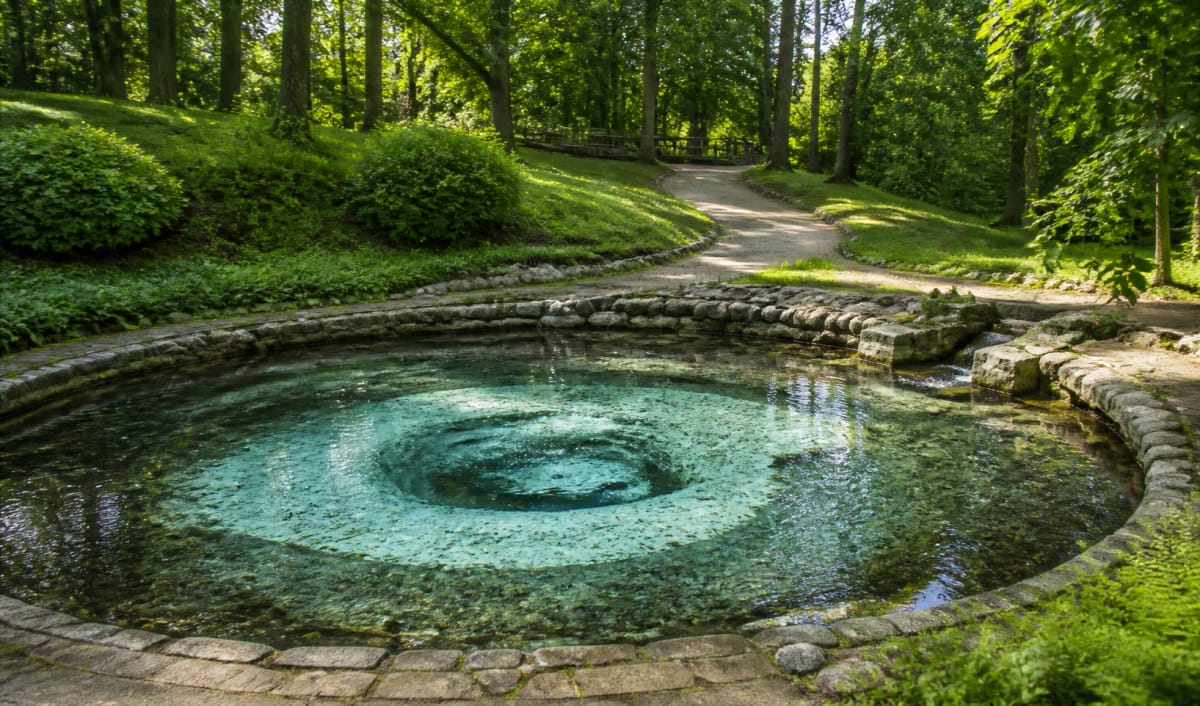
The spring is artesian and emerges from a funnel-shaped karst collapse. VLE gives a basin diameter of about 18 m and depth of 1.5-3 m; the bottom is silty and the banks are reinforced with stones. The water flows west in a stream about 3 m wide and 15 cm deep, entering the Smardonė, a 3.94 km right tributary of the Tatula, after a few hundred metres. Protected-area descriptions mention 15 and 17 m diameters and two swirling basins.
The spring's discharge varies, with the highest flow during spring melt; the average is about 122.6 l/s. VLE notes that until 1961 Smardonė was the most forceful spring in Lithuania, reaching up to 540 l/s. The water comes from karstified Upper Devonian Tatula Formation rocks; it is low-mineralized at about 2.4 g/l, calcium sulphate and bicarbonate, weakly alkaline at about pH 7.4, very hard, with total hardness of 33.93 mg-eq/l, cold at about 7.6 °C, clear, bitter-tasting, and has a weak hydrogen-sulphide smell. It does not freeze in winter.
Therapeutic place and Likėnai resort history
Written references to therapeutic use of the water reach back to 1587, when a treatment site using Smardonė mineral water is mentioned near Biržai. The first known mention of the spring was by J. Ferberis (1743-1790), a teacher at Jelgava Gymnasium, and in 1816-1818 the physical chemist Theodor von Grotthuss first studied its chemical composition. An oak sculpture with a relief by folk artist Algirdas Butkevičius stands near the spring in his memory.
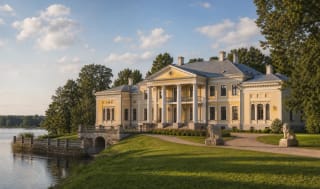
In 1890, through the efforts of doctor L. Chodakauskas, the water was tested at Riga Polytechnic Institute, and a hotel and treatment building were built on the Likėnai manor grounds; 168 patients were treated there in 1890-1891, but the resort ended after the bathhouse burned in 1891. In 1938, at the initiative of Biržai hospital chief doctor Jokūbas Mikelėnas, the Likėnai resort was established with a treatment facility and hotel, and 610 patients were treated in 1939. Today Likėnai has a rehabilitation hospital using mineral water from boreholes and therapeutic peat mud, but Smardonė Spring itself should be described carefully: saugoma.lt states that its water was formerly used for treatment and is no longer used, so visitors should not drink or use it therapeutically.
Likėnai Park
Likėnai Park surrounds the spring and has its own value: protected-area information mentions 68 species of trees and shrubs, a pond, springs, the nearby edge of natural forest, paved access, and a portable toilet. The park also has folk-artist sculptures. Its creator is considered to be agronomist J. Narušis, who was killed by Soviet activists during the June 1941 deportations.
The park lets visitors see the karst object calmly. It is suitable for a short stop, but it is worth taking time to understand that the smell of the water, the basin, the ponds, and the surrounding ground are parts of one geological system.
Visiting
Research did not find a ticket or opening time for the object. It is an outdoor nature and park site, but visitors should follow protected-area rules, avoid entering the spring, and not use the water medicinally without official medical designation.
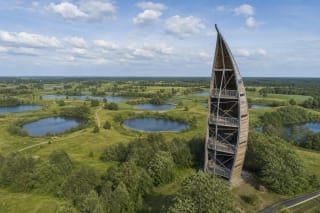
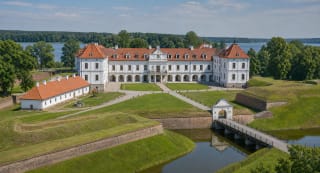
Likėnai is easiest to combine with Karvės Ola, Kirkilai, Biržai Castle, and Astravas. A short stop takes 30-60 minutes, but a Biržai Regional Park route is worth half a day.