- Place
- Biržai and Pasvalys District Municipalities
- Region
- Northern Lithuania's karst region
- Type
- a regional park with karst sinkholes, lakes, and cultural heritage
- Address
- Rotušės g. 10, Biržai, Biržai District (representative park point)
- Coordinates
- 56.20247, 24.75537
- Visit duration
- 1-2 days, depending on which karst, water, and cultural-heritage places you choose
- Best time
- from late spring to autumn; check the visitor centre, trails, and individual sites before travelling
Biržai Regional Park, Biržai karst region
Biržai Regional Park protects a large karst landscape
Biržai Regional Park covers 14,406 hectares in the municipalities of Biržai and Pasvalys. It was established on 24 September 1992 to protect the landscape of Lithuania's karst region, its ecosystem, and cultural heritage. This is not one attraction but a broad network of places best visited through separate routes.
The park may look flat at first, but sinkholes, river valleys, escarpments, and karst lakes give its relief a strong character. Gypsum-rich layers underground dissolve under the action of groundwater, so new landforms can open at the surface and older ones can change.
The coordinate 56.2024664, 24.7553693 on this page marks the Biržai Regional Park visitor centre in Rotušės Street. It is a practical starting point for information and route planning, but it is not the park's geographic centre or a navigation point for every natural site.
Karst is visible through sinkholes, caves, and small lakes
In the Biržai region, karst develops when groundwater dissolves gypsum layers and the overlying deposits lose support. Sinkholes form: some remain dry, while others fill with water and become small karst lakes. The park landscape is therefore an active process rather than a static backdrop.
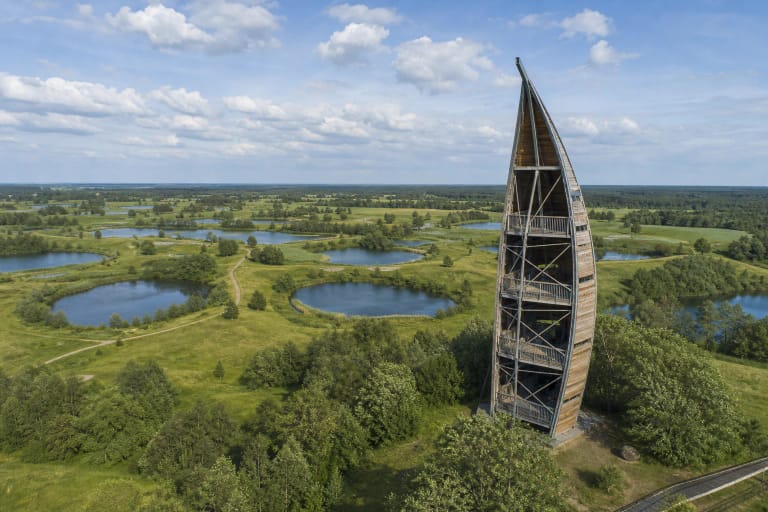
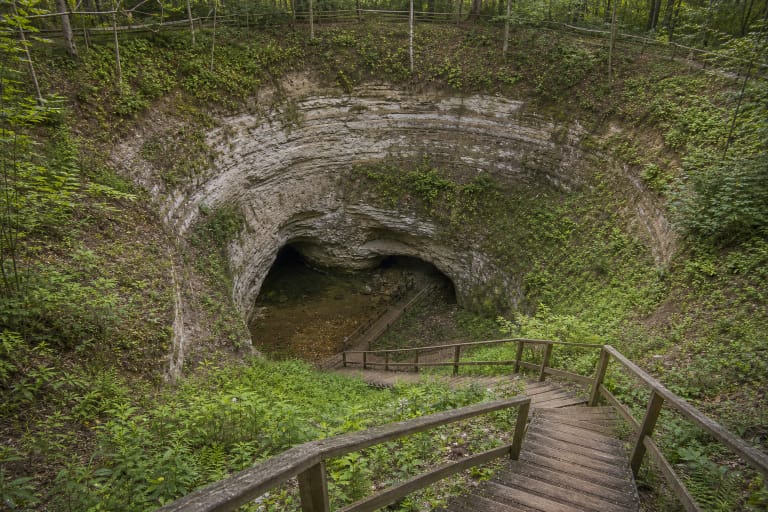
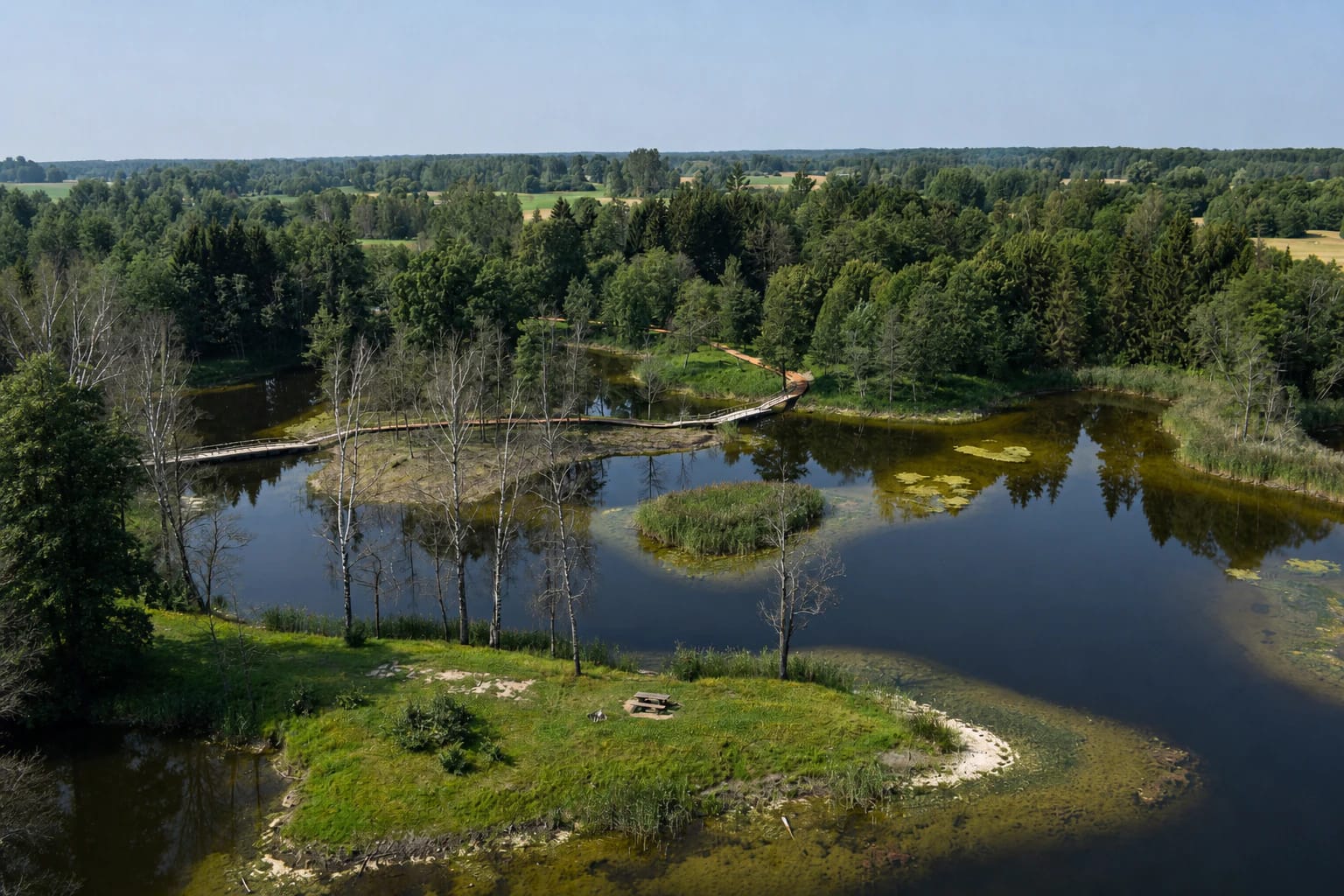
The Kirkilai lake district is one of the clearest expressions of this process: a system of connected water bodies surrounded by reeds, grassy islets, and woodland edges. Cow Cave, Geologists' Pit, and the Fox and Badger Caves at Karajimiškis show different, drier or underground forms of karst.
The park protects many types of reserve: geological, landscape, hydrographic, botanical, and telmological. A visitor can see water, a dolomite escarpment, and woodland habitat in one trip, but each site has its own access and visiting conditions.
The visitor centre helps shape a varied day out
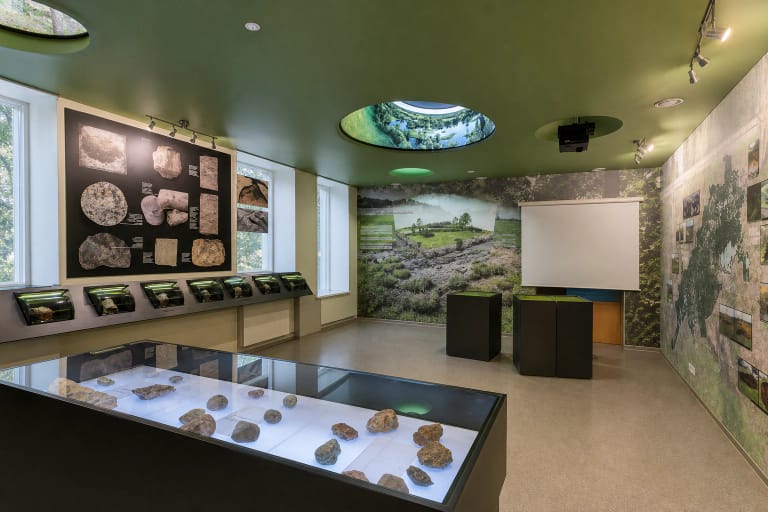
The Biržai Regional Park visitor centre is in Biržai at Rotušės g. 10, in the town hall built in 1924. Its “Sinking Land” exhibition explains karst phenomena and presents the park's natural and cultural heritage. Check opening hours and current information before travelling to more distant sites.
For a first visit, choose one theme: the Kirkilai lakes and tower, the Karajimiškis sinkhole field and Cow Cave, or the town, Lake Širvėna, and Astravas cultural route. This reduces time spent driving between distant places and leaves more time for walking.
Biržai town and the park do not need to be separate trips. Biržai Castle, the Lake Širvėna footbridge, Astravas Manor, and the visitor centre give historical context to the karst landscape, while in rural park locations geological processes appear directly underfoot.
On nature trails, watch more than the view
The Kirkilai karst-lake trails and observation tower show water-filled sinkholes from different heights. The Badger Cave geological trail at Karajimiškis crosses collapses, cave surroundings, and karst landforms. Choose a route according to its surface, steps, moisture, and distance between sites.
Sinkhole edges are not places to shorten the route or step close for a photograph. Rain, roots, thawing ground, and erosion can change the stability of the surface. Stay on the trail and behind barriers, and follow information signs even when a hollow looks shallow.
Beside the Kirkilai lakes and other water bodies, do not disturb reed beds, birds, or amphibians. Do not feed wild animals, light fires outside designated places, or drive to the water where access is prohibited.
Take your time and make several stops in Biržai Regional Park
You do not need to cover all 14,406 hectares in one visit. Half a day suits the Kirkilai lakes and tower or the Karajimiškis trail, while a full day can add the visitor centre, Biržai Castle, the Lake Širvėna footbridge, or Astravas Manor. For a fuller experience, allow two days rather than compressing the park into one hurried loop.
A dry daylight visit from late spring to autumn is usually easiest, but each site has its own seasonal restrictions and facility conditions. Check the official park website before travelling and follow the newest directions on site.
The value of Biržai Regional Park lies in a changing landscape: water fills sinkholes, woodland alters the shore, and visitor paths let people observe the processes without damaging them. Travel so that you leave only footprints on the trail, not new marks in the protected landforms.