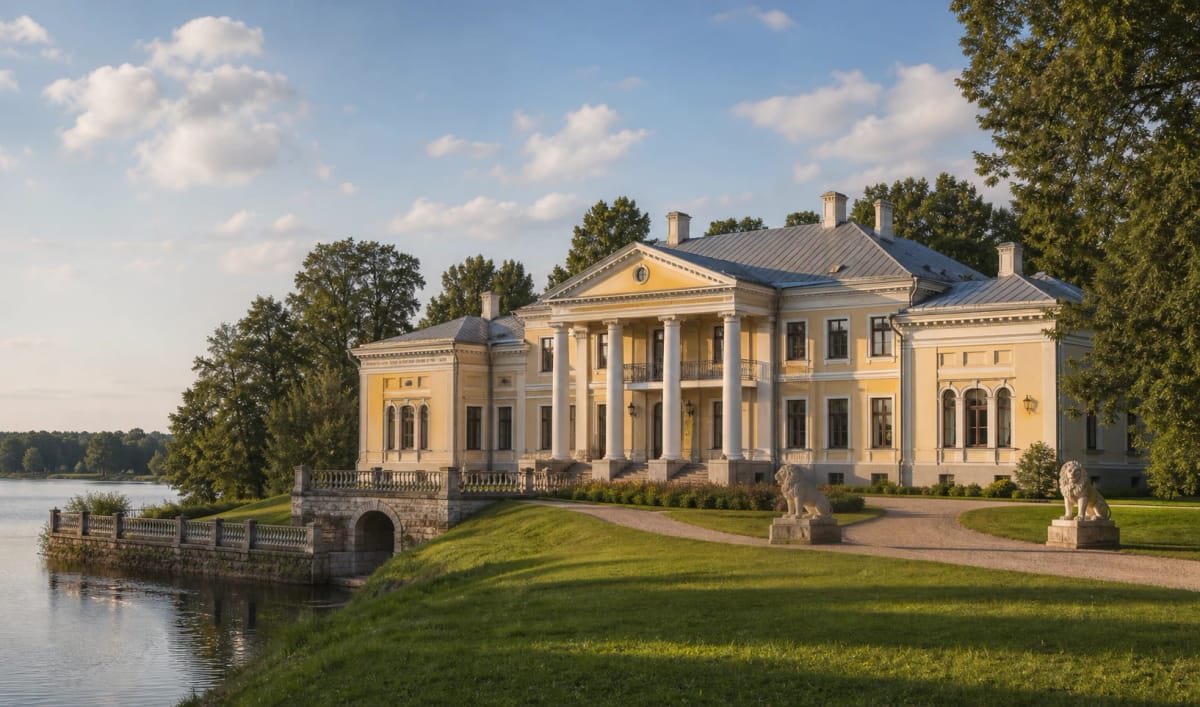
- Place
- Biržai District Municipality
- Region
- Aukštaitija
- Type
- Tiškevičiai manor estate by Lake Širvėna
- Address
- Astravo g. 17, Biržai
- Coordinates
- 56.20950, 24.75560
Astravas manor estate
Tiškevičiai Astravas on the Širvėna peninsula
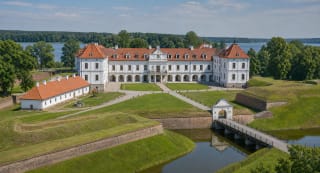
Astravas Manor stands on the northern shore of Lake Širvėna, by the Apaščia River, on the Širvėna peninsula, now within Biržai city limits since 1958. In the Cultural Heritage Register it is Astravas manor estate, unique code 854; its park of about 18 ha is a state-protected object of national significance.
The manor is known from 1617 and belonged to the Biržai-Dubingiai branch of the Radziwiłł family. In 1811 the Tiškevičiai counts bought the Biržai estates, including Astravas, from the Radziwiłłs; the purchase was officially confirmed in 1844. Rather than rebuild ruined Biržai Castle, they created a new residence across Lake Širvėna.
Astravas palace as an Italian-villa image
Astravas is considered one of Lithuania's most expressive nineteenth-century Romantic manor estates. The masonry palace, resembling an Italian villa, is thought to have been designed by architect Tomas Tišeckis; main construction stages are dated to 1842 and 1862. Inside survives a two-storey vestibule with eight columns and carved wooden decoration.
The architecture was deliberately made as a landscape residence rather than an urban palace. When visiting, notice the relationship between palace, water, and park: Astravas was planned so lake, greenery, and building form one view.
Park, arched bridge, and water economy
The estate includes more than the palace. The ensemble has two mills, including a watermill built in 1867, a stud farm, gatekeeper's house, and the oldest complex building, the folwark house from 1820. A distinctive arched bridge over the Apaščia River, built in 1860, recalls a Roman aqueduct in form.
The mixed-plan landscape park of about 18 ha was created in 1851-1862 and tied the manor to the Širvėna shore. Astravas is therefore best experienced by walking the whole ensemble: palace, lake, planting, and technical buildings.
Astravas lions: originals in Kaunas, copies on site
Astravas is famous for its lion sculptures. The original cast-iron lions were cast in Saint Petersburg in the mid-nineteenth century and decorated the palace entrance, but since 1937 they have stood by the Vytautas the Great War Museum in Kaunas. The lions seen at Astravas today are copies.
This detail is worth stating precisely because it is often confused. The copies remain important to the manor image, while the originals' movement shows how heritage objects changed place and status in the twentieth century.
Historical layers and how to visit
The palace once held parts of the Tiškevičiai and Radziwiłł archives, a library with fifteenth- to seventeenth-century books, and collections of archaeology, ethnography, and art, later taken to Vilnius and Paris. In 1918-1940 the Biržai cultural society Mūza operated here with a club, library, and reading room, and a spinning factory founded in 1923-1924 grew into today's industry.
During research, no official public interior visiting hours or ticket were found; the palace is used by AB Siūlas. Plan Astravas as an exterior, park, and Širvėna lakeshore visit, usually 45-90 minutes. For interior access or events, check separate announcements.