- Place
- Klaipėda City Municipality
- Region
- Klaipėda
- Type
- LNDM museum on the history of time measurement and clock forms
- Address
- Liepų g. 12, Klaipėda
- Coordinates
- 55.71390, 21.13250
LNDM Clock Museum, Clock Museum, Laikrodžių muziejus
Clock Museum in Klaipėda: why visit
The Clock Museum in Klaipėda is one of the city's most distinctive cultural places. It is not only display cases of old clocks, but a story about how people measured time: by the sun, stars, water, fire, sand, mechanisms, and later technologies.
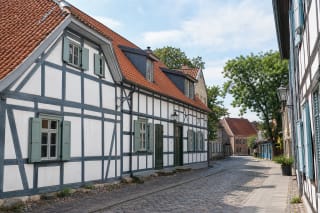
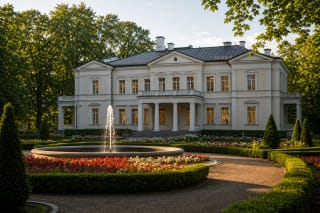
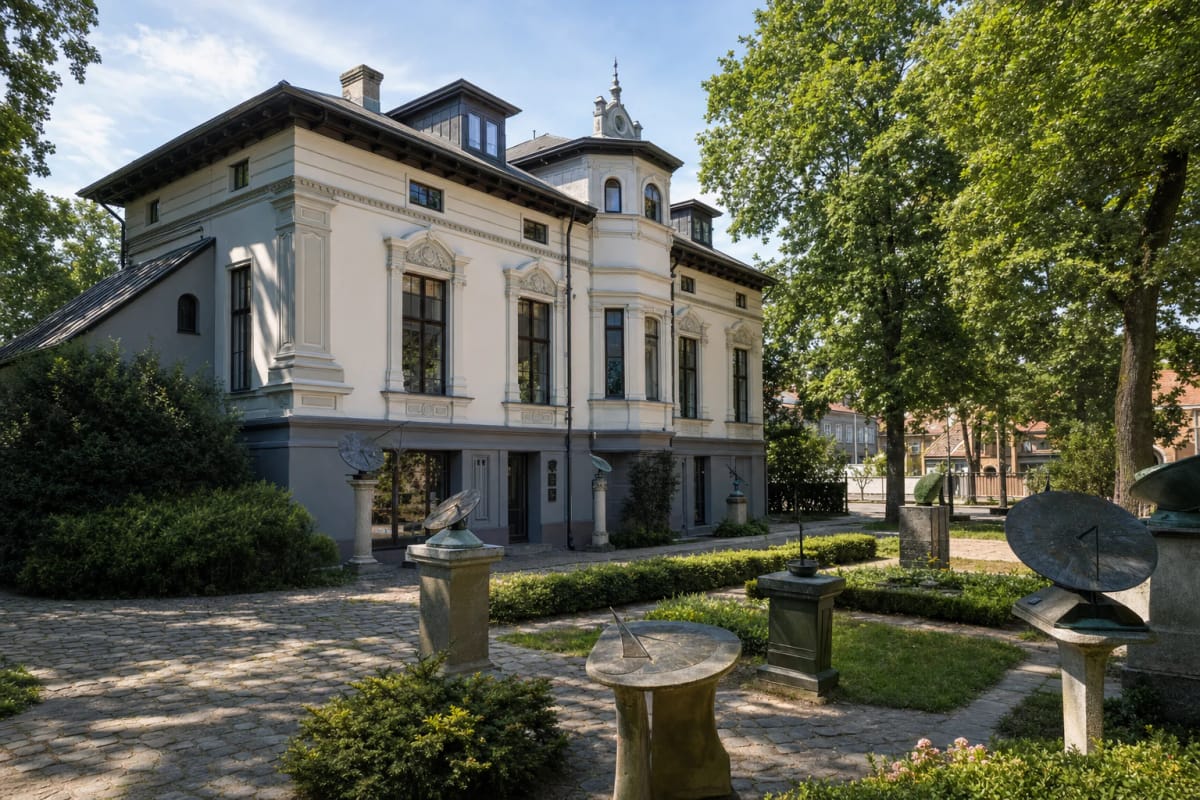
LNDM describes it as the only museum of this kind in Lithuania and the Northern European region. It is housed in a nineteenth-century suburban villa on Liepų Street, so a visit has both an architectural and a museum layer: inside is the history of clocks, and outside is the Sundial Park.
Museum history: from the 1979 department to the 1984 museum
VLE states that the Clock Museum was established on July 27, 1984, from the Clock Department of the Klaipėda Picture Gallery, which had been founded in 1979. The museum moved into a late-nineteenth-century building adapted for museum use by architect Vaidotas Guogis. Its long-time director was Romualdas Martinkus from 1979.
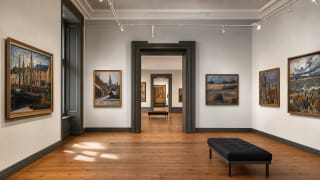
This origin matters because the museum was not born as a random collection. It was a specialized branch of what was then the Lithuanian Art Museum and is now the Lithuanian National Museum of Art. The exhibition therefore connects the history of technology, art styles, interiors, and craft quality.
First floor: from clepsydra to quantum clock
VLE details that the museum displays solar, stellar, water or clepsydra, fire, sand, mechanical, electromechanical, electromagnetic, electronic, quartz, and quantum clocks: authentic objects or models made especially for the museum, along with some parts. Through them, the development of clock construction is shown from the earliest times to the present.
This section works especially well with children or school groups because time measurement becomes physical and visual. It becomes easier to understand that a clock is not just a dial on a wall: it is observation, mechanics, astronomy, materials, and human agreement.
Second floor: clock forms from the Renaissance to Art Nouveau
LNDM emphasizes that the exhibition introduces the history of clock construction and the development of forms from the Renaissance to Art Nouveau, and also shows what a clockmaker's workshop looked like in the Renaissance period. VLE notes that the clock display is complemented by furniture, interior details, and engravings of the relevant style.
This lets visitors see clocks not only as technical objects but also as objects of interior design, fashion, representation, and craftsmanship. Among the makers represented are well-known European clockmakers, such as the Swiss Abraham-Louis Breguet.
The collection and how to read the objects
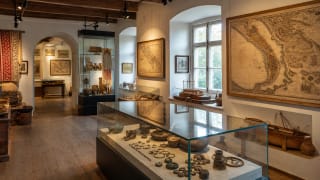
The museum is not a room of a few beautiful objects but a broad collection on the history of time measurement, made up of authentic clocks and specially created models of historical devices. This gives the visit a clear scale: from the oldest principles to twentieth-century precision technologies.
Look slowly at materials and details: brass, wood, enamel, engraving, tiny mechanisms, the proportions of cases, and how technology changes the appearance of an object. The slower you look, the clearer the level of workmanship becomes.
Sundial Park in the museum courtyard
One of the museum's distinctive features is the Sundial Park in the courtyard, part of a nineteenth-century park with functioning sundials. In the park wall is the composition Sun's Path Through the Constellations, created in Florentine technique by artist Lolita Sadauskaitė and designer Romualdas Martinkus in 1991.
The courtyard complements the interior display well: after mechanisms, dials, and cases, time is again connected with light, shadow, and season. Solstice and equinox events are held here, so the courtyard is best viewed on a bright day.
How to visit the Clock Museum
The museum is at Liepų g. 12, near the centre of Klaipėda. It is easy to combine with the Danė quays, old town, Sculpture Park, or other cultural places on Liepų Street. Before travelling, check LNDM opening hours and tickets, because museum schedules and temporary exhibitions can change.
If you have little time, focus on the first floor and the Sundial Park. If design, interiors, or crafts interest you, do not miss the second floor, where the development of forms from the Renaissance to Art Nouveau is the main experience. Some spaces are adapted for visitors with reduced mobility and parents with strollers.