- Place
- Suodžiai, Šakiai District Municipality
- Region
- Suvalkija
- Type
- active Catholic chapel and pilgrimage site
- Address
- Suodžiai village, Sintautai Eldership, Šakiai District Municipality
- Coordinates
- 54.85029, 22.91017
- Visit duration
- 20-40 minutes for a quiet visit; longer when attending a service
- Best time
- during a service confirmed with the parish in advance; more pilgrims arrive on 14 November and for the Feast of Divine Mercy
Suodžiai Chapel, Keturnaujiena Chapel, Divine Mercy Chapel in Suodžiai
A personal 1969 testimony, not a Church-approved apparition
The story of the site centres on Anelė Matijošaitienė. She said that she saw Jesus Christ at her homestead on 14 November 1969 and later experienced a vision of the Virgin Mary. News spread by word of mouth, and people began gathering by the house to pray and light candles. Accounts of graces and healing are also personal religious testimony, not medically established facts.
A Vatican News review published in 2019 emphasised that Matijošaitienė's visions had not been officially recognised by Church authorities. That distinction matters when visiting: this is an active Catholic place of prayer, but the existence of the chapel is not in itself ecclesiastical confirmation of stories about apparitions or miracles.
An agricultural airstrip laid across the homestead
The Soviet authorities suppressed gatherings of pilgrims. Witness accounts say that Anelė was removed, her homestead and trees were destroyed, and the levelled ground became an asphalt runway for agricultural aircraft. The long straight surface survives and explains the extraordinary setting: the chapel stands in open farmland rather than on a village square or beside a street.
After Lithuanian independence was restored and the land was returned, Anelė came back. A house and a small shrine appeared first, followed by the present Divine Mercy Chapel. Sources disagree on the year of consecration: Vatican News gives 2002, while a Šakiai District municipal planning document gives 2003. It is therefore most accurate to date the chapel to the early 2000s and acknowledge the discrepancy.
A modern interpretation of ethnic architectural forms
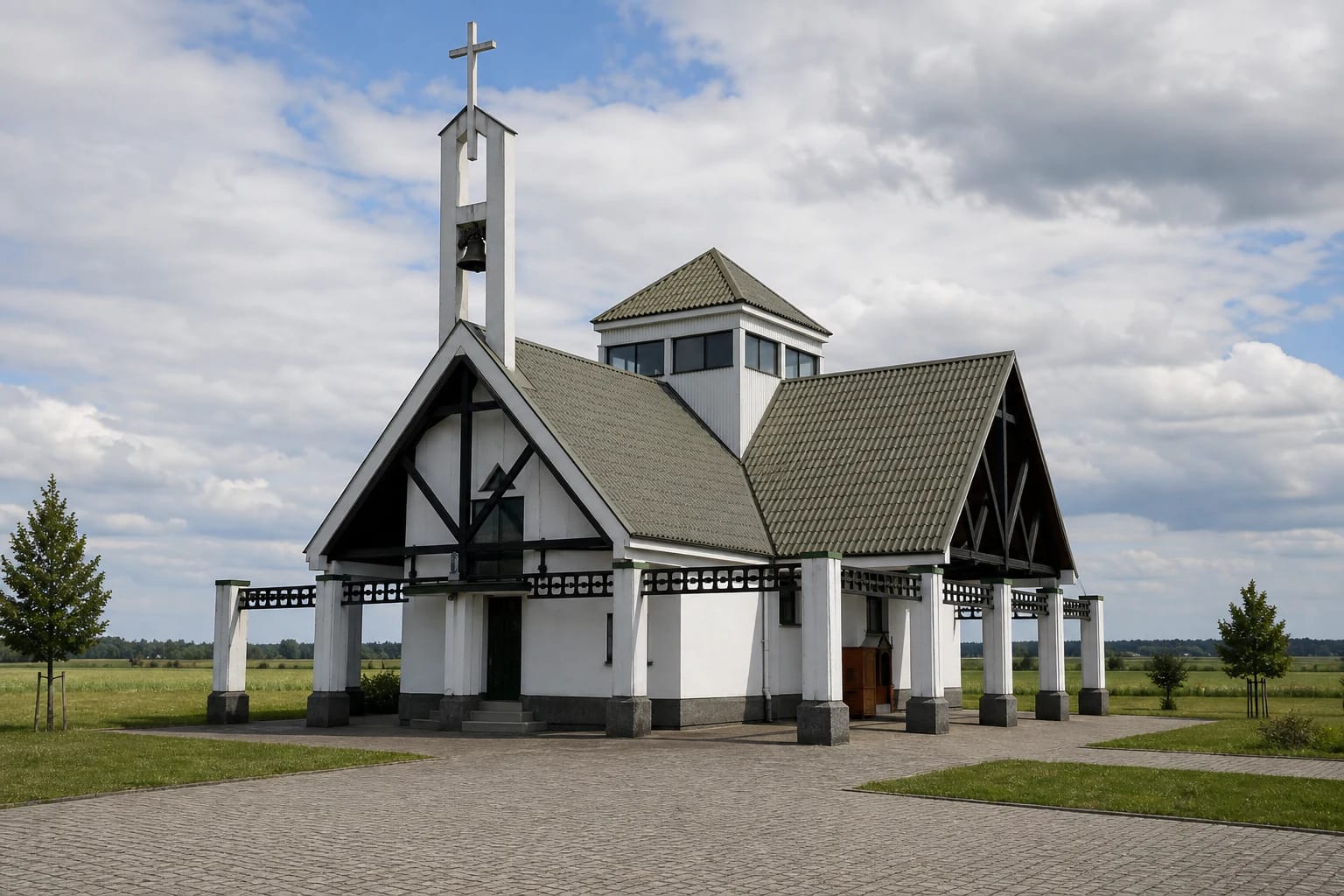
Architectural research describes the Suodžiai complex as a contemporary building that modifies traditional ethnic forms. Outside, this can be seen in intersecting pitched roofs, white walls, dark exposed timber, a columned veranda, a square glazed lantern and the tall open bell frame crowned by a cross.
The complex includes more than the chapel. Its spacious rural grounds also contain a house and farm building, crosses, statues and small shrines. Inside, pale walls and a timber ceiling are accompanied by numerous devotional paintings and sculptures. Researchers identify Rokas Cvirka's stained-glass image of the Sacred Hearts of Mary and Jesus as an important artistic accent.
Services and the annual 14 November commemoration
The chapel belongs to the Church of the Invention of the Holy Cross parish in Kudirkos Naumiestis, within Vilkaviškis Diocese. Pilgrimage sources list three Masses on 14 November and the Feast of Divine Mercy on the Sunday after Easter. They also publish a pattern of services on certain Fridays, Saturdays and Sundays, but the schedule has no clearly dated validity period.
If you are travelling specifically for Mass or want to enter the chapel, confirm the current arrangements with the parish on +370 345 57338. No admission ticket or visitor fee is published. During services, behave as you would in any active church: speak quietly, do not photograph people without permission, and never disturb the liturgy.
Reaching the complex in the open fields
The coordinates 54.8502894, 22.9101746 mark the chapel itself in the fields of Suodžiai. Twenty to forty minutes is enough on a quiet day, but more people gather on 14 November and for major services. Allow extra time, follow any temporary traffic instructions and keep access routes clear.
There is hard surfacing around the veranda, but no confirmed public description of a step-free interior route, thresholds or an accessible toilet. Contact the parish if wheelchair access is important. Outside service times, be prepared to find the chapel locked: a 24-hour label on online maps is not a reliable indication of interior opening hours.