- Place
- Kaunas City Municipality
- Region
- Kaunas
- Type
- active Evangelical Lutheran church
- Address
- 8A Muitinės Street, Kaunas
- Coordinates
- 54.89517, 23.88865
- Visit duration
- 25-45 minutes if the church is open
- Best time
- before a service or parish event, after confirming the time
Kaunas Lutheran Church
Lutherans in sixteenth-century Kaunas
Kaunas's Lutheran community appears in 16th-century records: pastor Dovydas Zomeris is mentioned in 1558, and public worship took place in private houses by Market Square in 1577. This was a community of a trading town that long lacked a permanent sanctuary.
From 1666 to 1676 the congregation worshipped in the masonry houses of merchant and municipal councillor Johann Naugard. His heirs sold the property to the parish in 1676, and the new church was planned on that same site beside the Nemunas.
Construction in 1682-1683 and a restrained exterior
The cornerstone of the present church was consecrated on 22 September 1682, and the building was dedicated to the Holy Trinity at Christmas 1683. Its original rectangular, single-nave form had to remain without a tower or cross, so the exterior deliberately lacked the usual marks of a church.
Unable to emphasise the outside, the congregation enriched the interior. A masonry choir and pulpit were installed in 1691, followed in 1692 by an organ and an elaborate three-tier Baroque high altar. The vaulted west porch known as the Beautiful Hall was added in 1695.
Baroque interior and nineteenth-century tower
Octagonal piers now divide the interior into three aisles, with galleries above the side aisles. The richly carved and gilded Baroque altar is especially valuable; fragments of wall painting survive behind it. The late-18th-century organ was repaired in the late 19th century and reconstructed in 1978-1984.
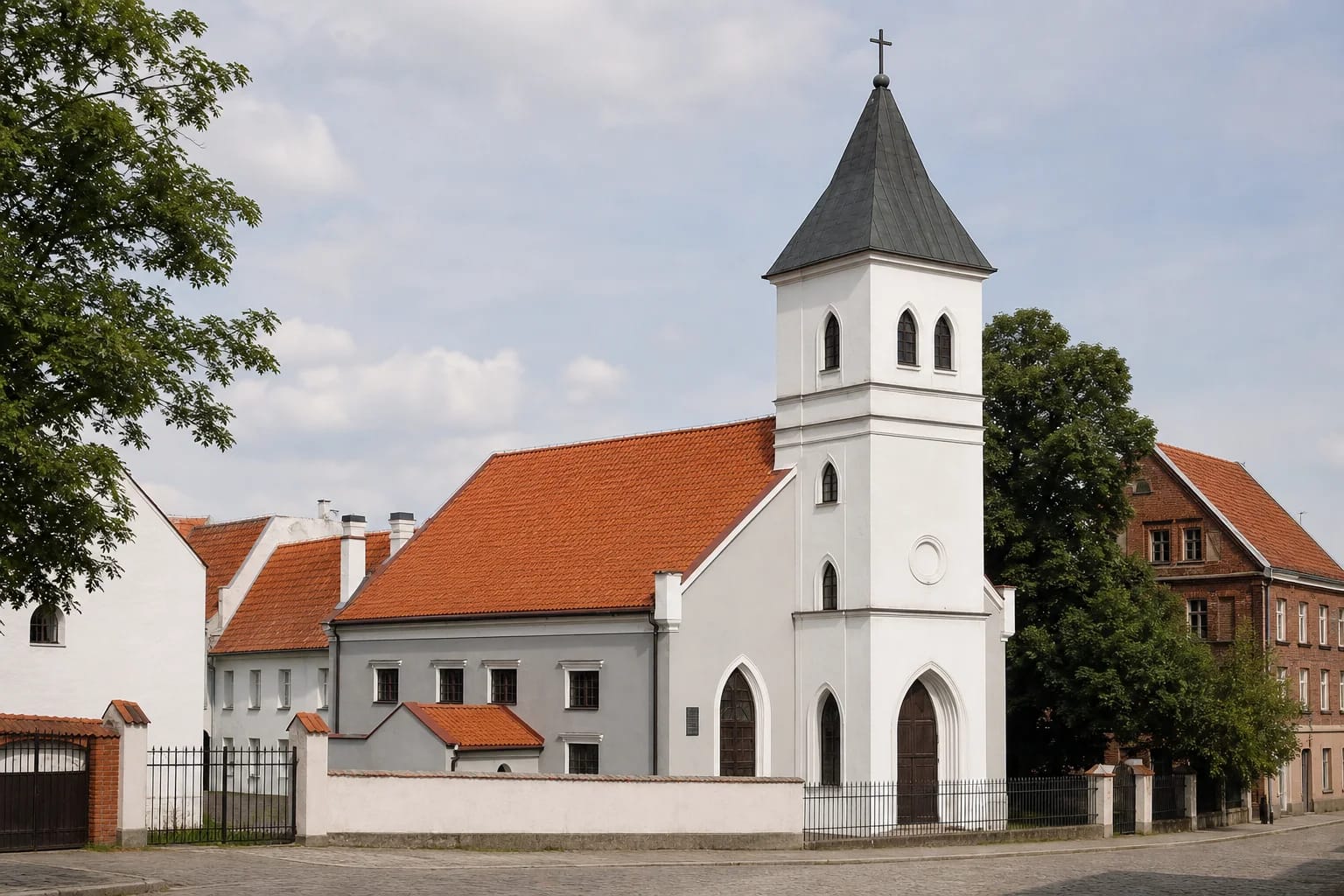
After the church had deteriorated, it was repaired in 1859. Architect Jakob Woller designed the bell tower added in 1860-1862, together with a Nemunas-side entrance and a new parsonage. This phase gave the church its most recognisable silhouette.
Soviet closure and conversion into a university hall
The church closed on 1 April 1953 and was later used as a sports hall and warehouse. Fire damaged the high altar in 1968, which helps explain why the present interior combines surviving fabric with substantial restoration.
In 1974-1984 the building was converted into an assembly hall for Vilnius University's Kaunas faculty. Timber floors and columns were replaced with reinforced concrete, the altar and organ were restored, and an underground link connected the church with the university auditorium block. Their physical relationship is still conspicuous in the quarter.
Return of worship and a living parish
Services resumed on 30 April 1989. After sustained parish efforts, the church and sacristy were returned to the Kaunas Evangelical Lutheran parish on 8 October 1992. AUTC notes that Reformed Christians also worship here.
This is a working church, not a museum open to tourists every day. On 22 July 2026 the parish listed Sunday services at 10:00, but always confirm the current schedule and any changes on its official website.
How to visit respectfully
A published service or public event is the most reliable opportunity to see the interior; alternatively, arrange access with the parish in advance. The parish does not list a standard museum admission fee.
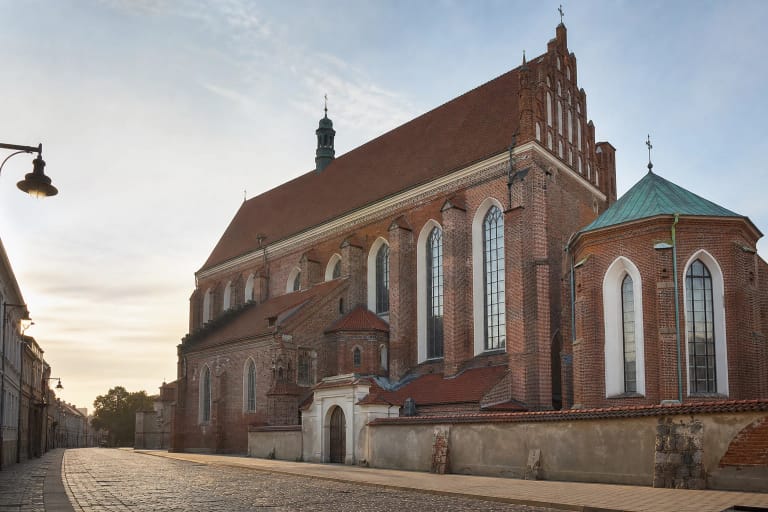
Outside, notice the steep red-tile roof, the 19th-century tower, and the way the church is embedded in the university block. During worship, move and photograph only when this does not disturb the congregation.