- Place
- Jonava District Municipality
- Region
- Aukštaitija
- Type
- urban alpaca farm offering pre-booked animal introductions and supervised feeding sessions
- Address
- Smėlio g. 17, Jonava
- Coordinates
- 55.08516, 24.26436
- Visit duration
- about 1 hour for the education session; 1.5-2 hours including the walk from parking and a circuit of Jonava's ponds
- Best time
- at the pre-booked morning or evening time, in dry weather and outside the hottest part of a summer day
Jonava Alpaca Farm, Alpaca Farm in Jonava, Alpacas by Jonava Ponds
A visit begins in the booking system, not at the gate
You cannot simply arrive during regular opening hours because there is no permanent walk-in timetable. Visitors enter only at education-session times displayed in the online system and with a ticket purchased in advance. The ticket is valid for the selected date, time, and number of people, so check the entire order before paying.
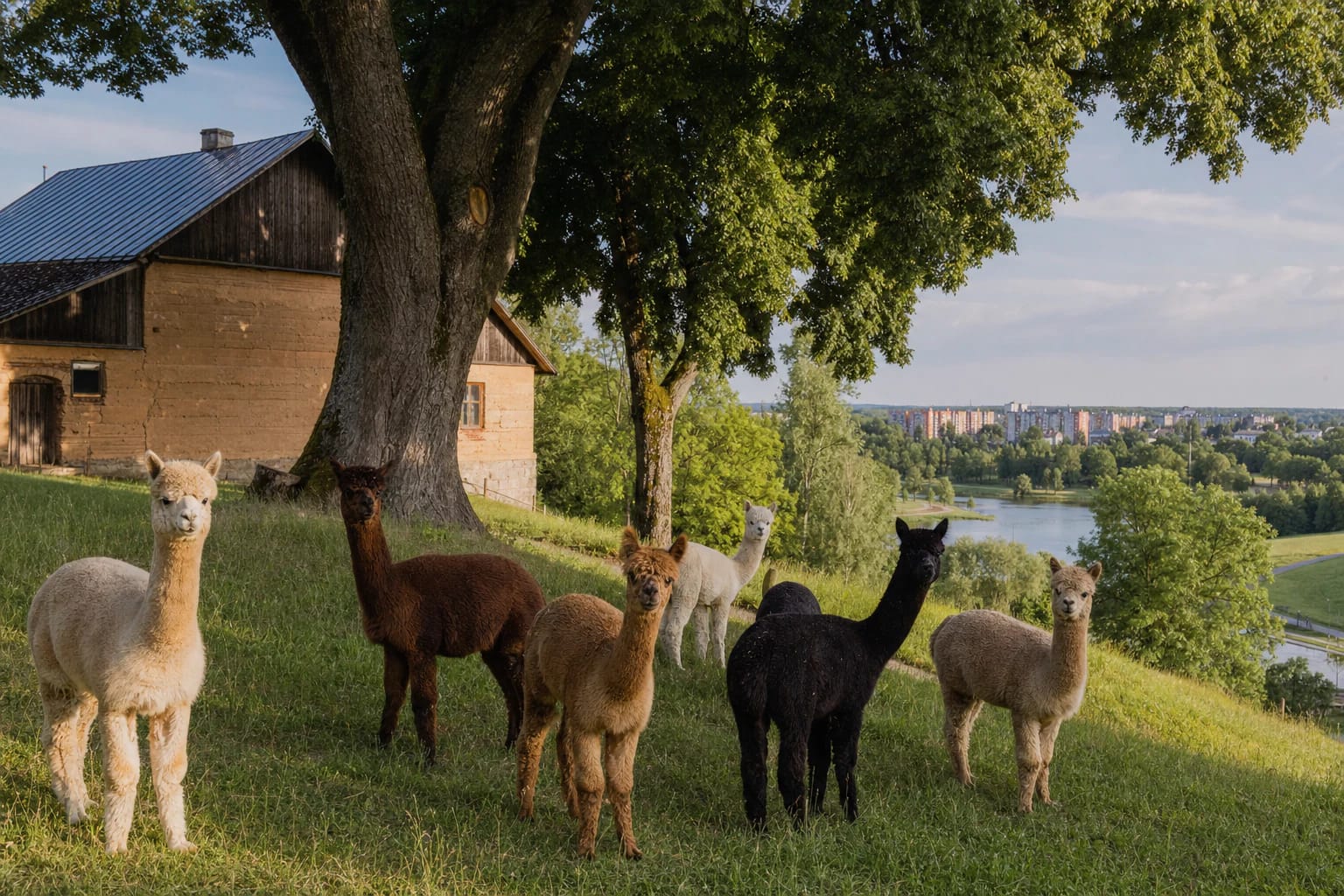
A host introduces alpaca behaviour, care, and individual members of the herd. Contact depends on how the animals feel: one may approach for feed while another prefers to keep its distance. A chance to stroke or lead an alpaca is not permission to chase it around the pasture. Respecting the distance set by the host is part of the experience.
In good weather, grazing alpacas can sometimes be seen free of charge from the cycle path on the Juodmena Street side. This means watching from a public path, not entering the enclosure, feeding animals, or receiving a shorter version of the education session. If the herd is in the barn or over the hill, visitors cannot demand that it appear.
A rural homestead became an unexpected urban retreat in 2018
The farm was established in 2018 beside Jonava's second pond. Its first alpacas came from breeders elsewhere in the European Union, while breeding males from Switzerland, Sweden, and the United Kingdom were later selected to expand the herd. This is a contemporary family-farm story, not the continuation of a historic manor menagerie.
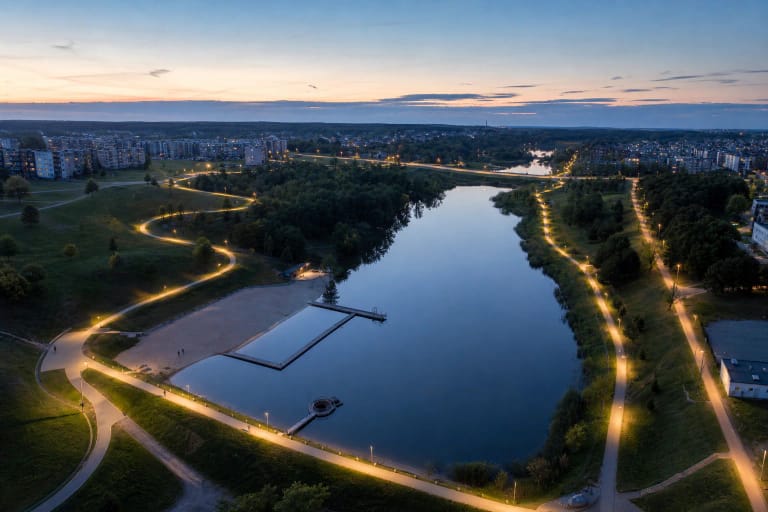
The site combines town and country in one view. Alpacas graze on a natural slope among century-old linden trees, a pond lies below, and Jonava appears in the distance. The old rammed-clay barn is not a stage prop: according to the farm, its thick walls remain cool in summer and provide a more sheltered environment in winter.
Lithuania's State Food and Veterinary Service stresses that alpacas need a dry, draught-free shelter, sufficient pasture, shade, water, and the option of returning indoors. Visitor times therefore adapt to the herd rather than the reverse. During the hottest part of the day or poor weather, the animals may stay under cover.
Why sessions take place only at a few times each day
The farm's official page describes three daily visitor times in the warm season and two in cooler weather, in the morning and evening. These coincide with feeding, integrating the programme into the animals' established routine. Exact times change and are displayed in the booking system rather than negotiated at the fence.
Feeding is supervised. Do not bring apples, carrots, bread, or any other food, even if an animal appears interested. The host distributes suitable alpaca feed and demonstrates how to hold an open palm. The veterinary service identifies hay and pasture grass as the main diet and says that compound feed must be rationed according to an animal's condition.
Alpacas are calm but remain substantial farm animals. Do not push between them, embrace the neck, pull fleece, sit a child on the back, or force a group photograph. If an alpaca withdraws, flattens its ears, or shows another sign of discomfort, give it space and follow the host's instructions.
This is an education session, not a guaranteed therapy service
The farm describes time with alpacas as calming, but a standard visitor ticket is neither medical nor psychological therapy. If you are travelling with particular sensory, emotional, or additional needs, discuss group size, noise, contact limits, and the possibility of an individual format before buying tickets.
Close adult supervision matters for young children. Teach them to offer feed on a flat palm, keep fingers away from the mouth, and never run behind an animal. Wash hands with soap after stroking or feeding. The National Public Health Centre notes that water alone does not remove every contaminant; hand sanitiser is useful when travelling.
The public rules do not clearly confirm admission for visitors' dogs or other pets. An alpaca may find a predator-like animal stressful, so never bring a pet without explicit advance approval from the farm by telephone or in writing.
Prices and ticket terms worth reading before payment
On 25 July 2026, the official price was EUR 8 for every visitor aged three or older. Children under three entered free and did not need to be added in the booking system. A EUR 6 disabled-visitor ticket was listed with documentary eligibility requirements specified in the terms.
Kindergarten and school groups were quoted EUR 5 per person, with one accompanying adult admitted free for every ten children. Arrange group timing, invoices, and suitable capacity on +370 655 53374 rather than buying a large number of individual tickets without consultation.
The electronic ticket can be shown on a phone or printed, is scanned on arrival, and is valid once. Because the booking fixes a date, time, and number of visitors, read the exchange, non-attendance, and refund terms in the ticket system before paying. Prices and conditions can change, so follow the official booking information shown on the day you book.
Park by the pond and walk the final section
The farm asks motorists to use parking areas on Tvenkinio Street or on Juodmena Street beside the children's playground. Do not drive to the Smėlio Street gate expecting private visitor parking, never block residents' access, and allow time to walk to the session.
The farm can be reached on foot or by bicycle along the Jonava ponds paths. Afterwards, continue past the playground, the third pond beach, and Joninės Valley. Arrive 10-15 minutes before the ticket time, but approach the animals only when invited.
A sloping meadow, grass, and an old farm surface are not equivalent to a level urban gallery. No detailed public wheelchair-access audit was found, so discuss the access route, weather effects, toilet facilities, and assistance before buying a ticket. Closed shoes with good grip are practical even in summer.