- Place
- Telšiai District Municipality
- Region
- Samogitia
- Type
- wooden Samogitian manor estate linked with writer Žemaitė
- Address
- Džiuginėnai village, Gadūnavas Eldership, Telšiai District Municipality
- Coordinates
- 55.98400, 22.17600
Džiuginėnai Manor Estate
A wooden manor estate near Telšiai
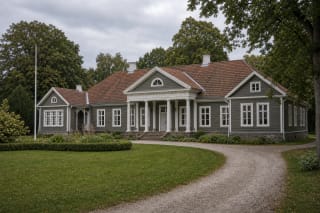
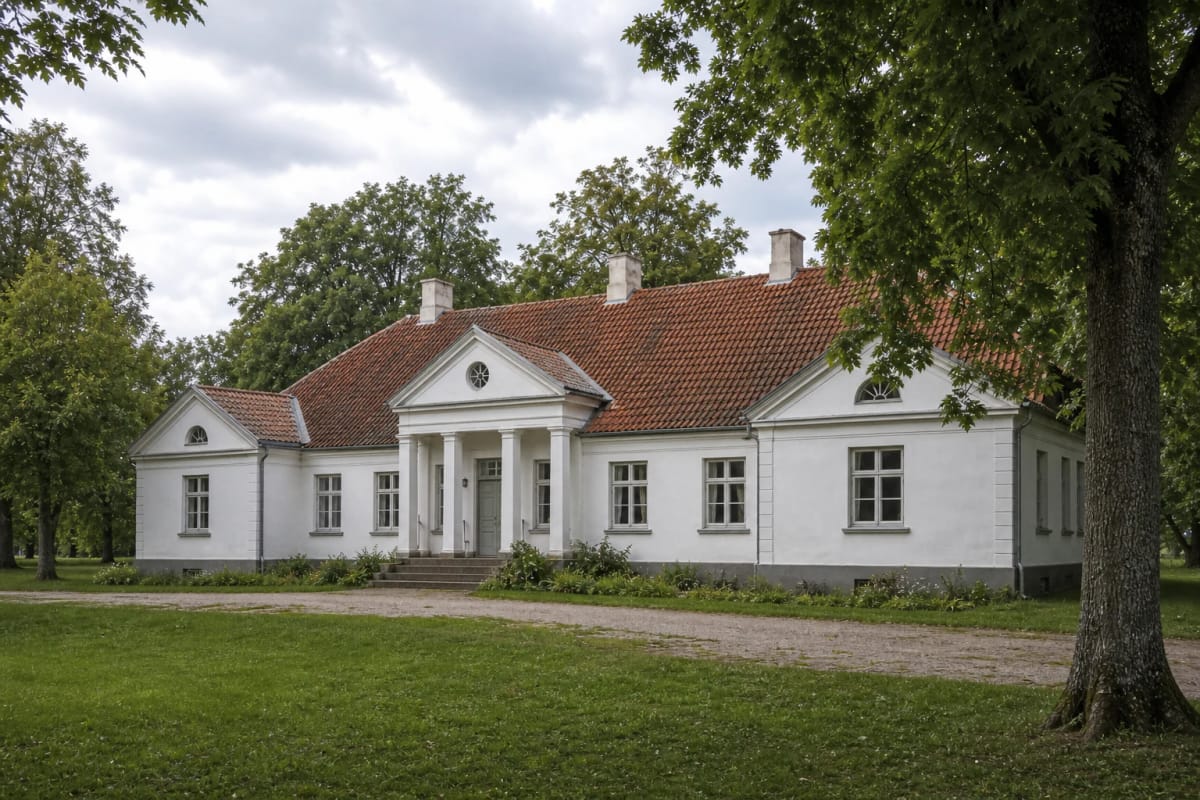
Džiuginėnai Manor stands in Džiuginėnai village, Gadūnavas Eldership, about 2-4 km west of Telšiai, near Lake Germantas. It is a wooden Samogitian manor estate whose history, according to VLE, reaches the 16th century. It is not a large museum ensemble with a widely advertised exhibition, so it is best treated as a contextual but historically rich stop on a Telšiai-region route.
The Cultural Heritage Register lists the object as Džiuginėnai Manor Estate, unique code 733. According to AUTC, the estate includes several buildings: a large wooden rectangular manor house with symmetrical composition, a Samogitian-style granary, a stable-carriage house from the late 18th or early 19th century, and an icehouse; a park also survives nearby.
Žemaitė in Džiuginėnai
The most important thread in Džiuginėnai Manor's story is its link with the writer Žemaitė, the pen name of Julija Beniuševičiūtė-Žymantienė. VLE and AUTC state that in 1864-1866 she served at the manor and here met her future husband Laurynas Žymantas, who was then the manor's tijūnas, or overseer. This biographical episode places Džiuginėnai on the map of Lithuanian literature.
Because of that, the small and modest manor has cultural significance out of proportion to its size. Visitors can imagine the environment in which one of Lithuania's major prose writers formed her view of the village and manor relationship from the perspective of those who served.
Laucevičiai, Perkovskis, and the manor library
The manor belonged to the Laucevičiai, also written Laučevičiai, family, while broader literature also connects the place with the Gorskiai. Džiuginėnai was known for its manor library. The estate is also linked with ethnographer, artist, and photographer Juozapas Perkovskis; a street in Džiuginėnai village is named after him.
These connections show that Džiuginėnai was not only an agricultural holding but a place of cultural memory. When visiting, look at the surviving wooden layout, the scale of the estate, and its relationship with the village and park surroundings, rather than expecting a grand representative ensemble.
Hillfort and the Germantas landscape
Next to the manor estate is Džiuginėnai Hillfort with an ancient settlement, and nearby are Germantas Landscape Reserve and Lake Germantas. That makes Džiuginėnai easy to include in a wider nature-and-heritage route, where manor estate, archaeological site, and lake landscape reinforce one another.
Smaller manor estates matter because they reveal the dense network of Samogitian manors. In Džiuginėnai, that network can be read together with a concrete story of literature and ethnography, giving the place more depth than architecture alone.
Practical visiting and route planning
Reliable sources did not show permanent museum opening hours, tickets, or a broad exhibition. Plan Džiuginėnai Manor as a short stop and use cautious visiting etiquette: view it from publicly accessible places and do not enter private areas.
It is best combined with Telšiai, Žemaičių Museum "Alka", Varniai Cathedral, the Museum of the Samogitian Diocese, or other Samogitian manors. If you want a special tour or interior access, first look for the newest local information.