- Place
- Panevėžys District Municipality
- Region
- Aukštaitija
- Type
- state-protected botanical natural heritage site
- Address
- Daniliškis village, Krekenava eldership, Panevėžys District
- Coordinates
- 55.48476, 24.06746
- Visit duration
- 30-60 minutes; 1.5-2 hours with the Daniliškis manor site and Nevėžis Valley surroundings
- Best time
- during the June linden blossom or in early October; avoid strong winds
Daniliškis Manor Linden Avenue, Daniliškis Manor Park Avenue, Daniliškio liepų alėja
A green corridor in a former manor park
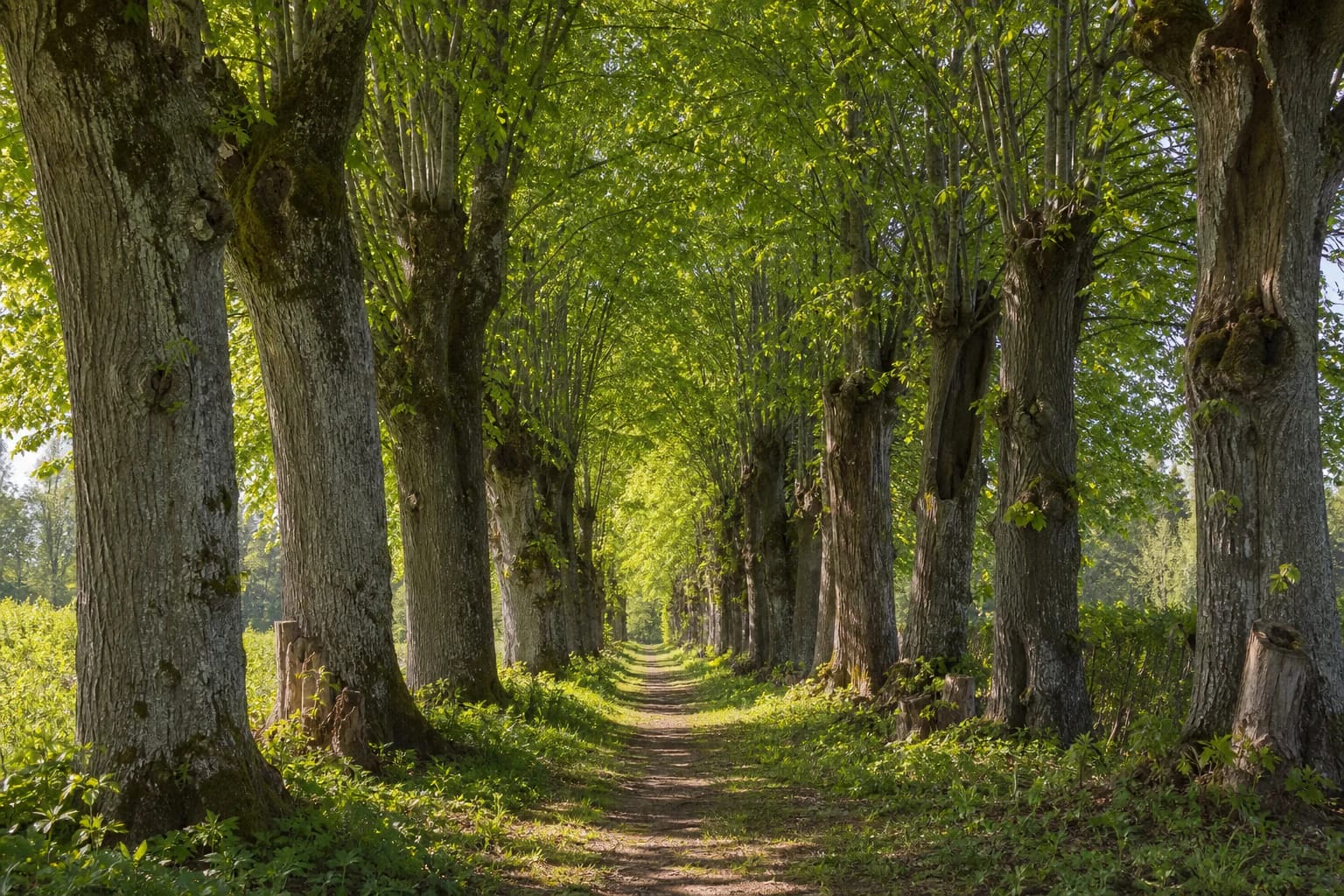
The avenue is a straight perspective of two tree rows crossing what remains of the Daniliškis manor park. Old trunks, cavities, scars, and high interlocking crowns create a very different experience from a young urban planting. Its value lies not only in individual trees but in the repeated spatial structure as a whole.
Saugoma.lt calls the avenue the most important planted feature of the former manor. Do not expect an intact palace ensemble: the most valuable elements today are the tree composition, traces of the designed terrain, and the park's relationship with the Nevėžis Valley.
Why two lengths and tree counts are quoted
The State Service for Protected Areas visitor page gives a length of 263 metres and approximately 360 small-leaved lime trees. These figures were repeated for years in visitor literature and relate to an earlier definition of the historic embankment and avenue.
The arborist plan prepared in 2025 used a newer inventory method. The Aukštaitija Protected Areas Directorate gives 283 metres and 315 individually assessed trees. This does not necessarily mean dozens of limes vanished rapidly: start and end points, which trunks are included, and the purpose of an approximate count versus a working inventory can all differ. The 2025 plan is the better reference for current management, while the older figure remains useful historical visitor information.
The historical layer of the Daniliškis manor site
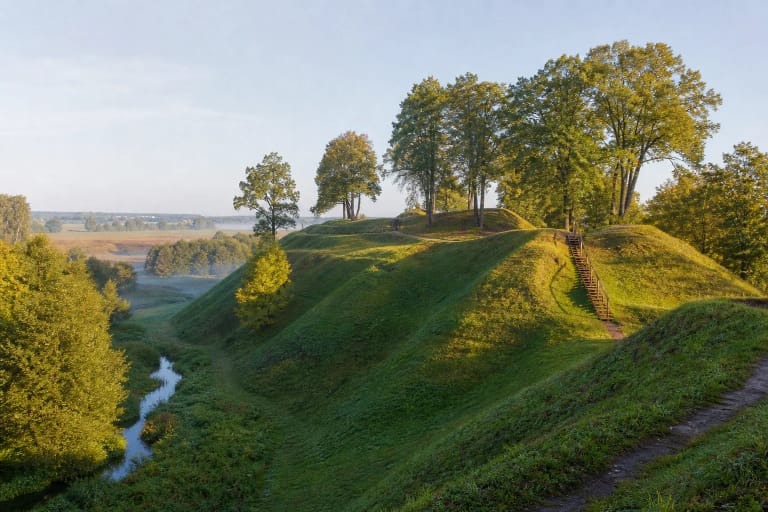
Written sources record the Daniliškis manor from the late sixteenth century. Its park once descended in terraces towards the Nevėžis Valley, with springs emerging from the slopes. Saugoma.lt also mentions two secular works by celebrated cross-crafter Vincas Svirskis that once stood here: wooden lions.
Archaeological fieldwork took place on the manor site in 2013. Seventeenth- to nineteenth-century pottery, hand-forged nails, vessel glass, and window-glass fragments were collected between the avenue embankment and the former palace terraces. They confirm that the tree corridor is not an isolated natural feature but part of a much longer story of manor life.
What the 2026 arborist work changed
Work began in early 2026 under a plan assigning measures to each tree. The Directorate said 123 trees in good condition were to remain untouched. Trees in moderate condition received sanitation pruning and crown thinning or lifting, while the poorest specimens required crown reduction, conversion into standing habitat trunks, or removal.
A habitat trunk is not simply an abandoned stump. It is a safely retained portion of old wood that can support insects, fungi, and cavity-using animals. On 9 June, the Directorate was already holding educational tours for children in the avenue, showing that the site had returned to public interpretation after the spring work.
Visiting without harming the old limes
The avenue is open and free, with no set visiting hours. Stay on the existing path, do not compact roots with a vehicle, reach into cavities, or remove dead wood. June brings linden fragrance and abundant insect activity, while autumn makes the perspective of the tree rows especially clear.
Saugoma.lt describes the site as unsuitable for people with mobility impairments. The natural path can soften after rain, and lingering beneath old crowns is unwise in strong winds. Google Maps showed 4.6 out of 5 from 54 reviews on 27 July 2026; the rating changes over time.